
Review · CYCLING TOURS
Anuradhapura Heritage Mountain bike / bicycle Tour
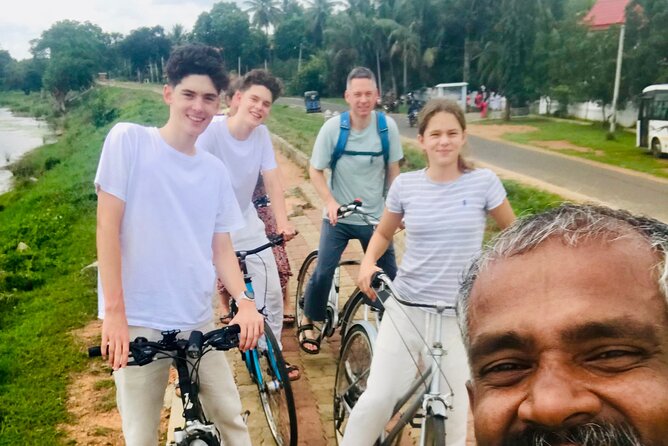
History feels better on two wheels. This private Anuradhapura cycling tour combines quiet roads, forest paths, ancient Buddhist sites, and local life in a 10-kilometer loop. I especially like the chance to see places such as the Abhayagiri monastery ruins and Kuttam Pokuna without rushing, and I like that guide Saranga adds cultural and Buddhist insight rather than simply pointing at old stones. The included vegetarian meal at Hela Bojun is another welcome touch.
The main catch is the extra $30 UNESCO entrance ticket for most adults, which makes the real cost closer to $55 per person. You also need moderate physical fitness, suitable clothing for temple visits, and a willingness to ride in warm conditions. Still, for a private half-day tour, the price can be fair if you want context and local routes instead of a quick circuit by car.
In This Review
- Key points to know before you book
- Why Anuradhapura works so well by bicycle
- Meeting Saranga near the old car park
- Jetavanaramaya: beginning with a giant stupa
- Samadhi Statue and the quiet side of Buddhist art
- Abhayagiri and Kuttam Pokuna, the tour’s strongest archaeological stretch
- Eth Pokuna and the engineering behind the sacred city
- The Moonstone and the meaning beneath your feet
- Basawkkulama Tank and the living importance of water
- Abhayagiri’s refectory and the scale of monastic life
- Ruwanweliseya, one of Anuradhapura’s great sacred sights
- Sri Maha Bodhi and the tour’s spiritual finish
- The included meal and the local touch
- What the $25 price really covers
- Who should book this ride?
- Booking details and practical preparation
- Should you book the Anuradhapura Heritage Mountain Bike Tour?
- FAQ
- How long is the Anuradhapura bicycle tour?
- How far do you cycle?
- Is the tour private?
- What is included in the tour price?
- Is the UNESCO entrance ticket included?
- Where does the tour begin and end?
- What happens if the weather is poor?
Key points to know before you book
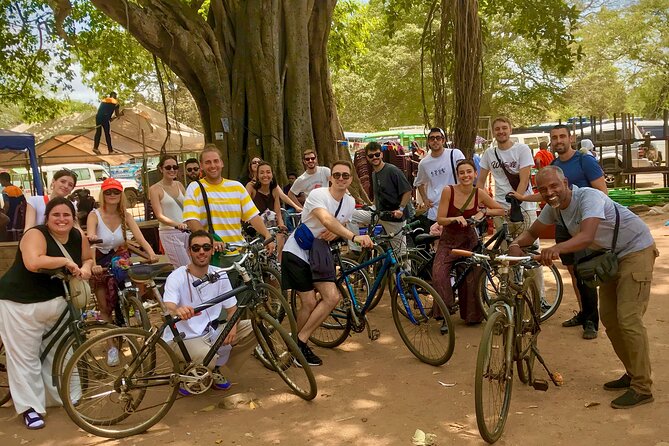
- A 10-kilometer loop covers ten major sights, including Jetavanaramaya, Abhayagiri, Ruwanweliseya, and Sri Maha Bodhi.
- Guide Saranga leads the ride in English and brings personal insight into Buddhism, local culture, and Anuradhapura.
- The pace is designed for looking around, with stops ranging from 10 to 30 minutes rather than a rushed photo stop.
- Quality mountain bikes are provided, with bikes from brands such as Giant, Trek, and Louis Garneau.
- A local vegetarian meal is included, along with bottled water, parking, and bicycle use.
- The tour is private, so only your own group takes part, and it finishes where it begins.
Why Anuradhapura works so well by bicycle
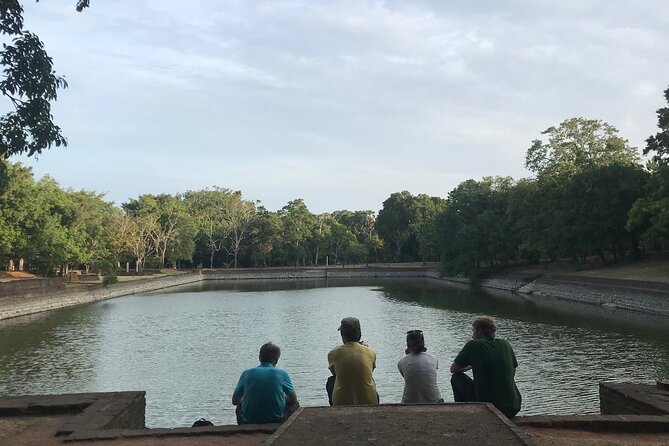
Anuradhapura is spread across a large ancient city area, with major monuments separated by trees, tanks, open paths, and quieter stretches of road. Seeing it on a bicycle helps connect those pieces. You are not simply moving from one monument to the next in an enclosed vehicle. You can notice the irrigation tanks, forest shade, village edges, and changing views between the famous sites.
The advertised loop covers about 10 kilometers and lasts roughly four and a half hours. That is not a race. The scheduled stops alone take several hours, so the remaining time allows for cycling between sites, explanations, pauses, and the included food.
I would call the physical effort moderate rather than strenuous. You need to pedal for several hours and manage a mountain bicycle, but the tour is built around sightseeing. If you rarely exercise, the heat may be more tiring than the distance. Bring a hat, use sun protection, and drink the supplied water regularly.
Because this is a private activity, you are not tied to the pace of a large group. That matters at religious sites. You can spend more time at a stupa that interests you, or keep moving if a particular ruin does not hold your attention.
More bike tours in Anuradhapura:
- Anuradhapura: Private Half-Day Cycling Tour w/ Guide
★ 5.0 · 2 reviews - Cycling and Cooking Demonstration from Anuradhapura
★ 5.0 · 1 review - Countryside Cycling Tour From Sigiriya, Dambulla & Habarana
★ 5.0 · 1 review
Meeting Saranga near the old car park
The ride begins at Rides Hubwela Mada Gedara, Garage Waththa, near the old car park at 116/1 Watawandana Road in Anuradhapura. It returns to the same meeting point, which keeps the logistics simple if you are staying in the area or arranging your own transport.
Saranga is an English-speaking guide from the Anuradhapura area. His role seems to be one of the strongest parts of the experience. He explains the sites, but the personal side matters just as much. One especially positive account describes his understanding of Buddhism and the way he connected the monuments to local belief and daily life.
That makes a difference in Anuradhapura. You can read the dates and names on a guidebook, but a local explanation can help you understand why a tree, bathing pool, or carved doorstep still matters to people today.
The bicycles are described as professional mountain bikes from familiar brands, including Giant, Trek, and Louis Garneau. That is reassuring, though you should still check that the saddle height and riding position feel right before setting off.
Jetavanaramaya: beginning with a giant stupa
The first major stop is Jetavanaramaya, one of the most impressive structures in the ancient city. When King Mahasena built it between 273 and 301, the stupa reached about 122 meters, making it the tallest stupa in the world at the time and one of the tallest structures anywhere.
The planned visit lasts about 15 minutes. That is enough to take in the scale and hear the basic story, though it is not a long archaeological visit. The open area around the monument gives you a useful first sense of Anuradhapura’s size.
This is a good opening stop because it makes the ancient city feel large and ambitious immediately. If you enjoy architecture and engineering, pay attention to the sheer volume of brick and the way the structure dominates the surrounding trees.
Samadhi Statue and the quiet side of Buddhist art
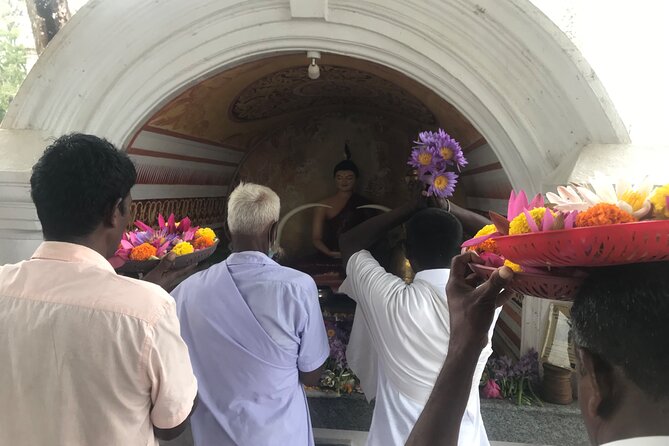
The Samadhi Buddha receives about 20 minutes. The statue shows the Buddha in the meditation posture known as Dhyana Mudra and is located in Mahamevnawa Park.
After the monumental scale of Jetavanaramaya, this stop offers a more human-sized focus. The value here is not just the sculpture itself. It is the chance to pause, look closely at the posture and expression, and hear how meditation is understood within Buddhist practice.
You should dress respectfully throughout the ride. A wraparound cloth is specifically recommended if your knees are uncovered, since the route includes several temples and sacred places. This is a practical detail that is easy to overlook when planning a cycling day.
More History Tours in Anuradhapura:
- Explore & Ride the history of anuradhapura with Vogel Tours
★ 5.0 · 62 reviews - Visiting the Historical Polonnaruwa Ruins and Minneriya Safari
★ 5.0 · 16 reviews - Day tour to Sigiriya,Dambulla & Polannaruwa (3 word heritage places) from Kandy
★ 5.0 · 99 reviews - Kandy Heritage City Tour by tuktuk
★ 5.0 · 61 reviews
Abhayagiri and Kuttam Pokuna, the tour’s strongest archaeological stretch
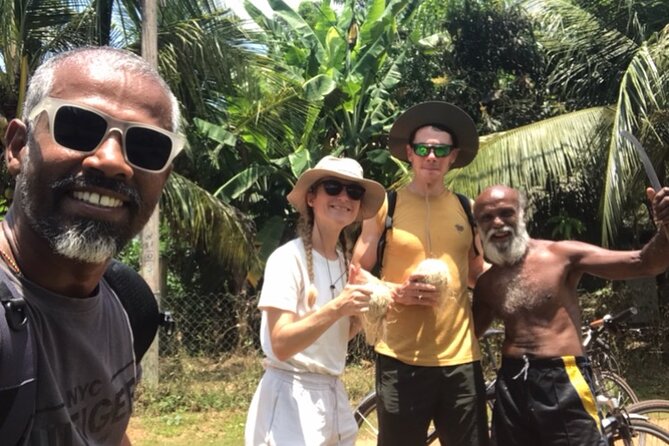
The route then reaches Abhayagiri Stupa, with about 20 minutes to explore. Abhayagiri was once a major monastery connected with Mahayana, Theravada, and Vajrayana Buddhist traditions. The wider area is among the largest ancient monastic sites in the world.
This is where a guide adds real value. The remains cover a broad area, and without context, it can be difficult to understand how a monastery functioned. Saranga can help turn scattered buildings and paths into a picture of religious and academic life.
Next comes Kuttam Pokuna, or the Twin Baths. These two bathing pools are among the best-preserved examples of ancient bathing tanks in Sri Lanka. Their careful stonework and orderly design show that practical facilities could also be highly refined.
The stop lasts about 20 minutes. I would use that time to look at the steps, stone edges, and water design rather than treating the pools as a quick background for photographs. The site is also a good reminder that Anuradhapura’s achievement was not limited to stupas. Water management and public facilities were central to the ancient city.
Eth Pokuna and the engineering behind the sacred city
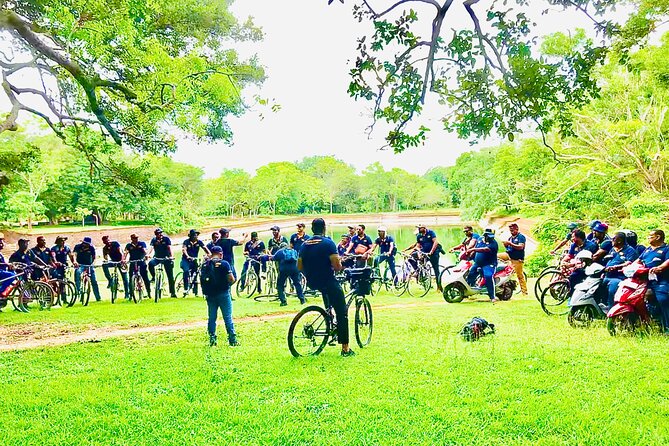
Eth Pokuna, known as the Elephant Pond, is another large reservoir associated with the ancient Anuradhapura Kingdom. It measures about 159 meters long and 52 meters wide, giving you a sense of the scale of water storage in the city.
The name and size make this a memorable stop, but the broader lesson is even more important. Anuradhapura depended on carefully planned tanks, channels, and reservoirs. The city’s religious monuments could not have functioned without this practical system.
The visit lasts around 20 minutes. This is a place where you may appreciate the benefit of arriving by bicycle. The ride between large monuments helps you understand how water, monasteries, paths, and gardens fit together across the ancient city.
The Moonstone and the meaning beneath your feet
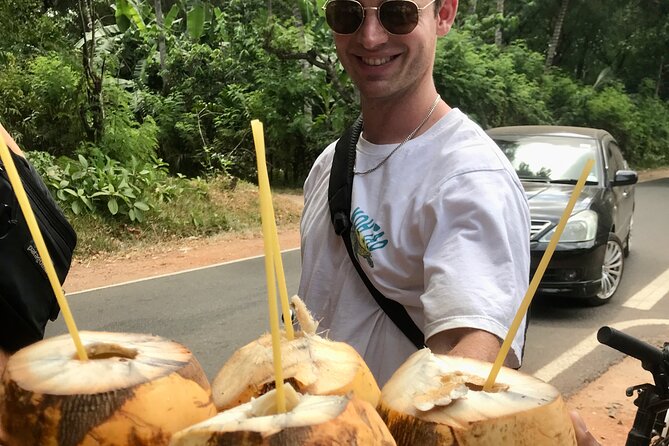
At Sandakada Pahana, the carved Moonstone, you get about 25 minutes. This semicircular stone slab usually sits at the bottom of a staircase or entrance and contains detailed symbolic carving.
It is easy to walk over a Moonstone without noticing it. Slow down here. The design is one of the distinctive features of ancient Sri Lankan architecture, and its position at an entrance gives it a ceremonial role as well as an artistic one.
This is a particularly good stop for anyone who likes small details. The massive stupas attract attention from far away, but the Moonstone rewards close looking. Ask Saranga to explain the carvings and their place in Buddhist architecture.
Basawkkulama Tank and the living importance of water
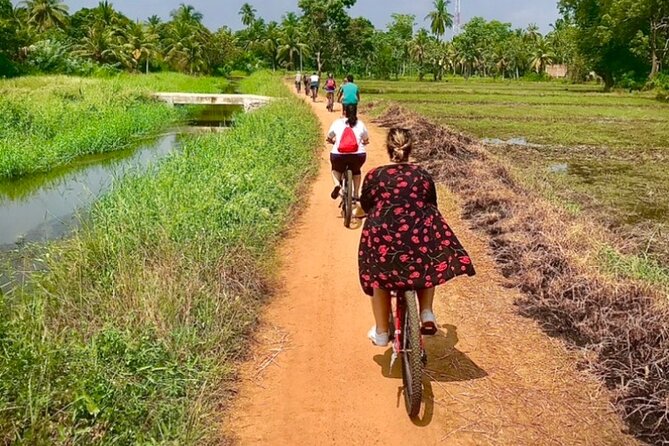
Basawkkulama Tank offers a different kind of ancient monument. The irrigation systems around Anuradhapura rank among the most complex in the ancient world, with early works dating to about 430 BC during the reign of King Pandukabhaya.
The planned stop is about 20 minutes. You may find this less visually dramatic than the major stupas, but it gives essential context. A city cannot support monasteries, workers, gardens, and ceremonies without a reliable water supply.
This is also one of the points where the bicycle format makes sense. You can move through the area at ground level, seeing the relationship between the tank, vegetation, and nearby historic sites instead of viewing everything as isolated attractions.
Abhayagiri’s refectory and the scale of monastic life
The main refectory of Abhayagiri Monastery receives a shorter 10-minute stop. The Chinese monk Fa-Hien recorded in the fifth century that the monastery housed as many as 5,000 monks.
That figure changes how you view the ruins. This was not a small retreat with a handful of residents. It was a large institution that needed kitchens, dining facilities, water systems, teaching spaces, and support from the wider community.
Because the stop is brief, you will not have time for a long study of every remaining structure. Its purpose is to help you picture daily life within the monastery and connect the large archaeological area with ordinary routines such as eating and gathering.
Ruwanweliseya, one of Anuradhapura’s great sacred sights
Ruwanweli Maha Seya receives the longest stop so far, about 30 minutes. King Dutugamunu began the stupa between 137 and 119 BC, and the monument remains one of the best-known sacred sites in Anuradhapura.
This is a place where respectful behavior matters. The area is active as a religious site, not simply an archaeological exhibit. You may see ceremonies or worship taking place, and the cycling tour’s slower approach can help you observe without treating the site like a rushed checklist.
The half-hour gives you time to take in the white dome, surrounding space, and devotional atmosphere. Since the route includes several major monuments, you may want to save your most careful photographs for stops like this one rather than trying to photograph everything equally.
Sri Maha Bodhi and the tour’s spiritual finish
The final scheduled sight is Sri Maha Bodhi, visited for about 30 minutes. This sacred fig tree in Mahamevnawa Gardens is regarded as the closest living link to Gautama Buddha.
The significance here is religious rather than purely historical. Even if you are not Buddhist, you can appreciate the care and respect surrounding the tree. The stop gives the tour a quieter ending after the large stupas, reservoirs, and monastery remains.
The route may also coincide with ceremonies around the sacred sites, depending on timing. One account of the experience particularly valued seeing ceremonies near sunset, although you should not assume every departure will have the same light or religious activity.
The included meal and the local touch
A vegetarian meal cooked by local people at Hela Bojun is included. That adds value beyond the bicycle rental and guiding, especially if you want a break from standard restaurant meals.
The supplied information does not specify the exact menu or when the meal takes place, so I would not book this expecting a particular dish. Instead, think of it as a practical chance to eat local vegetarian food during a long morning or afternoon of riding.
The food also fits the tone of the tour. The experience is not only about seeing famous monuments. It brings together local cooking, religious sites, rural surroundings, and movement through the area at an unhurried pace.
What the $25 price really covers
The advertised price is $25 per person. It includes the mountain bicycle, guide, bottled water, parking fees, and the vegetarian meal.
The major extra cost is the UNESCO entrance ticket. Adults pay $30, while children under 13 pay $15. That means an adult should budget about $55 in total for the tour and entry, before any personal expenses.
At that full price, the tour is not the cheapest way to see Anuradhapura. Yet the comparison is not simply $25 for a bicycle. You are also paying for a private English-speaking guide, a planned route through ten important places, local interpretation, and food.
I think the value is strongest for first-time visitors who want help understanding the site. If you already know Anuradhapura well and prefer to set your own pace, renting a bicycle independently may cost less. You would then need to handle navigation, entry arrangements, and the history yourself.
Who should book this ride?
I would recommend it to you if you enjoy combining moderate exercise with cultural sightseeing. It suits couples, families with older children, and small private groups that want flexibility and a personal guide.
It is also a good choice if the thought of spending four hours inside a vehicle sounds dull. The route through forested areas, rice fields, tanks, and quiet paths gives the ancient city a more connected feel.
You may want to choose another format if you dislike cycling, struggle in warm weather, or want a detailed archaeological tour at every monument. The schedule covers a lot of ground, and some stops are short. The tour gives you broad coverage and local explanation rather than a specialist lecture at each site.
Booking details and practical preparation
Confirmation is provided when you book, and the activity is near public transportation. Cancellation is free if you cancel at least 24 hours before the start time. Changes or cancellations inside that window are not accepted, and poor weather may lead to a different date or a full refund.
Wear clothing that allows comfortable cycling but respects temple rules. If your knees are uncovered, bring a wraparound cloth. Closed shoes, sun protection, and a water bottle for backup are sensible, even though bottled water is included.
The tour requires moderate physical fitness. Since the activity lasts about four and a half hours, avoid treating it like a quick sightseeing transfer. Give yourself enough energy for repeated stops, short rides, and time in the sun.
Should you book the Anuradhapura Heritage Mountain Bike Tour?
Book it if you want Anuradhapura to feel like a real place rather than a row of disconnected monuments. Saranga’s personal approach, the quiet routes, the quality bicycles, and the included local vegetarian meal give the tour a clear sense of purpose.
Think carefully about the extra UNESCO fee and the cycling requirement. With entry included in your budget, the total adult cost is about $55 per person. For someone who wants independent exercise and broad site coverage, that is a reasonable price. For someone seeking the lowest-cost visit or a highly specialized archaeology lesson, it may not be the best fit.
FAQ
How long is the Anuradhapura bicycle tour?
The tour lasts approximately 4 hours and 30 minutes.
How far do you cycle?
The route is a loop of about 10 kilometers.
Is the tour private?
Yes. Only your own group participates in the activity.
What is included in the tour price?
The price includes bottled water, parking fees, use of a mountain bicycle, a guided tour, and a vegetarian meal cooked by local people at Hela Bojun.
Is the UNESCO entrance ticket included?
No. The UNESCO entrance ticket costs $30 per adult. Children under 13 pay $15.
Where does the tour begin and end?
It begins at Rides Hubwela Mada Gedara, Garage Waththa, near the old car park at 116/1 Watawandana Road in Anuradhapura. The tour ends back at the same meeting point.
What happens if the weather is poor?
The experience requires good weather. If it is canceled because of poor weather, you will be offered another date or a full refund.
Just added in Anuradhapura
- Village tour Sigiriya Rock, Pidurangala Rock and Dambulla temple★ 5.0 · 2 reviews
- Day Tour from dambulla to Sigiriya & Polonnaruwa★ 5.0 · 13 reviews
- Wilpattu Half Day Safari From Anuradhapura★ 5.0 · 4 reviews
- Wilpattu National Park Private Safari★ 4.5 · 2 reviews
- Sunrise or sunset tour pidurangala Rock and Sigiriya Rock★ 5.0 · 4 reviews
- One Day Tour – Sacred city of Anuradhapura & Sacred city of Mihintale. (Sunset)★ 4.5 · 23 reviews
- Wilpattu National Park Entrance Ticket with Private Safari★ 5.0 · 1 review
- Adventure safari Experience in Hurulu Eco Park, Sri Lanka★ 5.0 · 18 reviews
Cycling Tours, compared.
Half-Day Lagoon and Village Cycling Tour in Galle
Read our review →
Galle Fort and City Cycling Tour – Choice of E-Bike or Manual
Read our review →
Browse the lists this tour appears in