
Review · WALKING TOURS
Colombo Walking Tour with Ajeet De Soyza
Colombo rewards slow walking. This three-to-four-hour tour with Ajeet De Soyza links colonial buildings, religious sites, old markets, and modern city life in a small group of no more than eight. I like the personal scale, and I like that Ajeet explains both Sri Lanka’s past and its present-day challenges instead of simply pointing out buildings. The main drawback is the heat and the amount of detail: this is a talking tour, not a quick photo stop.
You begin and end at the Galle Face Hotel, a useful base near the seafront. The $30 price includes bottled water, snacks, government fees, and private transportation, though you pay about $2 for entry to Gangaramaya Temple. Comfortable shoes matter, and you should be ready for a long outdoor walk through Colombo’s Fort and Pettah districts.
In This Review
- Key details that shape the experience
- Starting at the Galle Face Hotel
- Fort’s colonial buildings and royal prison cell
- Dutch Hospital and Colombo Fort Clock Tower
- Currency, department stores, and Colombo’s old commerce
- Grand Oriental Hotel and the Red Mosque
- Pettah Bazaar and the Old Town Hall
- Fort Railway Station and Gangaramaya Temple
- Returning to Galle Face Green
- What Ajeet adds to the walk
- Is $30 good value for three to four hours?
- Practical advice for a comfortable outing
- Who should book the Colombo walking tour?
- FAQ
- How long does the Colombo walking tour last?
- What is the price of the tour?
- Where does the tour start?
- Where does the tour end?
- How many people can join the tour?
- Is bottled water included?
- Is transportation included?
- Is entry to Gangaramaya Temple included?
- Can I cancel for a full refund?
- What happens if the weather is poor?
Key details that shape the experience
- A small group capped at eight: You get room to ask questions and keep close to the guide in crowded streets.
- A walk through two very different Colombos: Fort brings colonial architecture and old commercial buildings, while Pettah brings markets, shops, traffic, and daily city life.
- A guide who favors context over quick facts: Ajeet covers colonialism, Sri Lankan politics, religion, architecture, and current challenges.
- A useful first-day introduction: The tour gives you a broad sense of Colombo before you head farther around Sri Lanka.
- A little transport may be included: The experience is built around walking, though one account describes an electric tuk-tuk ride between areas.
- Gangaramaya costs extra: Temple entry is handled as a donation of about $2 per person.
Starting at the Galle Face Hotel
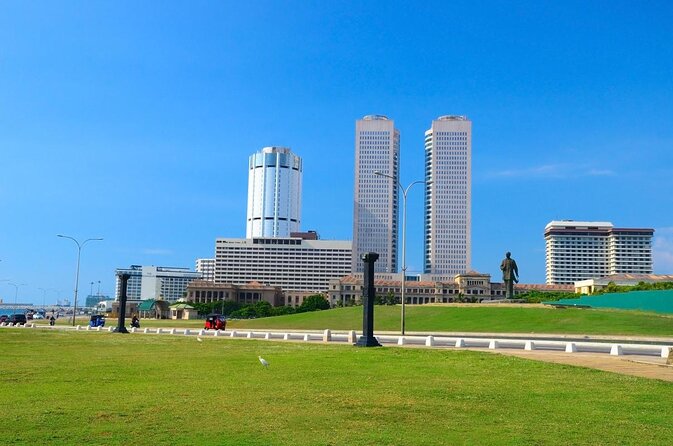
The tour starts at the Galle Face Hotel on Galle Road and returns there at the end. That makes the meeting point easy to identify, and the final location puts you directly in front of Galle Face Green, Colombo’s famous seafront gathering place.
The hotel itself is part of the lesson. Opened in 1875, the Grand Oriental Hotel was one of the first grand modern hotels in the East. Its earlier building was much simpler, but the hotel became a major colonial-era address with 154 luxury and semi-luxury rooms.
This is a good place to begin because the tour quickly establishes one of its main themes: Colombo is not one neatly preserved historic center. It is a city where British, Dutch, Portuguese, South Asian, Muslim, Buddhist, and modern commercial influences sit close together.
More Walking Tours in Colombo
- Glimpse Of Colombo City Walk
★ 4.5 · 11 reviews - Colombo Social and Political Walk
★ 5.0 · 4 reviews - Glimpse of Colombo Walking Tour
★ 5.0 · 2 reviews
Fort’s colonial buildings and royal prison cell
The first stop is the prison cell associated with King Sri Wickrama Rajasinghe, the last king of Sri Lanka. He was captured on February 18, 1815, in Madamahanuwara and transferred to Colombo without entering Kandy. The stop is brief, about 10 minutes, and there is no admission charge.
The value here is the political setting. Sri Lanka’s colonial story is not just a sequence of European buildings. It also involves the loss of the Kandyan kingdom and the movement of local power into British hands. Ajeet’s historical commentary is especially useful for connecting an ordinary-looking site with that larger shift.
From there, you move into Colombo Fort, the central business district. The streets are filled with colonial-era structures, government buildings, commercial offices, and reminders of the port city’s changing role. The walking format works well here because you can look up at façades, compare old and new buildings, and pause for questions instead of seeing everything through a bus window.
Dutch Hospital and Colombo Fort Clock Tower
The Old Colombo Dutch Hospital dates to the Dutch colonial period and is regarded as the oldest building in the Fort area. It has been restored as a heritage site with restaurants and shops, so it is both a historic building and a modern social space.
You spend about 10 minutes here. That is enough to understand the building’s importance, though not enough for a long meal or serious shopping. I would treat it as a short orientation stop rather than a major attraction in its own right.
The Colombo Fort Clock Tower comes next, with about five minutes for a look. It is a small stop, but it helps you understand how tightly packed the Fort sights are. The tower is noted for its unusual structure, and the surrounding streets provide a useful view of Colombo’s old commercial center.
This part of the walk is strongest when you enjoy details. If you prefer grand interiors and long visits at each attraction, the short pauses may feel rushed. If you like connecting several sites through a guide’s explanation, the pace makes sense.
Currency, department stores, and Colombo’s old commerce
The Central Bank Currency Museum occupies a Greco-Roman-style building whose construction began in 1911. At the time it opened, the building was Colombo’s tallest. Its colonnade and formal design give you another example of how colonial institutions presented authority through architecture.
The scheduled stop is about 10 minutes. The tour does not promise a long museum visit, so expect an exterior and historical explanation rather than a detailed examination of every exhibit.
Next comes Cargills Department Store, along with the old Cargills and Millers buildings. They are considered among Sri Lanka’s oldest department stores. The property first held a Dutch building, and the later commercial use reflects Colombo’s long connection with imported goods, retail, and the port.
You spend only about five minutes here. That may sound short, but the point is not to browse a department store. Ajeet uses the building to explain the city’s commercial development and the way old institutions remain part of modern Colombo.
The Titus Stores stop adds a smaller, more personal business story. Founded in 1924 as Titus Lamp Stores, the family-run company originally sold petrol lamps. When electricity became common in Sri Lanka, it shifted toward homeware and gifts. This is the sort of detail that gives the walk a human scale. Colombo’s past is not only found in official monuments. It also survives in long-running family businesses.
A different kind of day out entirely:
- Colombo: Private Tuk-Tuk City Tour with All Entry Fees
★ 4.9 · 2,154 reviews - Sri Lanka Personal Tour Driver in private vehicle
★ 5.0 · 747 reviews - Colombo Tuk Tuk City Tour -Sightseeing Entry Fees & Food Included
★ 5.0 · 678 reviews - Udawalawe National Park: Elephant Safari with Expert Guide
★ 4.9 · 641 reviews
Grand Oriental Hotel and the Red Mosque
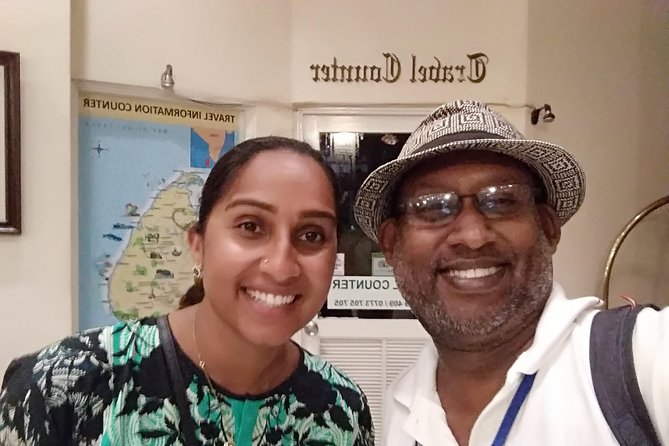
The Grand Oriental Hotel receives about 15 minutes, making it one of the longer Fort stops. Its opening in 1875 and its early role as a grand hotel reflect Colombo’s importance as a colonial port. Even if you are not staying there, the building helps explain how business, shipping, administration, and social life once gathered around the harbor district.
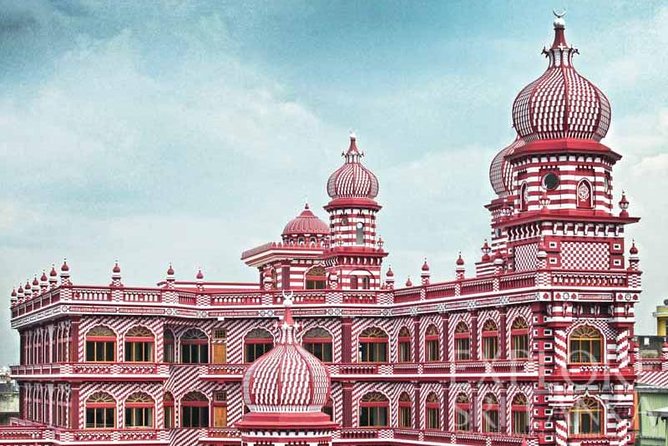
The walk then reaches Jami Ul-Alfar Mosque, commonly called the Red Mosque. The stop is brief, about five minutes. Its red-and-white exterior makes it one of Colombo’s most distinctive religious buildings, and its location near Pettah shows how close the city’s commercial and religious quarters are.
Because the stop is short, you should not expect an extended visit inside. The benefit is the setting and Ajeet’s explanation of the mosque’s place in Colombo’s diverse city life. This is a useful moment to ask questions about religious communities, architecture, and the way different traditions share the same urban space.
Pettah Bazaar and the Old Town Hall
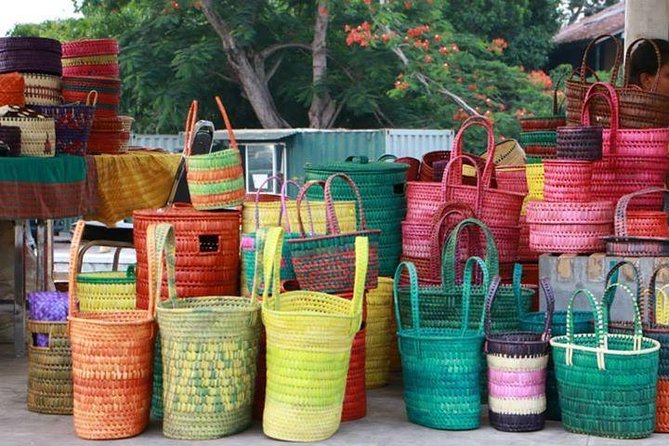
Pettah brings a clear change in mood. The route takes you through the busy markets of Pettah Bazaar, where shops, pedestrians, goods, and traffic create a very different experience from the formal streets of Fort.
This is one of the most valuable parts of the tour because you are not simply looking at Colombo’s past. You are seeing a working commercial district. The walk lets you observe the city at street level, with Ajeet helping you make sense of what you are seeing.
The Old Town Hall is another important Pettah stop. The large Gothic church-like building is easy to pass without realizing what it contains. You receive about 15 minutes here, and admission is included.
The contrast between the Old Town Hall and the surrounding market is the point. One represents civic architecture and official city life. The other is crowded, practical, noisy, and commercial. Put together, they show why Colombo cannot be understood through its grand buildings alone.
Pettah can also be the most tiring section. The streets are busy, the walking surface may demand attention, and you may need to keep close to the group. Wear shoes you can use comfortably for several hours and keep your belongings secure.
Fort Railway Station and Gangaramaya Temple
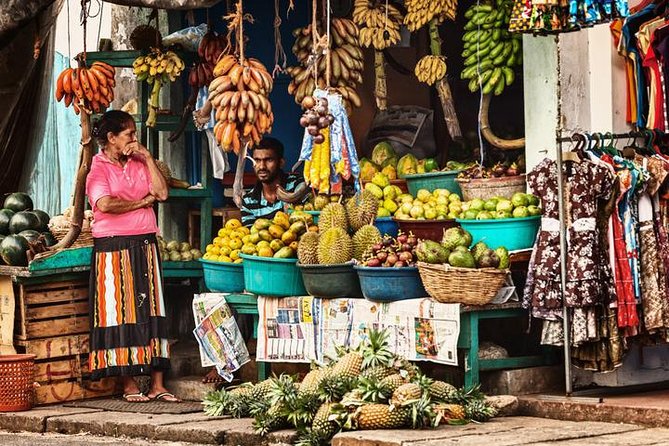
Colombo Fort Railway Station is a major transport hub built by the British. The stop lasts about 15 minutes and has included admission.
A railway station may seem less glamorous than a colonial hotel or mosque, but it gives you a better sense of how Colombo connects to the rest of Sri Lanka. The station is part of the city’s working infrastructure, not a preserved monument detached from daily life.
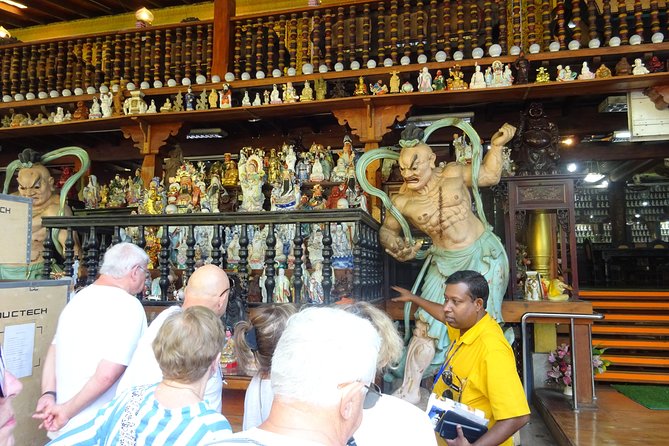
Gangaramaya Buddhist Temple receives about 20 minutes, the longest scheduled stop. Its architecture has been influenced by several cultures, giving it a very different appearance from the colonial buildings in Fort.
Temple admission is not included in the tour price. The payment is treated as a donation, with a ticket issued by the temple, and the stated cost is about $2 per person. Bring suitable clothing and behave respectfully, since this is an active place of worship rather than only a sightseeing stop.
Gangaramaya is where the tour’s cultural side becomes most direct. Ajeet can explain how Buddhism shapes Sri Lankan life, while the temple itself shows how religious spaces can gather objects and design influences from different places.
Returning to Galle Face Green
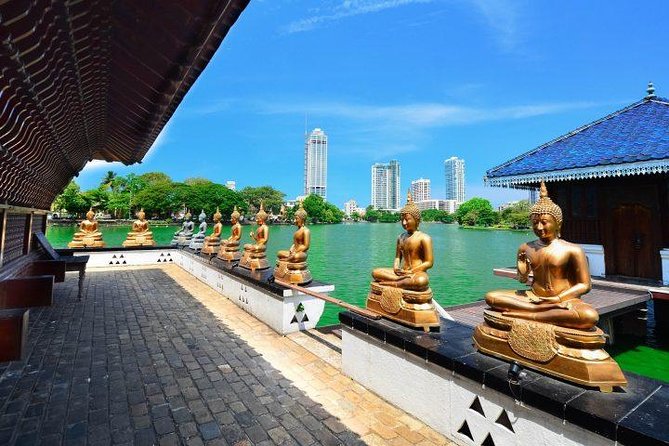
The final section returns you to the Galle Face Hotel and the open space of Galle Face Green. Depending on the time of day, you can see people using the Green and get a glimpse of its past through nearby landmarks such as the hotel and the Old Parliament building.
The Old Parliament building was constructed during British rule for the Legislative Council of Ceylon. Its Neo-Baroque design reflects the formal political world of the colonial period. Seen at the end of a walk through markets, temples, shops, and railway lines, it helps bring the tour’s historical themes together.
The finish is practical. You are back at the same point where you started, in front of Galle Face Green, with no need to find your way through an unfamiliar district. It is also a pleasant place to continue your own Colombo exploration afterward.
What Ajeet adds to the walk
The strongest part of this experience is Ajeet’s guiding style. He is praised for being patient, friendly, and willing to answer many questions. He covers Sri Lankan and Colombo history, architecture, culture, colonialism, and current national challenges.
That broad range is useful if you are visiting Sri Lanka at the start of a longer trip. One especially helpful feature is the chance to ask questions and receive suggestions beyond the fixed route. Ajeet has recommended restaurants before, and he has helped people reach a preferred drop-off point after the tour.
The tradeoff is clear. Ajeet gives substantial detail, and he may spend longer explaining a subject than some people expect. If you like a guide who tells a few quick facts and keeps moving, the commentary may feel heavy. If you want to understand why Colombo looks and functions as it does, the detail is a major part of the value.
The pace has also varied by experience. It is intended as a relaxed walk, and one account describes it as a slow, short stroll. Another describes an electric tuk-tuk ride between areas, so private transportation may sometimes be used to connect sections of the route. Ask about the plan when you book if the walking-to-transport balance matters to you.
Is $30 good value for three to four hours?
At $30, the tour is reasonably priced for a small-group city introduction. You receive three to four hours with a local guide, bottled water, snacks, government fees, and private transportation. The group limit of eight is important because it gives the experience a more personal feel than a large city coach tour.
The value is less about admission tickets. Most stops are free, and the only stated extra is the roughly $2 temple donation. You are paying mainly for the route, the interpretation, the chance to ask questions, and the ease of moving between districts.
For a first visit, that can be money well spent. The route covers Fort, Pettah, a Buddhist temple, a mosque, old businesses, a railway station, and the seafront. You gain a broad working picture of Colombo in one morning or afternoon.
I would not choose it if you want long interior visits at every building. The schedule includes many stops, and several receive only five or 10 minutes. Think of it as a guided city orientation with historical depth, not a series of full museum tours.
Practical advice for a comfortable outing
The tour requires good weather and may be canceled if conditions are poor. If that happens, you are offered another date or a full refund. A minimum number of participants also applies, with the same choice of an alternative or refund if the tour cannot run.
Wear comfortable shoes. The route includes several hours outdoors, and the hot Colombo weather can make the final part tiring. Carry extra water even though a bottle is supplied, and bring a small snack if you know you need regular breaks.
The tour is near public transportation, and most people can participate. Confirmation arrives at booking, and the mobile ticket is convenient for a day of sightseeing.
Free cancellation is available up to 24 hours before the start time. Cancellations or changes made less than 24 hours before the start are not refunded or accepted, and the cut-off follows local time.
Who should book the Colombo walking tour?
You should book if you want a strong first look at Colombo, enjoy asking questions, and prefer street-level sightseeing to a sealed vehicle. It suits people who want the city’s colonial buildings placed beside its markets, religious sites, old businesses, and current social life.
It is also a good fit for cruise passengers or visitors with limited time. The start and finish at the Galle Face Hotel simplify the day, and the route gives you enough background to decide what deserves a longer return visit.
You may want another option if you dislike long explanations, struggle in hot weather, or want a fast list of photo stops. The tour’s best feature is also its main caution: Ajeet has a lot to say, and he takes the city seriously.
With a 4.9 rating from 43 reviews and 95 percent recommendation, the experience has a strong record. My advice is to book it early in your Colombo stay, wear good shoes, bring water, and tell Ajeet what interests you. That small conversation can help turn a detailed walk into a very useful introduction to Sri Lanka.
FAQ
How long does the Colombo walking tour last?
The tour lasts approximately three to four hours.
What is the price of the tour?
The listed price is $30.
Where does the tour start?
The tour starts at the Galle Face Hotel, 2 Galle Road, Colombo 00300, Sri Lanka.
Where does the tour end?
It ends at the Galle Face Hotel, in front of Galle Face Green.
How many people can join the tour?
The tour has a maximum group size of eight travelers.
Is bottled water included?
Yes. Bottled water and snacks are included.
Is transportation included?
Yes. Private transportation is included. The experience is mainly a walking tour, and an electric tuk-tuk ride between areas has also been included on at least one tour.
Is entry to Gangaramaya Temple included?
No. Temple entry is treated as a donation and costs about $2 per person. A ticket is issued by the temple.
Can I cancel for a full refund?
Yes, if you cancel at least 24 hours before the experience start time. Cancellations made less than 24 hours before the start are not refunded.
What happens if the weather is poor?
If poor weather causes cancellation, you are offered a different date or a full refund.
Just added in Colombo
- Yala National Park (Day Tour)★ 5.0 · 5 reviews
- Water Amusement and Karting★ 5.0 · 1 review
- Wake Boarding in Bentota★ 5.0 · 1 review
- Udawalawe Jeep Safari from Bentota Aluthgama Berawula Area★ 5.0 · 1 review
- Madu River Sunrise Mangrove Kayaking★ 5.0 · 5 reviews
- Udawalawa National Park Day Tour★ 4.5 · 5 reviews
- Half Day Udawalawe Safari from Kalutara (Entrance + Lunch)★ 5.0 · 9 reviews
- Sigiriya and Dambulla Day Tour from Kalutara All Inclusive★ 5.0 · 2 reviews
Walking Tours, compared.
Galle Fort Heritage Walk by a Certified Heritage Interpreter
Read our review →
Browse the lists this tour appears in