
Review · GALLE FORT TOURS
Galle Fort Walk with Glamorous Stories
Galle’s walls tell better stories than its streets. This 90-minute to two-hour walk brings the fort’s Portuguese, Dutch, and English past to life, with local guide Dilip leading you from Flag Rock through bastions, churches, old trade routes, and the Dutch Hospital. I especially like the small maximum of six people and the strong focus on stories rather than a quick checklist of sights.
I also like the human details: soldiers reduced to eating cats and dogs during a siege, Dutch ship bricks reused in the fort, and the walls protecting Galle during the 2004 tsunami. The main consideration is the weather. You walk outdoors, and water, hats, and umbrellas are not provided, so come prepared.
In This Review
- Key points to know before you book
- Why Galle Fort rewards a guided walk
- Starting at Flag Rock Bastion
- Portuguese beginnings and the name Galla
- The front wall, Clock Tower, and three bastions
- Ammunition stores, tunnels, and cooling walls
- Dutch rule, treaties, and ship ballast
- The Dutch Reformed Church and colonial daily life
- Dutch Hospital food stops and a fort still in use
- The 2004 tsunami and the strength of the walls
- How the timing and group size affect the experience
- Weather, clothing, and what to bring
- Is $35 a fair price for Galle Fort?
- Who should book this Galle Fort walk?
- My verdict: book for stories, not just sights
- FAQ
- Where does the Galle Fort walk begin?
- Where does the tour end?
- How long does the walking tour last?
- What language is the tour conducted in?
- Is the tour private?
- Is transportation included?
- Are food and drinks included?
- What should I bring for the weather?
- Can I cancel for a full refund?
Key points to know before you book
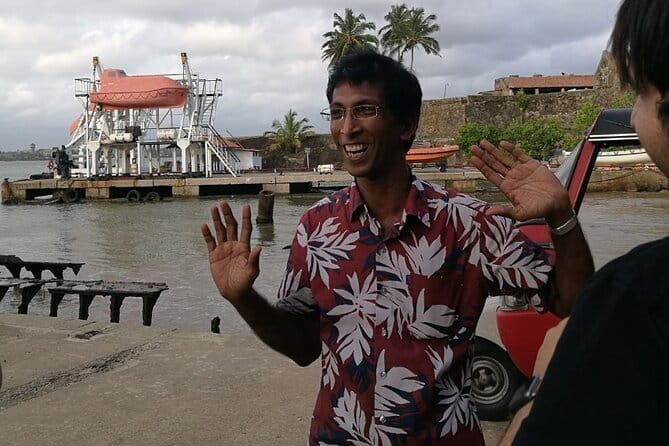
- A local guide named Dilip leads the walk: He has lived in the Galle area all his life and speaks English well.
- The fort’s military past takes center stage: Expect bastions, cannon positions, an ammunition store, tunnels, and siege stories.
- The group is capped at six people: If enough people book the same time slot, it may become a shared tour rather than a private walk.
- The 2004 tsunami is part of the story: You’ll learn how the fort walls survived while much of Galle City suffered major damage.
- The route begins and ends at Flag Rock Bastion: Arrange your own transport back to your hotel or onward stop.
- The $35 price buys context, not transport: It is fair value if you want a personal guide, but less useful if you only want a short independent stroll.
Why Galle Fort rewards a guided walk
Galle Fort is easy to enter and easy to wander. That is also the problem. Without context, you can pass a church, bastion, wall, or old warehouse and see only weathered stone. A good guide helps you understand why those pieces are there and how different powers used the same small peninsula.
This walk covers roughly 400 years of change. The route connects the Portuguese arrival, the Dutch takeover, later British influence, trade across the Indian Ocean, and the fort’s life today. You are not simply looking at colonial buildings. You are following the practical reasons behind them: defense, shipping, storage, religion, administration, and trade.
Dilip’s approach appears especially suited to people who like questions and local stories. He has been praised for explaining buildings in detail, answering questions fully, and making the fort easy to understand. That matters in Galle, where a guide can turn a plain wall into evidence of a siege, a treaty, or a changing trade system.
The pace is described as relaxed rather than rushed. You should have time to look up at the architecture, walk the lanes, and pause at key points. Families with children aged 11 and 13 have enjoyed the experience, and solo visitors have also been paired with another person for a smaller shared outing.
More Walking Tours in Galle
- Galle Fort Walking tour
★ 4.9 · 285 reviews - Galle Fort Walking Tour with a Resident
★ 5.0 · 88 reviews - Galle Fortt Guided Walking Tour with a Local
★ 4.9 · 33 reviews
Starting at Flag Rock Bastion
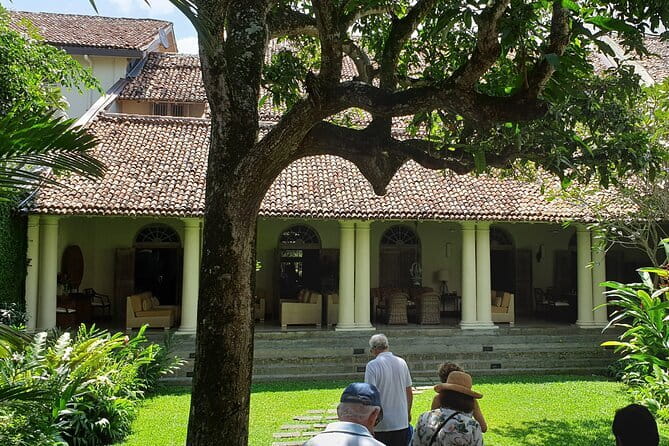
The meeting point is Flag Rock Bastion, at 26F8+FXH, Galle 80000. The route also finishes there, which keeps the plan simple, but it means you need to arrange your own transport afterward. The tour does not include private transport.
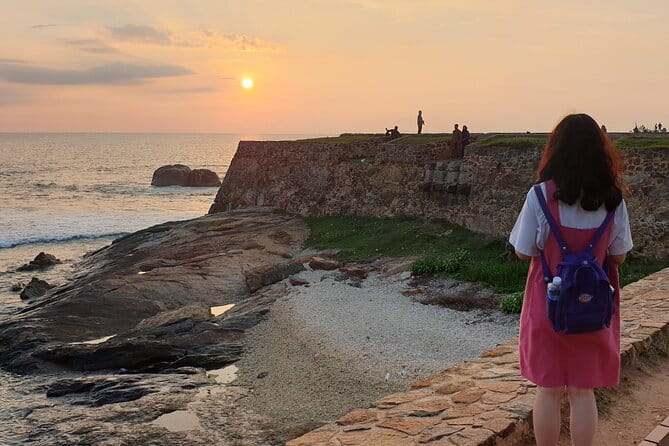
Flag Rock gives the walk a fitting start. It sits at the edge of the fort beside the sea, near the old lighthouse area and the fort’s outer defenses. From here, the guide can place Galle on the map: a fortified port facing the Indian Ocean, shaped by ships, trade, and military rivalry.
The old lighthouse ruins and Flag Rock area also connect to the fort’s later years. At some times of day, you may finish near the lowering of the fort flag and sunset. That timing is not guaranteed by the tour details, so ask when booking if this is important to you.
Public transportation is nearby, but the meeting point is still worth checking carefully before you set out. A map pin is provided, and starting at the correct bastion will save you from a hot, unnecessary search along the ramparts.
Portuguese beginnings and the name Galla
One of the early stories concerns the origin of the name Galla. The tour also explains how the ancient cinnamon trade, once strongly linked to Chinese merchants, was later controlled by the Portuguese.
That shift is a useful way to understand Galle. The fort was not built in isolation. It grew from the value of the harbor and the goods moving through it. Cinnamon made the area important to outside powers, while the harbor gave ships a place to anchor and trade.
You will hear about Portuguese clay fortifications before the Dutch replaced them with heavier stone walls. The contrast helps explain what you see underfoot and along the perimeter. The fort is not one single project from one single era. It is a layered military and commercial site, altered as European powers competed for control.
The stories also include Portuguese sieges and the grim claim that soldiers survived for three months by eating cats and dogs. That detail is memorable because it strips away the polished feel of colonial architecture. Behind the church facades and orderly streets was a hard military post where food could run out.
The front wall, Clock Tower, and three bastions

The front wall and its three bastions show how the fort was designed to control access. The Clock Tower adds a later civic marker to what began as a defensive stronghold.
You will spend time looking at the relationship between wall, bastion, and open sea. A bastion is more than a thick corner. Its shape allowed defenders to protect the wall beside it, reducing blind spots. A guide can make that geometry easier to read than a plaque can.
The fort’s scale is also easier to grasp from the walls. You see streets, roofs, public buildings, and the ocean in one view. The result is a strong sense of a town that remains part of daily life, rather than a fenced-off ruin.
The walk does not promise a dedicated sightseeing stop at every building, so keep your expectations realistic. It is a story-led tour through the main positions, not a formal architectural survey with lengthy interior visits.
More Galle Fort walks:
- Galle Fort cooking class
★ 5.0 · 60 reviews - Galle Fort Heritage Walk by a Certified Heritage Interpreter
★ 5.0 · 31 reviews - Galle Fort and City Cycling Tour – Choice of E-Bike or Manual
★ 5.0 · 28 reviews - Galle Fort Walk with a Local
★ 4.5 · 7 reviews
Ammunition stores, tunnels, and cooling walls

The ammunition store and its tunnel are among the more intriguing parts of the route. Military buildings often look plain from the outside, but their purpose becomes clearer when you learn how supplies were stored and moved.
The tour also covers hidden tunnels and coral cooling walls. These details show the practical side of life inside the fort. Walls were not only defensive barriers. Materials and construction methods helped buildings cope with heat, storage needs, and the movement of people and goods.
You may find this section most rewarding if you enjoy how old buildings work. It is less about grand views and more about the clever, sometimes rough solutions used in a fortified port.
The phrase hidden tunnels should not lead you to expect a long underground exploration. The information confirms an ammunition-store tunnel, but not the extent of access or how much time you spend inside. Treat it as a feature explained along the route rather than a separate adventure.
Dutch rule, treaties, and ship ballast

The Dutch period brings some of the tour’s sharpest political stories. You will hear how the Dutch replaced the Portuguese and allegedly used two copies of treaties to outmaneuver a local king.
The tour also explains VOC trade, referring to the Dutch East India Company and its commercial reach. Galle’s walls, warehouses, and harbor make more sense when you connect them to this wider trading system.
Look for ballast bricks from Dutch ships. Ballast was used to help ships sit safely in the water, and heavy materials could later be reused on land. Bricks left in the fort are a small but telling link between maritime travel and local construction.
These details give you something concrete to watch for. Instead of hearing only about distant empires, you can connect trade to the actual material in the walls and buildings around you.
The Dutch Reformed Church and colonial daily life

The Dutch Reformed Church, dated 1755, is one of the route’s key landmarks. Its origin story is unusually personal: it was built as a vow connected with the birth of a child.
That story adds a human touch to a building often discussed only in terms of empire and religion. The church also helps show how colonial authority operated beyond military walls. Worship, administration, family life, and commerce all occupied the same compact settlement.
Dilip’s strength appears to be explaining the buildings as part of a connected town. You can ask about Portuguese, Dutch, and English influences while walking through the streets, rather than treating each period as a separate lesson.
The tour information does not promise guaranteed interior access to the church. Plan on seeing and discussing the building from the route, with entry dependent on conditions at the time.
Dutch Hospital food stops and a fort still in use
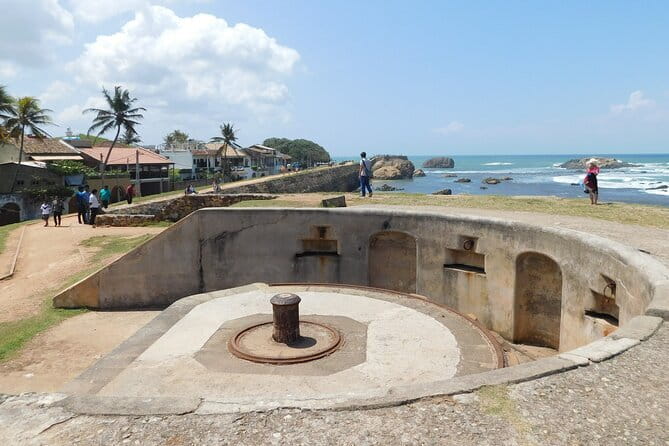
The Dutch Hospital is now a food hub, giving you a clear example of adaptive reuse. Its current role makes the fort feel lived in rather than frozen in the colonial past.
You can enjoy the contrast between old walls and present-day dining, but food and drinks are not included in the $35 fee. The walk is about interpretation, not a tasting tour, so budget separately if you want to stop afterward.
This is also where the tour makes a useful point about foreign investment. Galle Fort attracts money from outside Sri Lanka, and that investment can help preserve old buildings while also changing how the area functions.
I appreciate that the experience does not present the fort as a simple success story. Preserving a UNESCO World Heritage Site costs money, but new commercial uses can alter local life. You get a better view of Galle when you see both sides.
The 2004 tsunami and the strength of the walls
The tsunami story is one of the walk’s most valuable modern chapters. On December 26, 2004, waves devastated large parts of Galle City, while the fort’s walls helped shield the historic area.
The point is not that the fort escaped all harm or that stone can stop every disaster. Rather, the old defensive structure changed the impact of the water. It gives the walls a present-day meaning beyond colonial warfare.
This part of the route links the past to something still close in local memory. You are not only hearing about Portuguese and Dutch decisions from centuries ago. You are learning how the same structure affected the city in living memory.
For me, this is the sort of detail that justifies taking a guided walk. You can see a wall by yourself, but the guide helps you understand why it mattered during a modern catastrophe.
How the timing and group size affect the experience
The advertised duration is about 90 minutes to two hours. That is long enough for a useful introduction to Galle Fort without taking over your day.
An early morning start can be a smart choice. One outing began early and was praised for its pleasant pace and clear explanations. Morning light can also make walking more comfortable, though the tour does not promise a particular temperature or weather condition.
The maximum group size is six. That is small enough for questions and easier conversation, but it is not always private. If several people book the same time block, you may share the guide with the rest of the group.
Solo visitors should know that Dilip may pair them with another solo participant. That can work well if you like company, but it is worth asking if you require a private walk.
Allow for moderate physical fitness. You will walk through streets and along fortifications, and the experience takes place outdoors. No special mobility information is provided, so contact the provider before booking if you have concerns about the route.
Weather, clothing, and what to bring
Rain can change the experience quickly. The walk has continued during poor weather, and Dilip has helped people find shelter during a thunderstorm, but that does not mean conditions will always be comfortable or that the full route will continue.
Bring your own bottled water. Hats and umbrellas are not supplied, and the tour description specifically warns you to arrange them yourself. A small umbrella or rain layer is sensible during wet weather, while sun protection matters during a bright afternoon.
Comfortable walking shoes are a practical choice, though the tour does not set out a formal packing list. You may also want a little time before the start to find the Flag Rock meeting point without rushing.
Free cancellation is available if you cancel at least 24 hours before the local start time. Changes or cancellations inside that window are not accepted for a refund.
Is $35 a fair price for Galle Fort?
At $35 per person, this is not the cheapest way to walk around Galle Fort. You can see the walls and streets without paying for a guide.
The value comes from the interpretation. Dilip connects the harbor, trade, treaties, military buildings, church, tunnels, ship bricks, tsunami, and modern investment into one readable story. If you would otherwise spend two hours looking at buildings without knowing what you are seeing, the fee is reasonable.
The small group limit improves the value. A six-person maximum gives you a better chance to ask questions than a large coach tour, though the tour may still be shared and does not include transport, drinks, food, or equipment.
I would book it for a first visit, especially if you care about history, architecture, or local stories. If you already know Galle Fort well, or only want photographs at your own pace, the price may be harder to justify.
Who should book this Galle Fort walk?
This experience suits you if you want a clear introduction to the fort and prefer a relaxed walk to a long lecture. Families can use the siege and tsunami stories to keep younger people interested, while solo visitors may enjoy the small-group format.
It is also a good match for anyone who wants more than European colonial names. The tour includes local kings, Chinese trade, Sri Lankan cinnamon, treaty tricks, present-day investment, and the fort’s connection to Galle City.
You should think twice if you dislike outdoor walking, need guaranteed shelter, or expect a private tour regardless of demand. You also need to arrange your own return transport from Flag Rock.
My verdict: book for stories, not just sights
I would recommend this walk for a first or second visit to Galle Fort. Dilip’s local perspective, strong English, patient pace, and ability to answer questions are the main reasons to choose it.
Book it if you want to understand why the walls, bastions, church, tunnel, and old harbor matter. Skip it if your plan is simply to wander, eat at the Dutch Hospital, and take sunset photos without a guide. For most first-time visitors, $35 is a fair trade for turning a beautiful fort into a place you can actually read.
FAQ
Where does the Galle Fort walk begin?
The walk begins at Flag Rock Bastion, located at 26F8+FXH, Galle 80000, Sri Lanka.
Where does the tour end?
The tour ends at Flag Rock Bastion, the same place where it begins. You need to arrange your own transportation afterward.
How long does the walking tour last?
The experience lasts approximately 90 minutes to two hours.
What language is the tour conducted in?
The tour includes an in-person English-speaking guide.
Is the tour private?
Not always. If several people book the same time block, the tour may be shared. The maximum group size is six people.
Is transportation included?
No. Private transportation is not included, and you are responsible for arranging transportation back to your accommodation after the walk.
Are food and drinks included?
No. Bottled water is not included, and the tour does not list food or drinks as included features.
What should I bring for the weather?
Bring your own water, hat, and umbrella if needed. Hats and umbrellas are not supplied, and the walk can be affected by rain.
Can I cancel for a full refund?
Yes, if you cancel at least 24 hours before the experience start time. Cancellations or changes made less than 24 hours before the start are not accepted for a refund.
Just added in Galle
- Sri Lankan Cooking with Tricks★ 5.0 · 1 review
- Private Transfer and Whale Watching Tour from Hikkaduwa and Galle★ 5.0 · 1 review
- Udawalawa National Park Safari trip from Hikkaduwa/Galle/Weligama★ 4.5 · 7 reviews
- Surfing Lessons★ 4.5 · 7 reviews
- Airport Transfer by Hikkaduwa Taxi Service★ 5.0 · 5 reviews
- Sinharaja Rainforest Trip★ 5.0 · 7 reviews
- One Day Udawalawe Safari from Galle/Mirissa/Unawatuna/Hikkaduwa★ 5.0 · 10 reviews
- Hikkaduwa/ Galle/ Mirissa : With Udawalawe safari – Day trip★ 5.0 · 2 reviews
Galle Fort Tours, compared.

Galle Fort Heritage Walk by a Certified Heritage Interpreter
Read our review →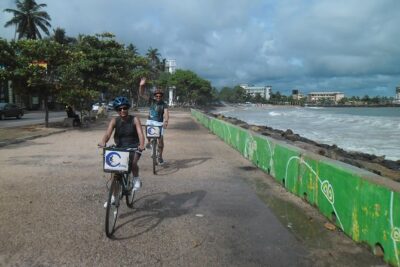
Galle Fort and City Cycling Tour – Choice of E-Bike or Manual
Read our review →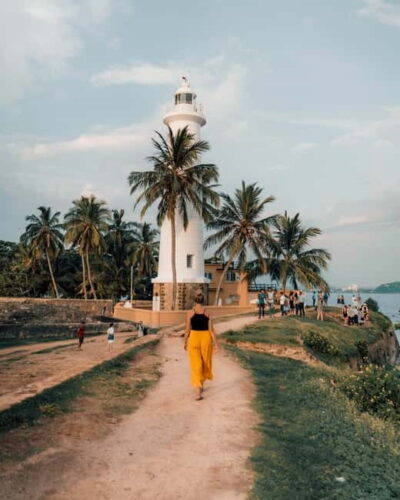
From Colombo to Galle Fort and Unawatuna Beach Day Trip
Read our review →
From Colombo to Galle Fort and Jungle Beach Day Trip
Read our review →
Galle Fort, Boat Safari, Turtles, Amazing Group Tour
Read our review →Browse the lists this tour appears in