
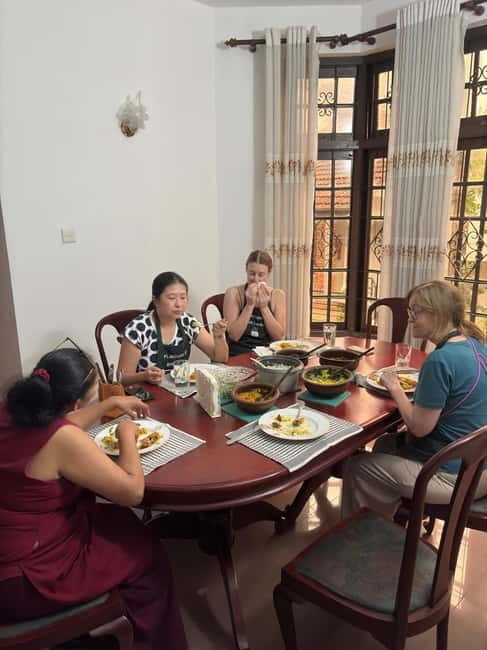
Review · KANDY TOURS
Kandy: Flavours of Sri Lanka by Chitra
Sri Lankan curry begins in the garden. Chitra’s three-hour cooking class turns a home kitchen into a friendly lesson in local food, from picking vegetables to grinding homemade curry powder and cooking five curries in clay pots. You do not just sit and watch. You crack coconuts, scrape them, extract the milk, and help prepare a full rice-and-curry meal.
I like the fresh garden ingredients and the hands-on work, especially the coconut milk process that many visitors never see. I also like the small-group setting, limited to 10 people, which gives the class a personal feel. The main consideration is that this is not a good fit for wheelchair users or people with mobility, hearing, or visual impairments.
In This Review
- Key points to know before booking
- Starting at the green parapet wall in Kandy
- Picking vegetables from Chitra’s home garden
- Learning what makes a Sri Lankan curry
- Cracking coconuts and extracting fresh milk
- Cooking five curries in traditional clay pots
- Sharing rice, curry, and local life
- Is $30 good value for three hours?
- Who will enjoy this cooking class most?
- A few limits to keep in mind
- Should you book Flavours of Sri Lanka by Chitra?
- FAQ
- How long does the cooking experience last?
- How much does the class cost?
- What food will be prepared?
- Is coconut milk made during the class?
- What language is the instruction in?
- Where is the meeting point?
Key points to know before booking
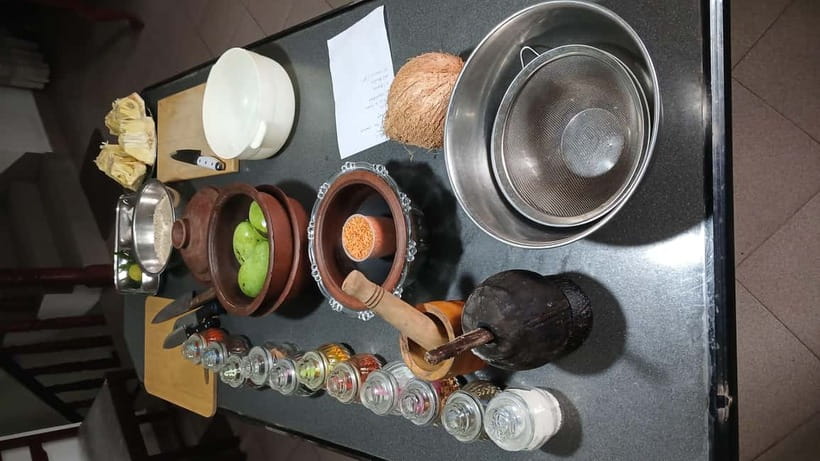
- Garden-to-table cooking: Pick fresh vegetables and other ingredients from Chitra’s home garden before cooking.
- Five curries in three hours: Prepare a complete Sri Lankan meal with rice and five curries, adjusted to your dietary preferences.
- Coconut milk from scratch: Crack and scrape coconuts, then extract the milk used in Sri Lankan cooking.
- Traditional clay pots: Cook the curries in local clay pots with homemade curry powder.
- A small, personal class: The group is capped at 10 people, and instruction is in English.
- A $30 local experience: For the price, you get a meal, practical cooking skills, and conversation about Sri Lankan culture and daily life.
Starting at the green parapet wall in Kandy
The meeting point is easy to identify by a green parapet wall and a name board marked 46, Major General Nimal Dembatapitiya. Since this is a home-based experience rather than a large cooking school, take a moment to check the address carefully before setting out.
The class lasts three hours. That is enough time for the garden visit, ingredient preparation, cooking, and the meal, but it is not a leisurely full-day food tour. You will spend most of the time doing rather than listening, so wear comfortable clothes and shoes that you do not mind using in a working kitchen.
The group size matters here. With no more than 10 participants, Chitra can explain the steps and help with practical tasks. A larger class might turn coconut scraping or spice preparation into a demonstration from the back of the room. This format should feel more direct and useful.
English is the listed teaching language. The experience is aimed at people who want to learn through conversation and action, with food providing the common ground.
A few more options to weigh up in Kandy
- Kandy Private Guided City Tour by Tuk Tuk
★ 4.9 · 1,307 reviews - From Kandy: Sigiriya Rock & Dambulla Cave Temple Adventure
★ 4.9 · 785 reviews - Kandy Village Cooking Class
★ 5.0 · 536 reviews
Picking vegetables from Chitra’s home garden
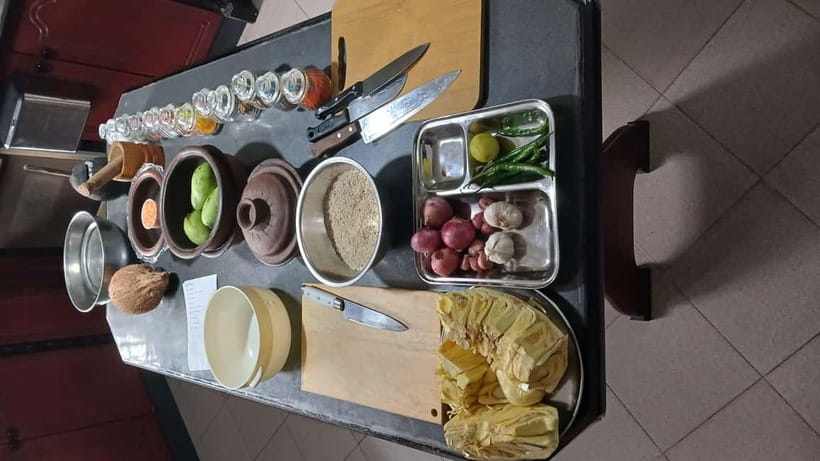
The class begins in the garden, where you pick fresh, organic vegetables and other ingredients for the meal. This is a small but important part of the experience because it shows where the cooking starts. Sri Lankan food is not only about a finished curry on a plate. It is also about choosing ingredients and matching them with spices, coconut, and cooking methods.
The garden visit gives you a practical connection to the food. Instead of receiving a neat bowl of pre-cut produce, you take part in selecting what will be used. The exact vegetables are not specified, and that is part of the home-cooking character. Your meal may reflect the ingredients available that day and your dietary preferences.
I like this opening because it avoids the polished feel of a staged cooking show. The food begins with ordinary produce, a garden, and a local kitchen. You get a better sense of how a home meal comes together.
There is one practical point to keep in mind. The experience is not suitable for people with mobility impairments, wheelchair users, or those with visual impairments. Because the activity includes a garden visit and hands-on kitchen work, you should be comfortable moving through these spaces without specialized support.
Learning what makes a Sri Lankan curry
After picking ingredients, Chitra introduces the curries and the spices used to prepare them. The value here is not simply learning a recipe. You get a look at the balance of ingredients and the traditional approach behind Sri Lankan curry.
The class includes advice about cooking that you may not find in a standard restaurant meal. You learn how the ingredients are prepared, how homemade curry powder is made, and how the different parts of the meal work together. The description does not list every spice or provide a fixed menu, so you should not book this expecting a precise recipe for one named curry.
That flexibility is useful if you have dietary needs. The meal can be prepared according to your dietary preferences, and the class is described as suitable for all dietary preferences. It is still wise to explain your needs clearly when booking or at the start of the session, since the final dishes depend on what you can eat.
Making curry powder is one of the most worthwhile parts of the class. Store-bought spice blends can make curry seem like a single flavor. Preparing a homemade blend helps you understand that the seasoning is built in stages, with each spice contributing something different.
Cracking coconuts and extracting fresh milk
The coconut work is where this class becomes more than a basic cooking lesson. You crack the coconuts, scrape the flesh, and extract coconut milk for the curries. It is a physical task, but it also explains a key part of Sri Lankan food.
Coconut milk adds body and softness to many curries. Seeing it made from a whole coconut gives you a better idea of the work behind a home meal. It also makes clear why fresh preparation matters. The process takes hands-on effort, and you should expect to use your hands rather than simply watch Chitra do it.
This is an especially good detail for anyone interested in food traditions. A restaurant can serve a delicious coconut-based curry, but it usually does not show you how the coconut reached the pot. Here, the preparation is part of the lesson.
The class also includes every step of the meal preparation. You are not limited to stirring one pot while someone else handles the important work. The exact amount of participation will depend on the group, but the experience is designed around hands-on cooking.
A different kind of day out entirely:
- Kandy to Ella Train Tickets – Reserved Seats
★ 4.5 · 523 reviews - From Kandy: Pinnawala Day Tour
★ 4.8 · 331 reviews - Kandy to Ambuluwawa & Kandy City Guided Tuk Tuk Day Tour
★ 4.8 · 270 reviews - Day tour to Sigiriya & Dambulla from Kandy
★ 5.0 · 252 reviews
Cooking five curries in traditional clay pots
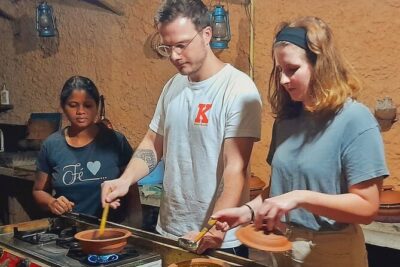
The main meal is rice with five curries, cooked in traditional clay pots using homemade curry powder. Five curries may sound like a large meal for a three-hour class, but the point is to show the range of a Sri Lankan rice-and-curry plate rather than focus on one dish.
Cooking in clay pots adds a traditional element and may change the pace of the session. The pots connect the meal to local home cooking, rather than presenting the food as a modern cooking-school exercise. You also get to see how several dishes are prepared as part of one shared meal.
The menu is not fixed in the information provided. That can be a benefit if you want a meal shaped around your preferences, but it means you should not expect a printed list of five specific curries in advance. If you have strong likes or dislikes, tell Chitra early.
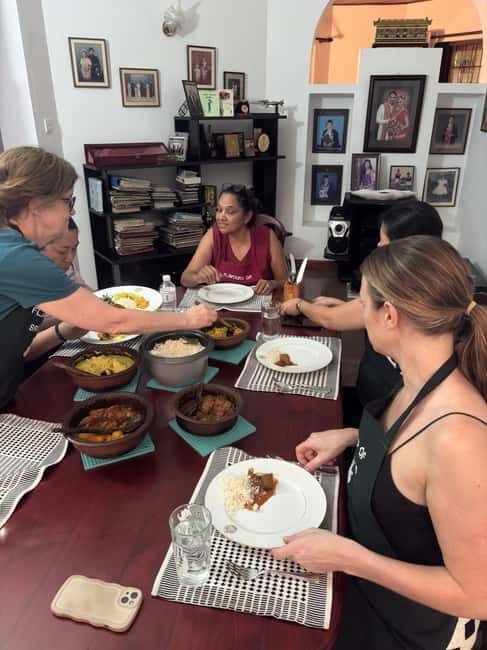
The final meal gives the class a clear payoff. You have worked with the ingredients, made the curry powder, prepared the coconut milk, and cooked the dishes. Sitting down to eat what you helped make is more satisfying than receiving a meal at the end of a demonstration.
Sharing rice, curry, and local life
The meal is also a chance to talk with Chitra about Sri Lankan history, culture, and lifestyle. This conversation adds context to the food without requiring a separate lecture. You can ask about the ingredients, the cooking methods, and the place rice and curry hold in everyday life.
The warm welcome is a major part of the experience. Chitra’s approach comes across as personal and generous, with the kitchen and garden forming the setting rather than a commercial venue. A June 2025 booking praised her welcome, the fresh garden ingredients, and the flavorful rice and curry meal, which matches the strongest features of the class.
I would choose this experience if you want cultural exchange along with cooking. It is less suitable if you only want to collect a recipe quickly and leave. The conversation over the meal is part of the value, so allow yourself to take part rather than treating the class as a rushed checklist.
The small group should help here. Ten people is still large enough for different personalities, but small enough for a shared meal and direct conversation. If you prefer private instruction, note that the experience is small-group rather than explicitly private.
Is $30 good value for three hours?
At $30 per person, the price is reasonable for what is included. You receive a garden visit, ingredient picking, a cooking lesson, practical work with coconut and spices, use of a local kitchen, a full meal, and cultural conversation.
The value is strongest if you care about participation. You are paying for more than five curries. You are also getting access to household cooking methods, homemade curry powder, traditional clay pots, and a meal prepared with ingredients from the home garden.
It is less compelling if you mainly want to eat. Kandy has restaurants where you can find rice and curry for less, but a restaurant meal will not normally include the garden work, coconut milk extraction, or instruction from the cook.
The meal can follow your dietary preferences, which makes the price more attractive for people who need some adjustment. Still, the provided information does not promise a specific number of special-diet dishes or separate cooking equipment, so explain your requirements before the session.
The class also offers free cancellation up to 24 hours before the start time and a reserve-now, pay-later option. Those terms make it easier to fit the activity around changing plans, but check the available start times before booking because the three-hour duration is not tied to one universal departure time.
Who will enjoy this cooking class most?
I would recommend Chitra’s class to food-focused visitors who want a close look at Sri Lankan home cooking. It suits curious cooks, couples, solo visitors comfortable in a small group, and anyone who values a meal with conversation as much as the food itself.
It is also a good choice for people who want to understand ingredients rather than memorize a recipe. Picking vegetables, making curry powder, and extracting coconut milk give you useful reference points when you later order or cook Sri Lankan food elsewhere.
The class is not suitable for children under 2 or babies under 1 year. People with mobility impairments, wheelchair users, and people with visual or hearing impairments are also listed as unsuitable for the activity.
You should bring a camera if you want to record the garden, ingredients, or cooking process. Wear comfortable clothing and shoes, and expect to work around spices. Smoking, vaping, alcohol, drugs, intoxication, pets, and sharp objects are not allowed. Assistance dogs are allowed, although the activity is otherwise not suitable for pets.
A few limits to keep in mind
The strongest details are clear, but some practical information is not provided. You are not given a fixed menu, a detailed list of spices, transport, or the exact garden layout. If you need those details, ask Chitra before confirming.
The class is in a private home, using the host’s own kitchen supplies. That is part of its charm, but it also means you should expect a real home environment rather than a purpose-built cooking studio with restaurant-style facilities.
The three-hour schedule should keep the experience focused, though the garden visit, coconut preparation, and five curries leave little room for a long pause. Arrive ready to participate. Comfortable shoes and clothes will make the practical work easier.
The single published rating is five out of five, with special praise for Chitra’s welcome, garden-fresh ingredients, and rice-and-curry meal. That is a positive sign, but it is still a small amount of feedback. I would judge the class mainly by the clear format and the personal nature of the experience, not by the rating alone.
Should you book Flavours of Sri Lanka by Chitra?
Book it if you want to cook a real home-style meal, learn how curry powder and coconut milk are made, and spend time talking with a local host. The combination of a garden, hands-on preparation, clay-pot cooking, and five curries gives the class more substance than a short demonstration.
Skip it if you need step-free access, formal cooking-school facilities, a guaranteed named menu, or a fully private lesson. For everyone else, $30 is a fair price for three hours of food, instruction, and cultural conversation in Kandy.
FAQ
How long does the cooking experience last?
The experience lasts three hours.
How much does the class cost?
The price is $30 per person.
What food will be prepared?
You will prepare rice and five curries. The meal can be made according to your dietary preferences.
Is coconut milk made during the class?
Yes. You will crack coconuts, scrape them, and extract the coconut milk used in Sri Lankan cooking.
What language is the instruction in?
The instructor teaches in English.
Where is the meeting point?
Meet at the green parapet wall with the name board 46, Major General Nimal Dembatapitiya.
Just added in Kandy
- Day Tour of Nuwara Eliya★ 5.0 · 3 reviews
- Full day Kandy City Tour by Tuk Tuk★ 5.0 · 1 review
- Day Tour Kandy to Sigiriya with Dambulla Cave Temple Excursion★ 5.0 · 3 reviews
- Day Tour for Outdoor and Adventure Lovers★ 4.5 · 4 reviews
- Culture Tour in Kandy★ 5.0 · 1 review
- Dambulla, Sigiriya and Pidurangala Tour from Kandy★ 5.0 · 9 reviews
- Ambuluwawa Tower and Kandy City Tuk Tuk Tour with Epic views★ 5.0 · 9 reviews
- Kandy to Nallathanniya (Climb Adams Peak)★ 5.0 · 1 review
Kandy Tours, compared.




Kandy to Sigiriya Day Tour and Dambulla cave temple with private vehicle
Read our review →
Browse the lists this tour appears in