
Review · COOKING CLASSES
Kandy Village Cooking Class
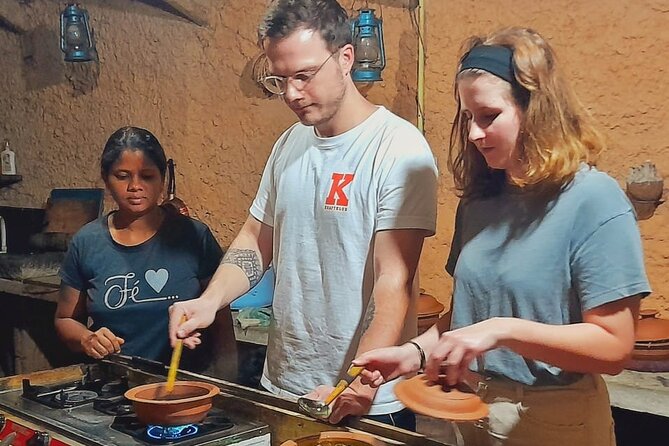
Come hungry, leave with recipes. The Kandy Village Cooking Class combines a local market visit, hands-on curry making, and a home-cooked meal in a village setting. I like the chance to choose five vegetables and either chicken or fish before cooking, and I like that the class teaches practical details such as spices and fresh coconut milk. The main thing to check is the return transport, since pickup may be offered but the trip back can cost extra.
This is more than a quick demonstration. You help select the ingredients, prepare several dishes, cook with traditional methods, then sit down to eat what you made. The class welcomes solo visitors, couples, families, and groups of up to 15 people, so the feel can range from personal to quite social.
In This Review
- Key Points at a Glance
- Starting at Kandy Municipal Central Market
- Choosing Five Vegetables, Chicken, or Fish
- From Kandy to a Village Kitchen
- Cooking With Shyama and the Host Family
- What You Actually Learn in Three Hours
- Eating the Meal You Prepared
- Transport, Meeting Point, and the One Important Catch
- Who Will Enjoy This Kandy Cooking Class?
- Is $25 a Good Price?
- Should You Book the Kandy Village Cooking Class?
- FAQ
- How long does the Kandy Village Cooking Class last?
- Where does the activity start?
- Where does the activity end?
- Is pickup available?
- Is transportation back to Kandy included?
- How many people can join?
- What ingredients do I choose at the market?
- Will I cook the food myself?
- How many dishes will I prepare?
- Can I cancel for a full refund?
Key Points at a Glance
- Choose your ingredients at Kandy Municipal Central Market: You select five vegetables and choose chicken or fish, with guidance on local spices and produce.
- Cook eight to eleven dishes: The exact number can vary, but the meal may include several curries, sambal, rice, and a sweet finish.
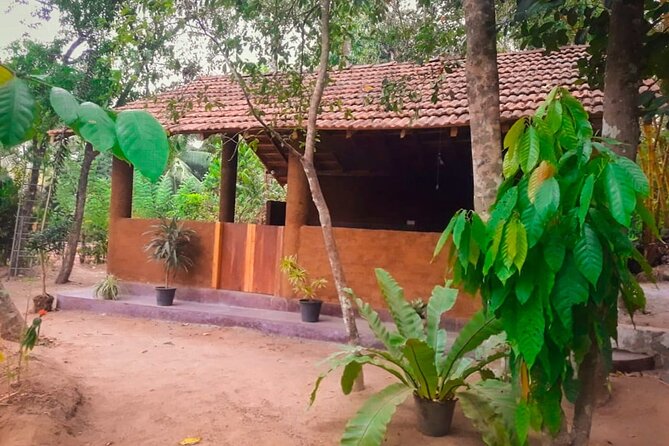
- Learn in a village kitchen: Cooking takes place near the host family’s home, often described as a traditional outdoor or clay-house kitchen surrounded by nature.
- Expect a very hands-on lesson: You do the chopping, mixing, seasoning, and cooking rather than simply watching a chef work.
- Plan for about three hours: The class includes the market visit, travel to the village, cooking, eating, and a short look at local village life.
- Check the return ride before booking: Pickup is offered from a designated point, but some arrangements require you to pay for your own return to Kandy.
Starting at Kandy Municipal Central Market
The experience begins at Kandy Municipal Central Market, at 144 Central Market, Kandy 20000. This is a useful starting point because the class does not treat food as an abstract list of recipes. You see the ingredients first, in the place where local shopping happens, then use them in the kitchen.
The market visit focuses on selecting five vegetables from the available range. You can also choose chicken or fish. Your guide explains the spices and other ingredients, helping you understand what each item does before it reaches the cooking pot.
I particularly like this part for first-time visitors to Sri Lankan food. A market can be confusing when you do not know the names of vegetables or the difference between everyday curry ingredients. Here, the shopping has a clear purpose. You are not just wandering through stalls. You are choosing the meal you will later prepare.
The market also gives you a chance to speak with people selling the produce and see ingredients at close range. Bring a little patience. The goal is not to rush through the shopping, but to learn how the meal begins with fresh food and careful selection.
More Cooking Classes in Kandy
- Private Traditional Sri Lankan Cooking Class in Kandy with Hotel Transfers
★ 5.0 · 115 reviews - Cooking With Village Family
★ 5.0 · 104 reviews - Kandy Cooking Class with Granny
★ 4.9 · 95 reviews
Choosing Five Vegetables, Chicken, or Fish
The ingredient choice gives the class a personal touch. Five vegetables create a broad meal, and the option of chicken or fish lets you choose a main dish that suits your taste.
The menu is not presented as one fixed plate. Several people describe preparing between eight and eleven dishes, while others report making around five curries or nine dishes. That difference likely reflects the group, the chosen ingredients, and the pace of the session. You should expect a generous spread, but not assume one exact dish count.
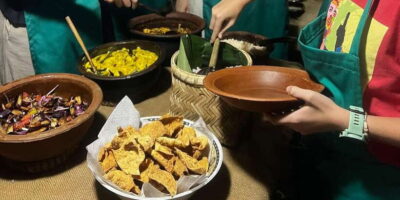
Commonly praised dishes include sambal, aubergine curry, chicken curry, and several vegetable curries. Rice is also part of the meal. A sweet course, including caramel pancakes with coconut, has been prepared in some classes.
This variety is one of the strongest reasons to book. Sri Lankan cooking is not simply one curry spooned over rice. A meal can bring together different textures, levels of heat, coconut, spices, vegetables, and side dishes. By preparing several recipes, you begin to understand how the parts work together.
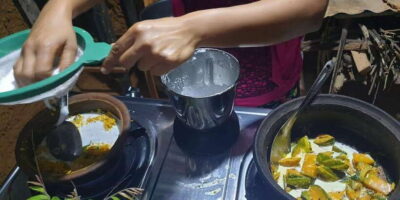
You may also learn how coconut milk is made from scratch. That is a small but useful lesson. It shows how a common ingredient is prepared rather than treating canned or packaged coconut milk as the only option.
From Kandy to a Village Kitchen
After shopping, the class continues to a village outside central Kandy. One description places the home roughly 10 kilometers from the city, so allow for a short transfer and do not schedule a tight appointment immediately afterward.
The village setting is the heart of the experience. Cooking takes place near the host family’s house, in a traditional kitchen described as an outdoor kitchen or a clay-house setting. The surroundings are part of the appeal, but the real value is the chance to cook in a family environment rather than in a polished restaurant classroom.
The visit also includes a brief look at a nearby village. This adds context to the cooking lesson. You are not only learning how to season a curry. You are seeing a little of the setting in which these foods belong.
I would keep your expectations sensible. This is a short village visit tied to the cooking class, not a full cultural tour of the Kandy District. The listed route also includes references to Kandy City Center, Kandy Lake, Kandy View Point, the Kandy Lake Club cultural dance show, and the Temple of the Sacred Tooth Relic. These places help identify Kandy and the wider area, but the core activity is the market, village transfer, cooking, and meal. Do not book this class expecting a full sightseeing circuit of every named location.
Cooking With Shyama and the Host Family
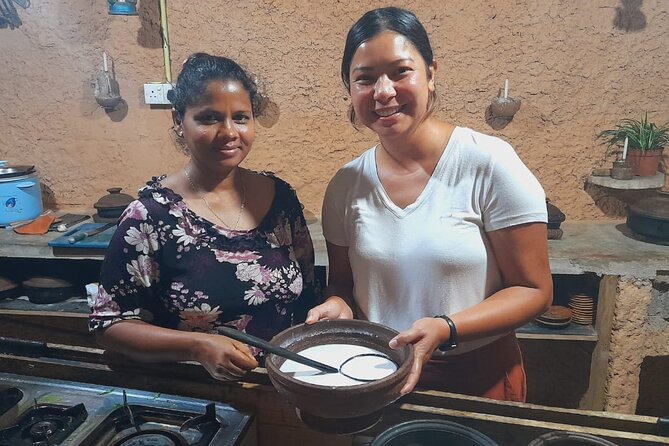
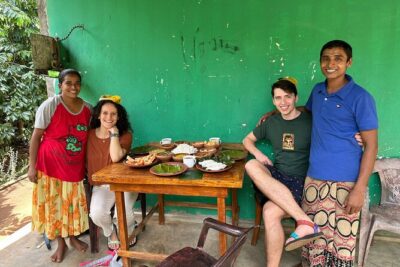
Shyama is repeatedly praised for her clear instruction and warm manner. She teaches the steps, answers questions, and helps solo visitors feel included. Her husband and other family members may also be involved in welcoming and guiding the group.
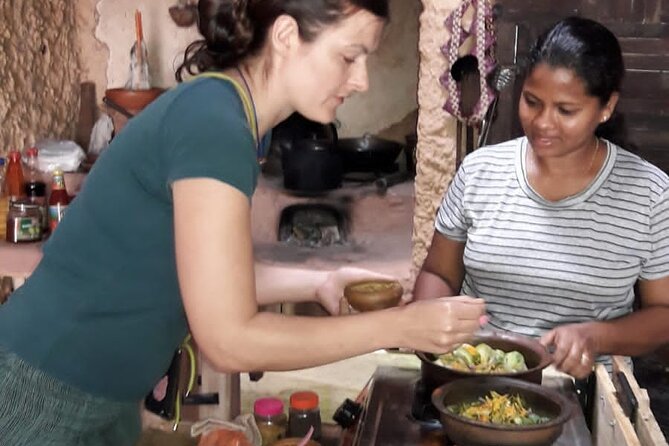
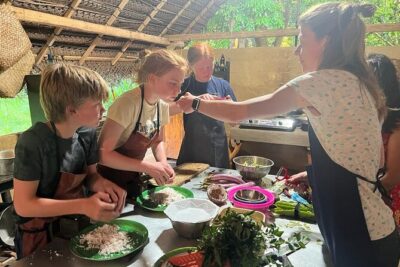
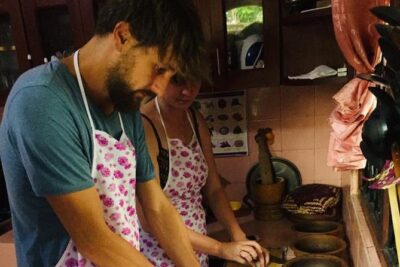
The teaching style is practical. You learn by doing, with explanations along the way. The recipes are presented as manageable enough to try again at home, which matters more than a showy chef demonstration. You should expect to handle the ingredients and take part in the work.
The class also seems well suited to mixed ages. A family group of 14, ranging from children to grandparents, found it a highlight of their Sri Lankan holiday. That does not mean every child will enjoy every task, but the format can work well for families who want an activity everyone can share.
Solo visitors should also feel comfortable booking. The class brings people together around a common task, so you have an easy subject for conversation. You are not left watching a private family ritual from the sidelines. The point is participation.
The pace may vary with group size. A small booking could feel more personal. A group near the 15-person limit may create a livelier kitchen and more waiting for certain tasks. The maximum group size is useful to know before you book, especially if you prefer quiet instruction.
A different kind of day out entirely:
- Kandy Private Guided City Tour by Tuk Tuk
★ 4.9 · 1,307 reviews - From Kandy: Sigiriya Rock & Dambulla Cave Temple Adventure
★ 4.9 · 785 reviews - Kandy to Ella Train Tickets – Reserved Seats
★ 4.5 · 523 reviews - From Kandy: Pinnawala Day Tour
★ 4.8 · 331 reviews
What You Actually Learn in Three Hours
The advertised duration is about three hours, covering the market and village cooking session. That is enough time for a full meal, but it is not a professional culinary course.
You can expect instruction in:
- Selecting vegetables and fresh ingredients
- Identifying Sri Lankan spices
- Preparing several vegetable curries
- Cooking chicken or fish, if selected
- Making rice and side dishes
- Preparing sambal
- Using coconut milk
- Following traditional cooking methods
- Making a sweet dish in some sessions
The strongest benefit is learning the logic behind the food. You see which ingredients are bought together, how spices are explained, and how separate dishes become one meal. You also get a chance to ask questions while the food is being prepared.
Recipes are provided in some sessions, which makes the class more useful after your holiday. Write down any personal adjustments you like, especially if you prefer less heat or need to repeat a method at home.
The class is not only for people who already cook. Beginners can follow the guidance, while confident home cooks can focus on spice combinations, coconut preparation, and traditional methods.
Eating the Meal You Prepared
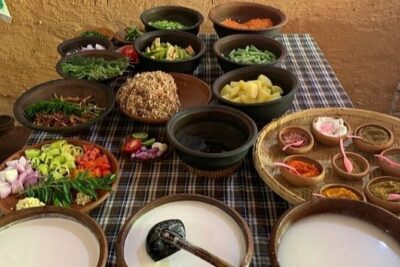
The final meal is the payoff, and it is a substantial one. People have prepared five curries, eight dishes, nine dishes, and even about eleven varied dishes, then sat down to eat together.
That shared meal gives the class a natural ending. You can compare flavors, find your favorite dish, and see how the separate recipes balance each other. Sambal and aubergine curry have received particular praise, along with chicken curry and the sweet caramel coconut pancakes.
This is also where the class offers good value. At $25 per person, you are not paying only for instruction. The price includes a market experience, ingredients, a village setting, a substantial meal, and time with a local host family. If the class delivers the full three-hour format, that is a fair price for an activity that combines food and cultural contact.
Still, the value depends on what you want. If you only want to eat Sri Lankan curry, a restaurant will be simpler. If you want to understand how the food is made and take part in the process, this class gives you much more for the money.
Come with room in your appetite. Several dishes are prepared, and the meal can leave you very full.
Transport, Meeting Point, and the One Important Catch
The official meeting point is Kandy Municipal Central Market, and the activity ends back at the meeting point. Pickup is offered from a designated point, and some bookings include a tuk-tuk or hotel pickup to the market or village.
The detail that needs clarification is the return journey. Some arrangements have required visitors to pay for their own ride back, especially after being taken about 10 kilometers outside Kandy. That does not ruin the class, but it can affect the final cost and your plans for the evening.
Ask before you go:
- Where exactly will pickup occur?
- Is the ride to the village included?
- Is the return ride included?
- If not, how will you arrange and pay for it?
- Does the three-hour estimate include transport time?
This is especially important if you have a train, dinner reservation, or evening performance booked. The class ends at the meeting point according to the stated details, but individual transport arrangements can differ.
The activity is near public transportation, and service animals are allowed. Confirmation is provided at booking. The group limit is 15 people.
Who Will Enjoy This Kandy Cooking Class?
I would recommend it most strongly to people who want direct contact with local food and family life. It suits:
- Solo visitors who want a friendly shared activity
- Couples looking for a food experience outside a restaurant
- Families with children and older relatives
- Home cooks who want recipes and methods to repeat
- First-time visitors who want help understanding Sri Lankan ingredients
- Anyone who prefers participation over a formal sightseeing talk
It is less suitable if you dislike group activities, have a very short schedule, or want a highly structured professional cooking school. It may also need advance discussion for strict dietary requirements.
One gluten-free participant was able to avoid soy sauce, mustard, papadam, and pancakes, but there were not dedicated gluten-free alternatives. If you have celiac disease or another serious allergy, contact the provider before booking and explain exactly what you cannot eat.
The class can accommodate groups from one person up to 15. Large family groups may enjoy the social setting, but a full group can make the kitchen busier.
Is $25 a Good Price?
Yes, provided the return transport does not add an unwelcome surprise. For $25, you receive a market visit, ingredient guidance, a village trip, hands-on cooking, and a full meal. That is a strong package in Kandy.
The price is especially good for anyone who would otherwise pay separately for a market tour and cooking lesson. You also get the setting of a local home and the personal teaching of Shyama and her family.
Factor in possible transport costs. A return ride from the village may not be included, and that should be part of your budget. The class is inexpensive enough that even with a modest extra ride, it can remain good value, but you should know the full cost in advance.
Free cancellation is available if you cancel at least 24 hours before the start time. Changes or cancellations made less than 24 hours ahead are not accepted for a refund.
Should You Book the Kandy Village Cooking Class?
I would book this if you want to learn by handling real ingredients, cooking several dishes, and eating a meal in a village home. The market visit is a major strength, and the teaching seems warm, patient, and practical.
Before booking, confirm the return ride and discuss any dietary restrictions. If those details work for you, this is one of the better-value food activities in Kandy. It gives you recipes, a generous meal, a look at local life, and a useful understanding of how Sri Lankan curry comes together.
FAQ
How long does the Kandy Village Cooking Class last?
The experience lasts approximately three hours, including the market visit, village cooking session, meal, and brief village visit.
Where does the activity start?
It starts at Kandy Municipal Central Market, 144 Central Market, Kandy 20000, Sri Lanka.
Where does the activity end?
The stated end point is back at the meeting point.
Is pickup available?
Pickup is offered from a designated point. Confirm the exact pickup location and transport details when booking.
Is transportation back to Kandy included?
Not always. Some arrangements require you to pay for your own return ride, so confirm this before the class.
How many people can join?
The activity has a maximum of 15 travelers.
What ingredients do I choose at the market?
You select five vegetables and choose either chicken or fish. The guide also explains spices and other ingredients.
Will I cook the food myself?
Yes. The class is hands-on, with guidance through preparing and cooking traditional Sri Lankan dishes.
How many dishes will I prepare?
The exact number can vary. Sessions described in the available details have included about five curries, eight dishes, nine dishes, and up to about eleven dishes.
Can I cancel for a full refund?
Yes, if you cancel at least 24 hours before the experience start time. Cancellations made less than 24 hours in advance are not refunded.
Just added in Kandy
- Day Tour of Nuwara Eliya★ 5.0 · 3 reviews
- Full day Kandy City Tour by Tuk Tuk★ 5.0 · 1 review
- Day Tour Kandy to Sigiriya with Dambulla Cave Temple Excursion★ 5.0 · 3 reviews
- Day Tour for Outdoor and Adventure Lovers★ 4.5 · 4 reviews
- Dambulla, Sigiriya and Pidurangala Tour from Kandy★ 5.0 · 9 reviews
- Ambuluwawa Tower and Kandy City Tuk Tuk Tour with Epic views★ 5.0 · 9 reviews
- Culture Tour in Kandy★ 5.0 · 1 review
- Kandy to Nallathanniya (Climb Adams Peak)★ 5.0 · 1 review
Cooking Classes, compared.
Organic cooking class sigiriya (kumara & family)
Read our review →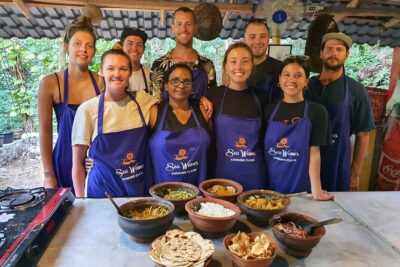
Sri Lankan Cooking Class with Neranji at Homestay
Read our review →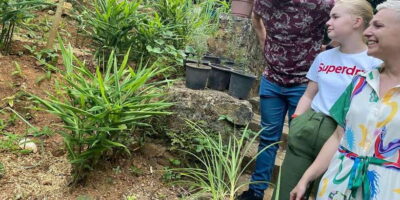
Browse the lists this tour appears in