
Review · CITY TOURS
Negombo City And Fishing Village Private Day Tour From Colombo
Negombo serves Sri Lanka in small, vivid slices. This private trip from Colombo links a fishing village, lagoon, market, historic fort, temple, and churches in one flexible outing. You get a quick look at the many faiths and working traditions that shape this coastal city.
I like the private format for up to six people and the mix of places, especially the fish market and lagoon. I also like the $51.20 group price, which can be strong value when shared. The main caution is language and extra costs: the driver speaks English, but the only published feedback suggests you should confirm what is included and watch for charges beyond the tour price.
In This Review
- Key details that shape the day
- Why Negombo makes a good short outing from Colombo
- Angurukaramulla Temple and its giant Buddha
- Katuwapitiya and a painful chapter
- Negombo Lagoon, where rivers meet the sea
- Negombo Fish Market, the tour’s most direct encounter
- Dutch Fort and the Portuguese-Dutch struggle
- St. Mary’s Church and Negombo’s Catholic identity
- What the private vehicle changes
- Is $51.20 good value for up to six?
- Who will get the most from this outing?
- Should you book the Negombo City and Fishing Village Tour?
- FAQ
- How long does the Negombo tour last?
- What time does the tour start?
- How many people can join the private tour?
- Is food included in the tour price?
- What is included in the tour?
- Can I cancel for a full refund?
Key details that shape the day
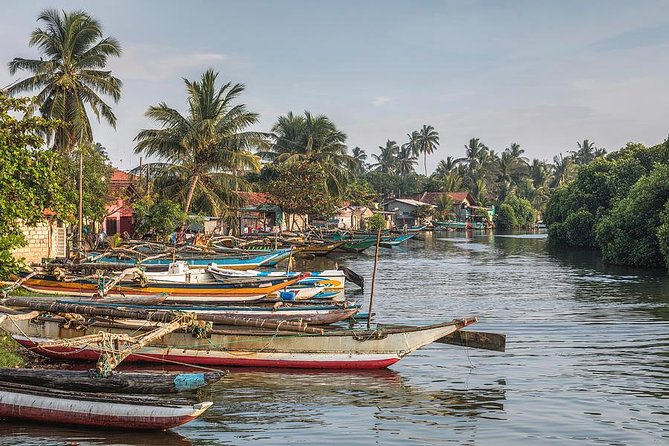
- Negombo fish market: Allow an hour to see dry fish, local trade, strong smells, and plenty of photographs.
- Six contrasting stops: The route moves from Buddhist art and Catholic churches to a lagoon, fort, and fishing economy.
- Private group setting: Only your party takes part, with space for up to six people.
- Short, manageable timing: The advertised duration is about three to six hours, depending on the pace and transfers.
- Early start from Colombo: Pickup begins at 7:00 am, a useful time for seeing the market and avoiding a long, tiring day.
- Practical inclusions: Air-conditioned transport, bottled water, parking, fuel surcharge, and an English-speaking chauffeur guide are included.
Why Negombo makes a good short outing from Colombo
Negombo is close enough to Colombo for a half-day visit, yet it offers a different feel. Its identity is tied to the sea, the lagoon, Catholic churches, Buddhist worship, old European power, and the daily business of fishing.
This is not a tour built around one grand monument. Its value comes from the changes of scene. You might spend half an hour looking at a brightly painted Buddha, then move to a solemn church site, a quiet stretch of lagoon, and a fish market where the day’s work is plainly visible.
That variety makes the trip useful if you have limited time in Sri Lanka. You get a broad introduction to Negombo without committing to a full-day excursion. The shorter format also matters for anyone who finds long road trips tiring. One published rating specifically praised the outing for being less exhausting than other excursions.
The tour is private, so your group can set a more comfortable rhythm than on a shared bus. Still, you should not expect a slow, deeply guided study of each site. With six stops and a suggested duration of three to six hours, this is best understood as a compact city and culture tour.
A few more options to weigh up in Colombo
- Fishing Village & Mangrove Tour Experince at Negombo (Starting from Colombo)
★ 4.0 · 1 review - Lagoon Fishing in Bentota
★ 5.0 · 11 reviews - Day out to Galle[Stilt Fishing. Turtle watching.Cinnamon Farm]
★ 4.5 · 9 reviews
Angurukaramulla Temple and its giant Buddha
The first stop is Angurukaramulla Temple, a colorful Buddhist site with a six-meter Buddha, ornate sculpture, murals, and the remains of a historic library. You are given about 30 minutes, with no admission fee listed.
The appeal is visual and immediate. The murals and sculpted details give you something to examine even during a short visit, while the ruined library adds a reminder that religious places can also be centers of learning and preservation.
I would use this stop to pay attention to the details around the main image rather than simply taking a quick photograph. The brief timing means you may not have much space for a long explanation, so ask the chauffeur guide about the temple’s features if you want more context.
As with any religious site, dress and behavior matter. The supplied information does not list a formal dress code, so it is sensible to choose respectful clothing and follow signs or local guidance. Since admission is free, this stop adds cultural value without increasing the listed tour cost.
Katuwapitiya and a painful chapter
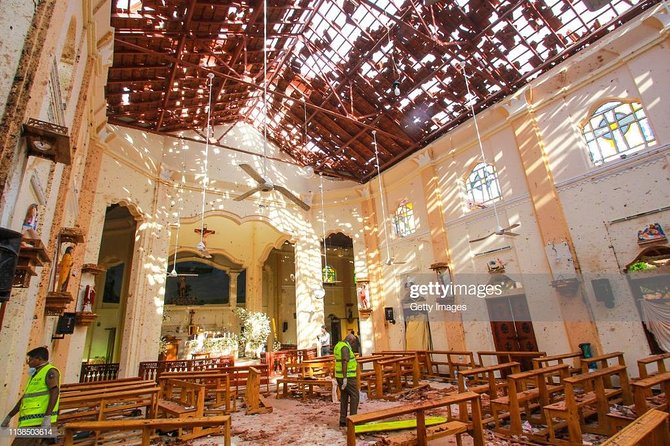
Katuwapitiya is included as a 30-minute stop connected to the church targeted on Easter Sunday in 2019. The bomb attacks across Sri Lanka killed at least 93 people at that church according to media reports cited in the tour information. UNICEF reported that 27 children died and 10 were injured there, with 45 children killed across all the attacks.
This is not a light sightseeing stop. It asks you to pause and recognize a recent tragedy that affected families and communities. The location is part of present-day Sri Lanka, not just a historical footnote.
The short visit may be enough for quiet reflection, but it is not likely to provide a full memorial program. You should approach this part of the route with respect and avoid treating it as a simple photo opportunity.
Its inclusion gives the tour a more honest shape. You see not only attractive places and old buildings, but also a site tied to modern grief and the country’s continuing memory. No admission charge is listed.
Negombo Lagoon, where rivers meet the sea
Negombo Lagoon is a large estuarine lagoon in southwestern Sri Lanka. Small rivers and a canal feed it, and a narrow channel near the city links it to the sea.
The water is surrounded by rice paddies, coconut plantations, grassland, and dense settlement. That mix helps explain why the lagoon matters. It is part of a working coastal area, not an isolated nature display.
You have about 30 minutes here. That is enough for a short look at the water and surrounding scenery, but not enough for a full lagoon expedition. The tour does not list a boat ride, so you should not assume one is included.
I like this stop because it connects the city to its setting. After seeing religious buildings and before entering the fish market, you get a view of the waterways that help define Negombo. The lagoon also provides a quieter break in a route that otherwise moves from one built site to another.
A different kind of day out entirely:
- Colombo: Private Tuk-Tuk City Tour with All Entry Fees
★ 4.9 · 2,154 reviews - Sri Lanka Personal Tour Driver in private vehicle
★ 5.0 · 747 reviews - Colombo Tuk Tuk City Tour -Sightseeing Entry Fees & Food Included
★ 5.0 · 678 reviews - Udawalawe National Park: Elephant Safari with Expert Guide
★ 4.9 · 641 reviews
Negombo Fish Market, the tour’s most direct encounter
The fish market receives the longest stop, about one hour, and for good reason. This is where the tour feels most connected to everyday work. You can see local fish trading and the dry fish process, with organized activity, strong odors, and plenty of photographic interest.
The market may be the most memorable part of the outing, but it will not suit everyone. Drying fish creates a noticeable smell, and the setting is practical rather than polished. If you prefer tidy attractions, you may find it intense. If you want to see how a coastal city earns its living, it is exactly the sort of place worth making time for.
I would keep your camera ready, but also stay aware of workers and local routines. The supplied information describes the market as an interesting experience and a good place to see the drying process. That is more useful than a staged cultural display because you are looking at an active part of the local economy.
The one-hour allowance is sensible. It gives you time to understand the process instead of rushing through in ten minutes. Since there is no admission fee listed, the market offers strong value within the tour.
Dutch Fort and the Portuguese-Dutch struggle
Negombo’s Dutch Fort is a compact historical stop with a complicated past. The original Portuguese fort was captured by Dutch forces under Philip Lucasz in February 1640. The Portuguese retook it in December of that year, strengthened the defenses, and held them until the Dutch returned under Francois Caron in January 1644.
The original bastions were destroyed by Dutch cannon fire during the siege. The Dutch later rebuilt the fort in 1672, though the supplied description is cut off before explaining the full design.
You get about 30 minutes here, and admission is free. That makes it a quick historical pause rather than a long fort visit. The site is useful for understanding why Negombo mattered to European powers, since the fort was once considered important after Colombo, Jaffna, and Galle.
Do not expect the scale or completeness of a major fortified complex. The value lies in the location and the story. Ask the guide to connect the fort to the Portuguese and Dutch periods if that is important to you, since the included English-speaking chauffeur guide is your main source of explanation.
St. Mary’s Church and Negombo’s Catholic identity
St. Mary’s Church is a major landmark in the heart of Negombo. Its exterior is painted pink, and it is described as one of Sri Lanka’s largest cathedrals.
The 30-minute stop gives you time to see the building and understand the strong Catholic presence in the city. Placing it beside Angurukaramulla Temple and Katuwapitiya makes the religious range of the route clear. Negombo is not presented as a single-faith destination.
The church is also a good counterpoint to the Dutch Fort. One reflects European colonial power and defense, while the other remains a place of worship and community life. The tour does not list an entry fee, so no separate admission cost is included in the supplied details.
As at the temple, keep your behavior respectful. The visit is short, so the emphasis is on seeing the landmark rather than attending a service or receiving a long architectural lecture.
What the private vehicle changes
The package includes an air-conditioned vehicle, parking fees, fuel surcharge, bottled water, and an English-speaking chauffeur guide. Pickup is offered, with the tour beginning at 7:00 am.
The air conditioning matters in Sri Lanka’s heat, especially when you move between outdoor stops. Bottled water is a small inclusion, but useful on a morning that includes walking around a market, fort, temple, and church.
A private vehicle also removes the need to coordinate public transport between six separate places. The tour information says the meeting area is near public transportation, and most people can participate. Still, the exact pickup arrangement should be confirmed when you book, especially if you are staying outside central Colombo.
The driver is both chauffeur and guide. That can work well for a concise route, but it may not equal the depth of a specialist historian or local market guide. One published comment praised the driver’s kindness while also advising future customers to pay close attention to costs and the meaning of English-speaking service. I would clarify the guiding level before departure and ask what expenses, if any, could arise outside the listed inclusions.
Is $51.20 good value for up to six?
At $51.20 per group, the price is attractive if you fill the vehicle. Split among six people, it comes to less than $9 per person before any personal spending. Even with a smaller group, the fixed private price can make sense for visitors who value door-to-door transport and a tailored pace.
The value comes from the combination of transport and variety. You are not paying for one ticketed attraction. You are getting a vehicle, driver-guide, parking, fuel, water, and visits to six places, with no admission fees listed for the stops.
Lunch and breakfast are not included. Any expense not specifically named in the inclusions is also outside the price. That does not make the tour poor value, but it means you should budget separately for food and ask about possible additional charges.
The tour is booked an average of 43 days in advance, which suggests you should not leave it until the last minute if your Colombo schedule is fixed. Confirmation is received at booking, and free cancellation is available up to 24 hours before the 7:00 am start. Changes or cancellations inside that window are not accepted for a refund, and poor weather can lead to a new date or full refund.
Who will get the most from this outing?
I would choose this tour if you want a broad introduction to Negombo without spending a full day on the road. It suits couples, families, and small groups who want a private vehicle and do not need a highly specialized lecture at every stop.
It is also a good fit if the fish market is a priority. The one-hour visit gives that part of the day real weight, while the lagoon and religious sites add context around it.
You may want a different experience if you dislike fish smells, prefer long visits at major monuments, or want a carefully structured food tour. The route touches many subjects, but each stop is short. The tour’s strength is range, not depth.
The sensitive Katuwapitiya stop is another factor. If you prefer only light sightseeing, this part may feel difficult. If you want to understand both the beauty and the painful recent events connected with Sri Lanka, its inclusion gives the day greater substance.
Should you book the Negombo City and Fishing Village Tour?
I would book it for the private price, practical route, and fish market focus, especially with several people sharing the cost. The mix of temple, church, lagoon, market, and fort gives you a useful picture of Negombo in a short time.
Before paying, confirm the pickup point, what English-speaking guiding involves, and whether you will need to cover any costs beyond food. If you want a relaxed city sampler with an especially strong local-market stop, this is a sensible choice. If your priority is a detailed historical tour or a long lagoon activity, the short schedule may leave you wanting more.
FAQ
How long does the Negombo tour last?
The approximate duration is three to six hours. The listed visits total about three and a half hours, with the remaining time allowing for driving and the pace of your private group.
What time does the tour start?
The tour starts at 7:00 am. Pickup is offered.
How many people can join the private tour?
The private vehicle is available for a group of up to six people. Only your group participates.
Is food included in the tour price?
No. Breakfast and lunch are not included. Any expense not named in the inclusions is also excluded.
What is included in the tour?
The tour includes bottled water, an air-conditioned vehicle, parking fees, fuel surcharge, and an English-speaking chauffeur guide.
Can I cancel for a full refund?
Yes, if you cancel at least 24 hours before the experience start time. Cancellations or changes made less than 24 hours before the start are not accepted for a refund. If poor weather cancels the experience, you will be offered another date or a full refund.
Just added in Colombo
- Yala National Park (Day Tour)★ 5.0 · 5 reviews
- Water Amusement and Karting★ 5.0 · 1 review
- Wake Boarding in Bentota★ 5.0 · 1 review
- Udawalawe Jeep Safari from Bentota Aluthgama Berawula Area★ 5.0 · 1 review
- Half Day Udawalawe Safari from Kalutara (Entrance + Lunch)★ 5.0 · 9 reviews
- Madu River Sunrise Mangrove Kayaking★ 5.0 · 5 reviews
- Udawalawa National Park Day Tour★ 4.5 · 5 reviews
- Sigiriya and Dambulla Day Tour from Kalutara All Inclusive★ 5.0 · 2 reviews
City Tours, compared.
Private Tuk-Tuk City Tour with All Entry Fees
Read our review →
Colombo Tuk Tuk City Tour -Sightseeing Entry Fees & Food Included
Read our review →
Colombo Private Tuk-Tuk City Tour with All Entry Fees Included
Read our review →
Private Tuk-Tuk City Tour with Guide & All Tickets
Read our review →

Browse the lists this tour appears in