
Review · WILDLIFE
Sri Lanka : Day Tour to Pinnawala Wildlife Orphanage & Zoo
Small moments make this tour memorable. Sri Lanka’s Pinnawala Elephant Orphanage gives you a close look at elephant care, from calf bottle-feeding to the famous river bathing routine. I like the private air-conditioned car and the freedom of a live English-speaking guide, and I also like that entrance fees, bottled water, highway fees, parking, and permits are covered. The main consideration is simple: this is a captive elephant facility, not a wild safari.
I also like the broad pickup and drop-off service, with coastal stops from Kosgoda and Bentota to Colombo, Negombo, and Katunayake. You get about three hours at Pinnawala, which is enough to see the key activities, but the day can feel transport-heavy if you are staying far from the orphanage.
In This Review
- Key points at a glance
- Why Pinnawala is such a different elephant experience
- What your three hours at Pinnawala look like
- Bottle-feeding the youngest elephants
- Feeding the rest of the herd
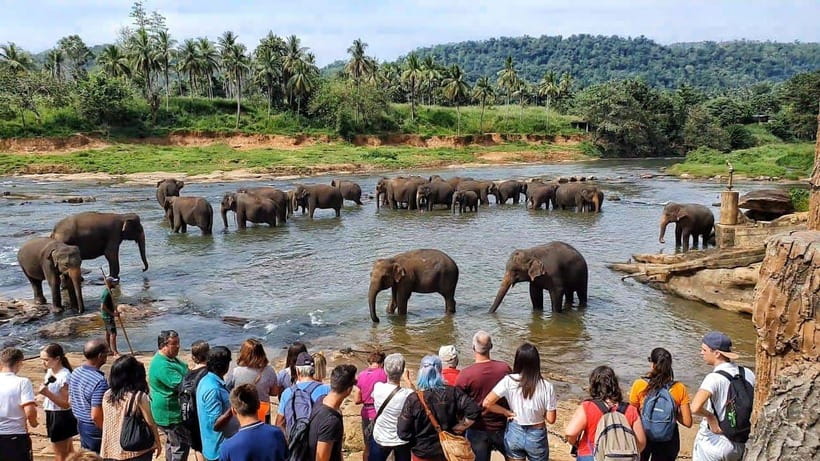
- Bathing in the Ma Oya River
- The private ride makes the coastal pickup useful
- What the guide adds to the visit
- What the $199 price covers
- The ethical question you should consider first
- Comfort, walking, and practical preparation
- Who should book this Pinnawala day tour?
- Should you book it?
- FAQ
- How long is the Pinnawala visit?
- What elephant activities can I see?
- Is private transportation included?
- Which pickup areas are available?
- Are meals included in the price?
- Is Pinnawala wheelchair accessible?
Key points at a glance
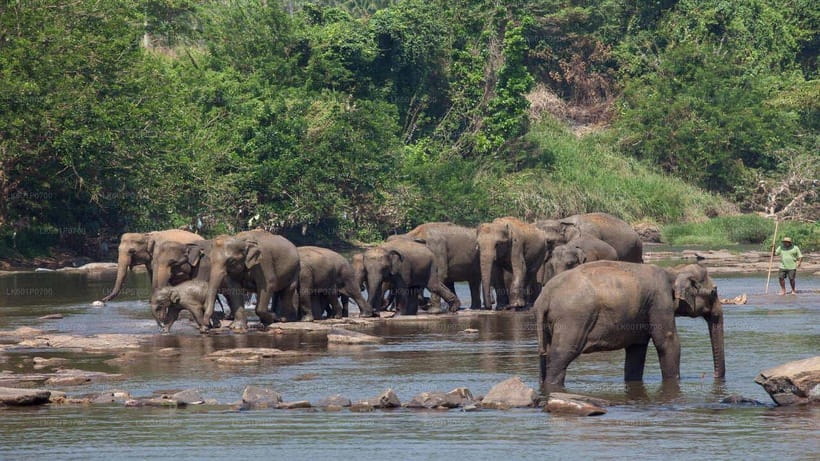
- Elephant bathing at the Ma Oya River: Watch the herd move to the river and bathe as part of its daily routine.
- Bottle-feeding for calves: A set feeding time gives you one of the clearest views of how young elephants are cared for.
- A 71-elephant herd: In 2023, Pinnawala housed 71 elephants, including 30 males and 41 females across three generations.
- Private coastal pickup: Collection and return are available from 28 locations around Colombo, the western coast, and the airport area.
- Three hours inside Pinnawala: The visit is focused rather than sprawling, with time for feeding, bathing, photos, and an introduction to the orphanage.
- A captive conservation setting: This suits you if you want close access to elephants, but less so if your priority is seeing them fully wild.
Why Pinnawala is such a different elephant experience
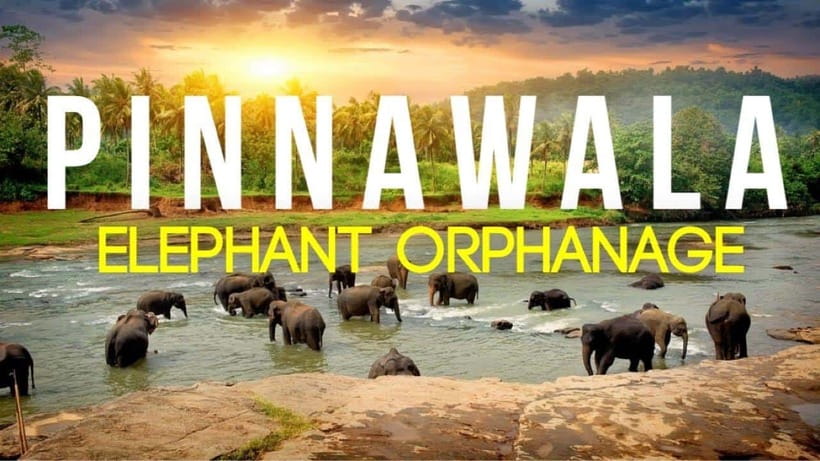
Pinnawala is not a national park. You will not sit in a jeep hoping an elephant appears from the forest. Instead, you enter a captive breeding and conservation institute in Pinnawala village, about 13 kilometers northeast of Kegalle in Sri Lanka’s Sabaragamuwa Province.
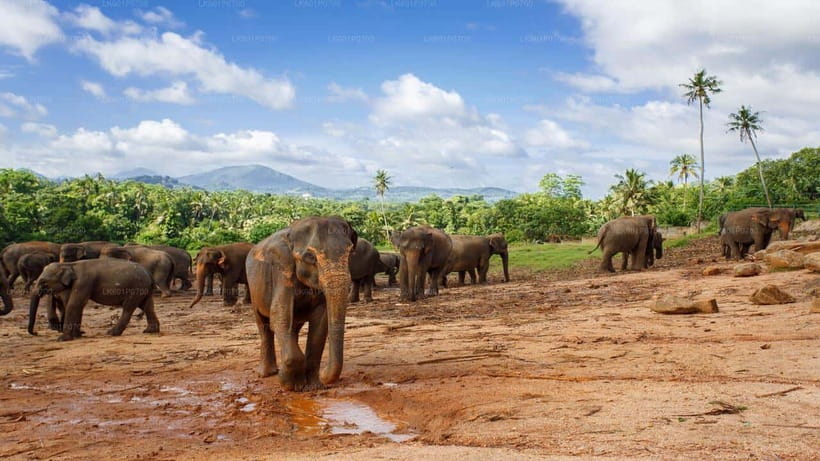
That difference matters. The attraction is the chance to watch a large herd during familiar daily activities. You may see calves being fed by bottle, adult elephants receiving food, and groups heading to the Ma Oya River for bathing. The setting gives you more reliable access than a wild encounter, though it also asks you to think carefully about the role of captive elephant facilities.
The orphanage was founded in 1975 by Sri Lanka’s Department of Wildlife Conservation. Its original purpose was to care for orphaned, unweaned wild elephants found wandering in and near Sri Lankan forests. Over time, Pinnawala developed a captive breeding program and became a major public attraction.
The figures give the place some scale. In 2023, 71 elephants lived at Pinnawala: 30 males and 41 females from three generations. That is a substantial herd, and it helps explain why the experience feels more like observing an institution with a working routine than visiting a small animal enclosure.
More wildlife trips in Kandy:
- Yala National Park Wildlife Safari/ Game Drive – by Ajith Safari
★ 4.5 · 351 reviews - Bentota River Safari with Mangrove and Wildlife Encounter
★ 4.9 · 182 reviews - Bentota River Safari By BTM (Mangrove & Wildlife Encounter)
★ 5.0 · 108 reviews
What your three hours at Pinnawala look like
The tour includes a three-hour visit to the orphanage. The precise order of activities can depend on the day’s routine, but you should expect the main visit to focus on feeding, bottle-feeding, bathing, and learning about the facility.
Bottle-feeding the youngest elephants
The calf feeding is one of the most distinctive parts of the visit. Young elephants are fed by bottle, giving you a clear view of the hands-on care they require. It is also a useful moment for understanding why an orphanage was created in the first place. An unweaned elephant calf cannot simply be released and left to manage alone.
This is a good time to listen to your guide. The feeding routine can explain more than a quick photo does: how the orphanage cares for young animals, how the breeding program fits into its work, and why different elephants may have different needs.
You should also keep your camera ready, but flash photography is not allowed. Bring a standard camera or phone and use it without a flash. The best photos will come from watching patiently rather than pushing close to the animals.
Feeding the rest of the herd
The daily schedule also includes feeding the adult and older elephants. This helps you see the herd as a group rather than focusing only on the calves. With 71 elephants recorded at the facility in 2023, there is a good chance that the scale of the operation will be as striking as any individual animal.
The phrase up close needs a little common sense here. You can get close enough for strong photographs and clear views, but you should maintain a safe distance and follow the guide’s instructions. Elephants are powerful animals, even when they look calm and gentle.
Do not bring food or drinks into the orphanage. Smoking is also prohibited on the premises. These rules are practical, not fussy. They reduce distractions and help keep the animal area orderly.
A few more options to weigh up in Kandy
- Kandy Private Guided City Tour by Tuk Tuk
★ 4.9 · 1,307 reviews - From Kandy: Sigiriya Rock & Dambulla Cave Temple Adventure
★ 4.9 · 785 reviews - Kandy Village Cooking Class
★ 5.0 · 536 reviews - Kandy to Ella Train Tickets – Reserved Seats
★ 4.5 · 523 reviews
Bathing in the Ma Oya River
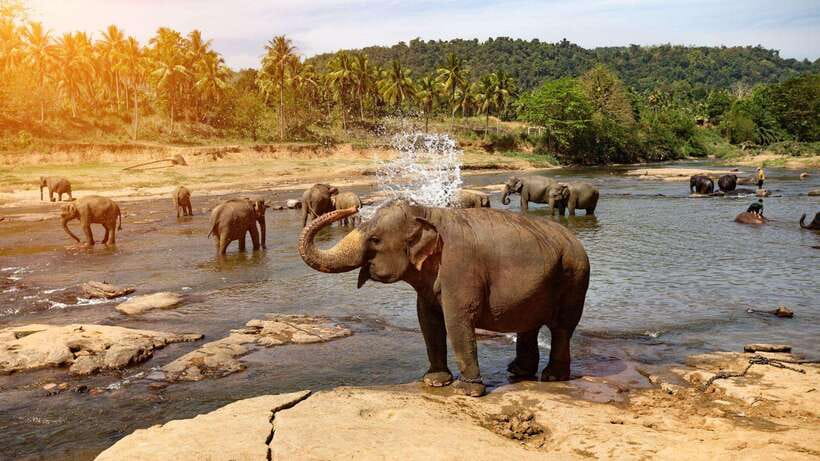
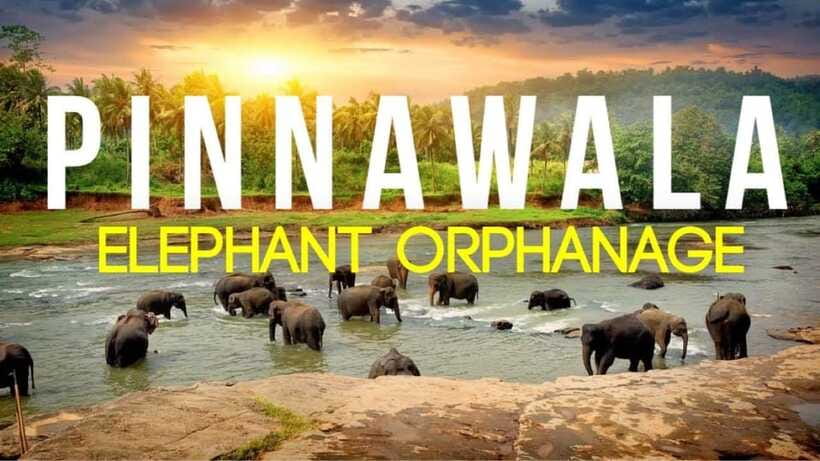
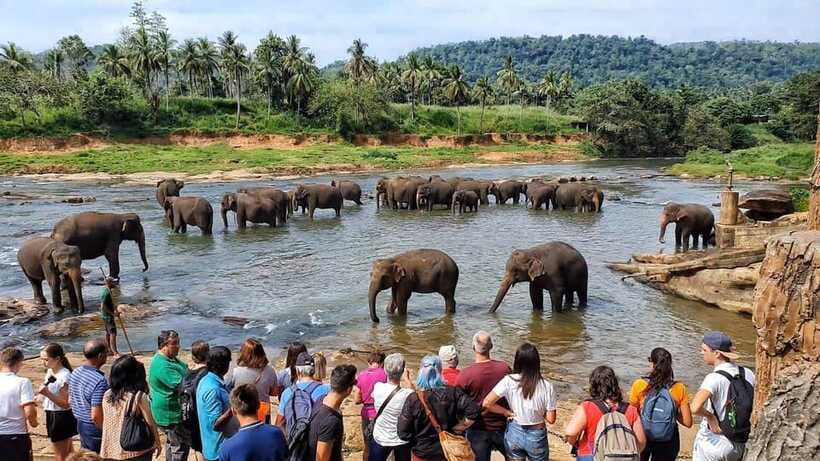
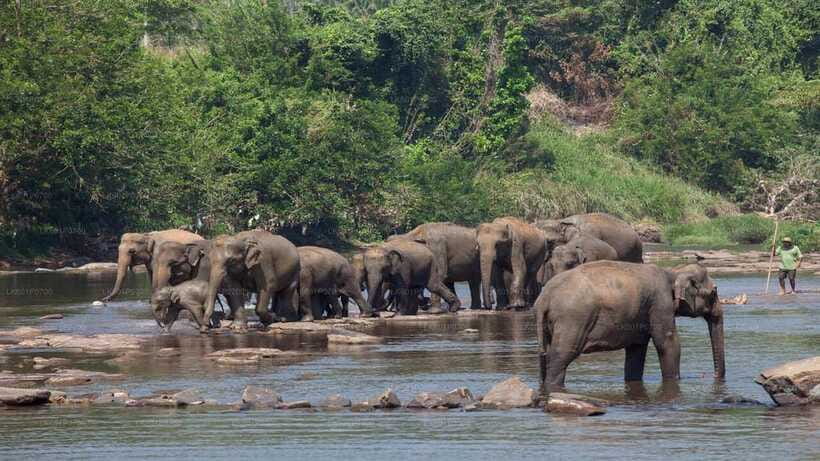
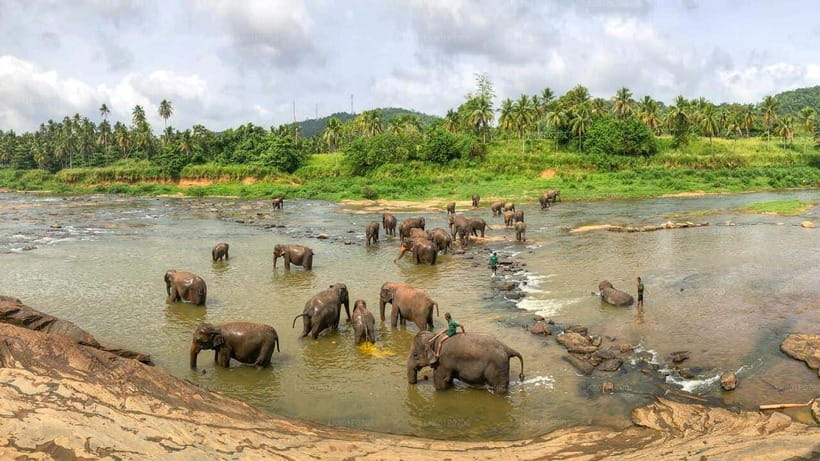
The river bathing is the signature scene. You can watch elephants bathe in the Ma Oya River as part of their daily routine, rather than seeing a one-off performance arranged only for visitors. The river setting also gives the herd room to move, which makes this part feel less like an enclosure visit and more like an observation point along a working animal route.
Bring a hat and sunscreen. You may spend time outdoors watching the elephants, and comfortable walking shoes are important because the visit involves plenty of walking. A camera is worth packing, but protect it from splashes and use no flash.
The bathing period is also where patience pays off. The animals may not all behave in the same way at the same time. Some may enter the water, some may remain nearby, and others may be more interested in moving between the feeding and bathing areas.
The private ride makes the coastal pickup useful
This experience is built around private transport. A private English-speaking chauffeur drives you in an air-conditioned luxury car for the journey, with pickup and drop-off included in the operator’s vehicle.
The pickup list is unusually broad. You can request collection from places including Colombo, Colombo 03, Colombo 04, Colombo 06, Dehiwala, Mount Lavinia, Moratuwa, Panadura, Kalutara, Beruwala, Bentota, Hikkaduwa, Ambalangoda, Balapitiya, Ahungalla, Kosgoda, Negombo, Katunayake, and several nearby coastal towns.
That coverage is useful if you are staying along Sri Lanka’s western coast and do not want to arrange a separate transfer to Pinnawala. It also means the return trip can finish at a different practical point within the listed drop-off network, though you should confirm your exact location when booking.
The private format is a real advantage for couples, families, and small groups. You are not sharing the car with strangers, and the guide can focus on your questions. It also gives you a more relaxed day than assembling a train, taxi, and entrance ticket on your own.
The tradeoff is time. Pinnawala is inland, while many pickup points are on the coast. The advertised visit lasts three hours, but the overall day includes the road journey in both directions. If you are staying near Kegalle or already visiting the interior, the transport portion should feel easier. If you are starting from the southern coastal area, expect the tour to be more about a single major attraction than a quick side trip.
What the guide adds to the visit
A live English-speaking guide is included, along with a private chauffeur for the entire journey. This is more useful than it may sound. Without context, you might see feeding, bathing, and a large herd, then leave with only a collection of elephant photos.
The guide can connect those scenes to Pinnawala’s founding in 1975, its role in caring for orphaned unweaned elephants, and its captive breeding program. You can also ask about the different generations living at the facility and the daily routine you are watching.
The experience lists the guide language as English, so this is the clearest fit for English-speaking visitors. No other guide languages are specified. If you want a detailed discussion of elephant welfare, breeding, or release practices, ask your guide directly during the visit rather than assuming every part of the program will be explained automatically.
The chauffeur and guide arrangement may be one person or involve separate roles, but the important point is that English-language support and private driving are included for the full journey.
What the $199 price covers
At $199 per person, this is not a bargain attraction ticket. It is a private full-day outing with transport from a large list of coastal locations. The value depends heavily on how much you would otherwise pay for a private car, driver, entrance admission, and a long day of arranging details yourself.
The price includes:
- Admission to Pinnawala Elephant Orphanage
- A live English-speaking guide
- A private air-conditioned luxury car
- Private chauffeur service for the journey
- Pickup and drop-off in the operator’s vehicle
- Bottled water
- Highway fees
- Parking
- Required permits and paperwork
- A first aid medical kit carried by the guide
That bundle removes several small costs that can otherwise pile up. You do not need to buy a separate entrance ticket or handle highway and parking charges during the day.
Meals and beverages are not included, so plan your food budget separately. Personal expenses, shopping, telephone costs, laundry, bar bills, travel insurance, flights, and camera or video permits are also excluded. The safest approach is to bring your own sunscreen, hat, camera, and comfortable shoes, then confirm any photography permit requirements before setting off.
For a solo visitor, $199 is a high price for one attraction. For two or more people sharing the private arrangement, the value improves, especially if you are staying far from Pinnawala and want door-to-door transport. Families may also appreciate the private car, since you can avoid the uncertainty of public connections with children.
The ethical question you should consider first
Pinnawala is promoted as a conservation and captive breeding institute, with roots in caring for orphaned wild elephants. You can learn about that work and see elephants receiving care. But the experience remains a captive setting.
That makes this tour a better match for you if you want to understand an established elephant care facility and see its routine at close range. It is a weaker match if you want only free-ranging elephants in a forest or a national park.
The tour description uses the phrase natural habitat, but you should understand the setting in practical terms: the elephants are living at Pinnawala, not roaming an untouched wild reserve. The river bathing and open movement can feel natural in appearance, yet the facility itself is managed and captive.
Keep your distance, avoid flash, and follow instructions. Do not bring food into the orphanage. These are basic ways to reduce stress and avoid unsafe behavior around the animals.
Comfort, walking, and practical preparation
Wear comfortable walking shoes. The visit involves a lot of walking, and sandals or stiff shoes will make the day less pleasant.
A hat and sunscreen are strongly recommended. Outdoor viewing beside the river and around the orphanage can expose you to direct sun. Bottled water is included, but meals and other drinks are not.
The first aid kit is carried by the guide. You are also advised to bring any personal medical supplies you may need. Travel insurance is not included, so arrange it separately if you want that protection.
Smoking is not allowed, and food and drinks should not be brought into the orphanage. Flash photography is prohibited. The facility is not wheelchair accessible and may not suit people with mobility impairments, especially given the walking involved.
Free cancellation is available up to 24 hours before the tour for a full refund, and you can reserve now and pay later. Starting times depend on availability, so check the schedule around your accommodation and any other Sri Lankan plans.
Who should book this Pinnawala day tour?
I would consider this tour if you are based along the western coast and want a simple private day with one major stop. The pickup network is broad, the car is air-conditioned, and the essential admission and road costs are already handled.
It suits families and small private groups particularly well. You can travel together, avoid coordinating multiple transfers, and spend the three-hour visit focused on elephants rather than tickets and transport.
It also suits you if bottle-feeding and river bathing are the exact scenes you want to see. Those activities give the visit a clear rhythm and make it easier to understand what happens at Pinnawala during a normal day.
I would hesitate if you are seeking a low-cost outing, a fully wild elephant encounter, or a tour with several inland sights. At $199 per person, the price is easiest to justify when private transport and convenience matter to you. The actual animal visit is three hours, so you are paying for the full journey and service as much as the time inside the orphanage.
Should you book it?
Book this Pinnawala tour if you want close, organized access to a large captive elephant herd and prefer a private car from Sri Lanka’s western coast. The river bathing, calf bottle-feeding, and English-speaking guide give the day a clear purpose, while included entrance fees, highway costs, parking, water, and permits keep the arrangements tidy.
Think twice if you want elephants only in the wild or if $199 feels steep for a three-hour attraction visit. For the right person, this is a convenient and focused way to see Pinnawala. Just arrive with realistic expectations: it is an elephant care and breeding facility, not a wilderness safari.
FAQ
How long is the Pinnawala visit?
The visit to Pinnawala lasts three hours. The full activity is a one-day tour because it also includes private transport to and from your pickup location.
What elephant activities can I see?
You can watch calf bottle-feeding, feeding of other elephants, and elephants bathing in the Ma Oya River. You can also learn about the orphanage’s history and captive breeding program.
Is private transportation included?
Yes. The tour includes a private English-speaking chauffeur, a private air-conditioned luxury car, and pickup and drop-off in the operator’s vehicle.
Which pickup areas are available?
Pickup is available from 28 listed locations, including Colombo, Mount Lavinia, Dehiwala, Negombo, Katunayake, Kalutara, Beruwala, Bentota, Hikkaduwa, Ambalangoda, Balapitiya, Ahungalla, and Kosgoda.
Are meals included in the price?
No. Meals and beverages are not included. Bottled water is included, while personal expenses and shopping costs are separate.
Is Pinnawala wheelchair accessible?
No. The orphanage is not wheelchair accessible and may not be suitable for people with mobility impairments. Comfortable walking shoes are recommended because the visit involves substantial walking.
Just added in Kandy
- Day Tour of Nuwara Eliya★ 5.0 · 3 reviews
- Full day Kandy City Tour by Tuk Tuk★ 5.0 · 1 review
- Day Tour Kandy to Sigiriya with Dambulla Cave Temple Excursion★ 5.0 · 3 reviews
- Day Tour for Outdoor and Adventure Lovers★ 4.5 · 4 reviews
- Culture Tour in Kandy★ 5.0 · 1 review
- Dambulla, Sigiriya and Pidurangala Tour from Kandy★ 5.0 · 9 reviews
- Ambuluwawa Tower and Kandy City Tuk Tuk Tour with Epic views★ 5.0 · 9 reviews
- Kandy to Nallathanniya (Climb Adams Peak)★ 5.0 · 1 review
Wildlife, compared.
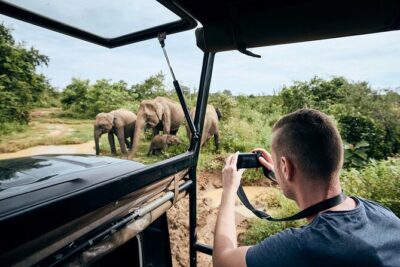
Yala National Park Wildlife Safari/ Game Drive – by Ajith Safari
Read our review →
Bentota River Safari with Mangrove and Wildlife Encounter
Read our review →
Bentota River Safari By BTM (Mangrove & Wildlife Encounter)
Read our review →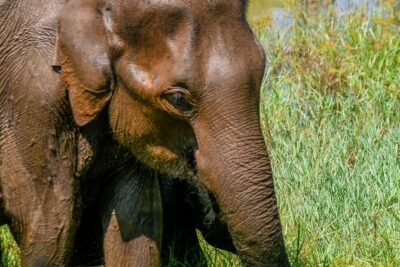
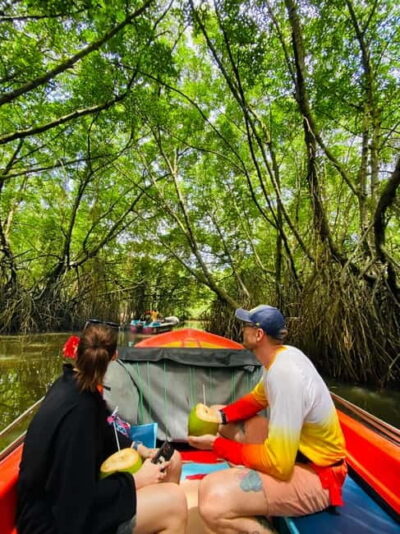
Bentota River Safari: Discover Wildlife & Mangroves by Boat
Read our review →
Kaudulla National Park Private Elephant & Wildlife Safari
Read our review →
Minneriya National Park Wildlife & Elephant Safari from Sigiriya
Read our review →
Browse the lists this tour appears in