
Review · WHALE WATCHING
Whale Watching Experience in Mirissa
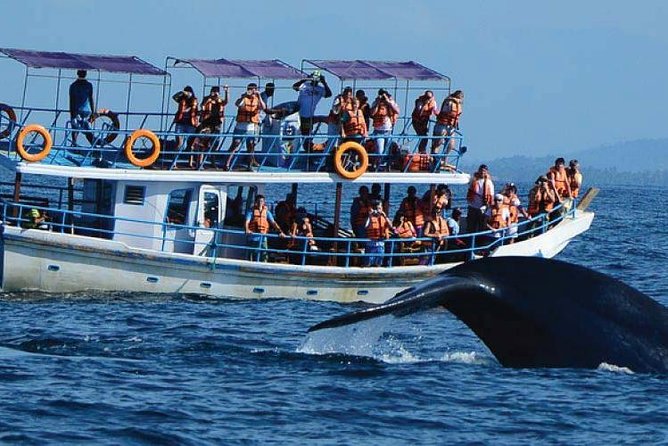
Whales keep their own schedule. This Mirissa whale-watching cruise gives you a practical way to search for blue whales, dolphins, turtles, and other sea life in the Indian Ocean, with a double-decker boat, on-board guides, snacks, and tuk-tuk transfers included. I like the early 6:00 a.m. start, which gives you the best part of the day for a long sea outing, and I like that the crew actively watches for signs of whales rather than simply taking you offshore and hoping for the best.
The main drawback is simple: no whale sighting is guaranteed. One trip produced dolphins but no whales, while another did spot a whale after the crew reacted quickly to signs in the water. At $70 per person, this is a fair but not tiny outlay, so you should book it for the wildlife search itself, not for a guaranteed photograph.
The tour lasts about four hours and returns to the meeting point in Mirissa. Pickup and drop-off by tuk-tuk are included around Mirissa, mobile tickets are accepted, and the group can reach a maximum of 50 people. The activity has an average booking lead time of 43 days, so reserving early is sensible during popular periods.
In This Review
- Key points before you book
- Leaving Mirissa Beach at 6:00 a.m.
- What the double-decker boat means at sea
- Searching for Sri Lanka’s largest animals
- Dolphins, turtles, and flying fish add variety
- Four hours of waiting, watching, and reacting
- How much value do you get for $70?
- What can go wrong, and how to think about it
- Who will enjoy this Mirissa boat trip?
- Booking advice for the 43-day lead time
- Should you book the Mirissa whale-watching experience?
- FAQ
- Where does the whale-watching tour start?
- What time does the tour begin?
- How long does the experience last?
- Where does the tour finish?
- Is pickup included?
- How much does the experience cost?
- What animals might I see?
- Is a whale sighting guaranteed?
- How many people can join the tour?
- What happens if bad weather cancels the tour?
Key points before you book
- Early 6:00 a.m. departure: You head out from Mirissa in the morning for roughly four hours at sea.
- Double-decker boat: The raised design gives you more than one place to watch, though a group of up to 50 can still feel busy.
- Whale and dolphin search: Possible sightings include blue, Bryde’s, sperm, killer, and fin whales, along with several dolphin species.
- Tuk-tuk transfers included: Pickup and return around Mirissa remove one small but useful transport problem.
- Wildlife is never promised: You might see dolphins, flying fish, turtles, manta rays, or sharks and still miss the whales.
- Flexible cancellation: You can receive a full refund if you cancel at least 24 hours before departure, subject to the stated conditions.
Leaving Mirissa Beach at 6:00 a.m.
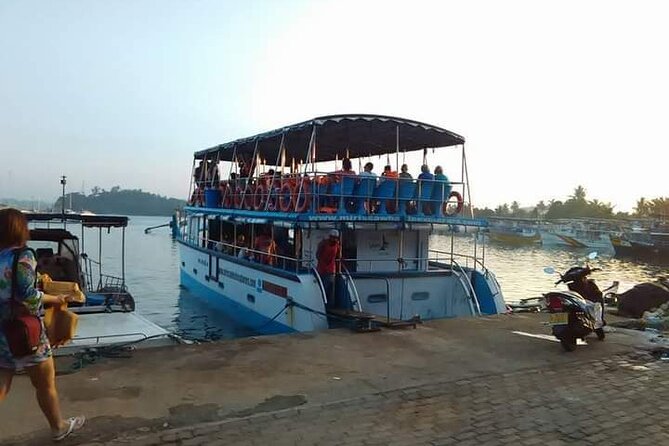
The day begins at Mirissa, a coastal town in southern Sri Lanka, with departure set for 6:00 a.m. The exact meeting point is Mirissa, and the activity ends back there after the boat trip. Included tuk-tuk transfers around Mirissa make the early start easier, particularly if you are not staying close to the beach.
I like this arrangement because a dawn meeting is much less awkward when someone helps with the short local transfer. Still, you should treat the start time as important. One piece of feedback described confusion over the departure hour, so confirm the details before the morning of your trip and be ready early.
The first stop is effectively Mirissa Beach, where you board and begin the move from shore to open water. There is no long land itinerary to distract you. This is a focused marine wildlife outing, and most of your time will be spent looking outward.
More Whale Watching Trips in Galle
- Whales and Dolphins Watching-Luxury Super Grade Cruiser(Hotel Pick up offered)
★ 5.0 · 1,268 reviews - Whale Watching Mirissa with ( WWC )
★ 5.0 · 252 reviews - Whale Watching Mirissa with Eagle Eye
★ 4.5 · 128 reviews
What the double-decker boat means at sea
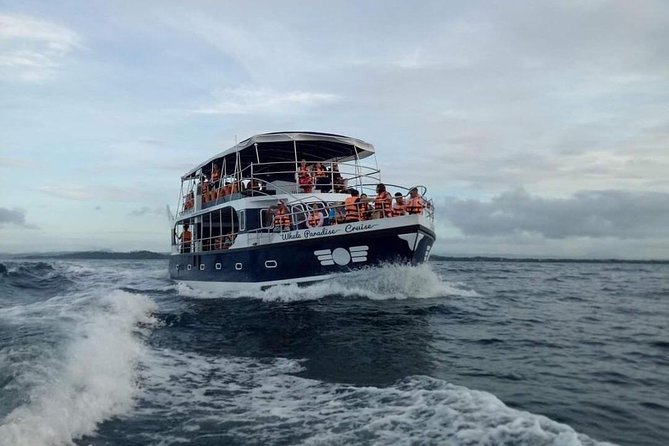
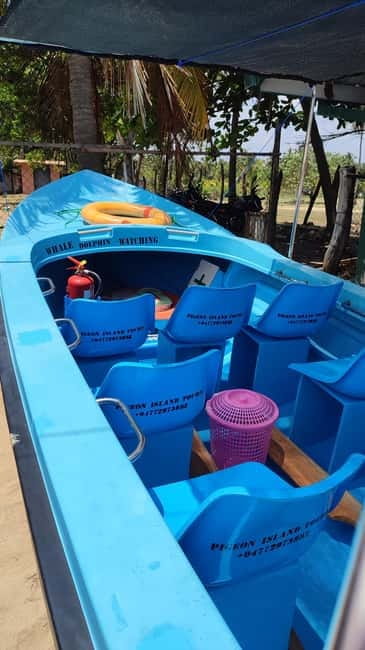
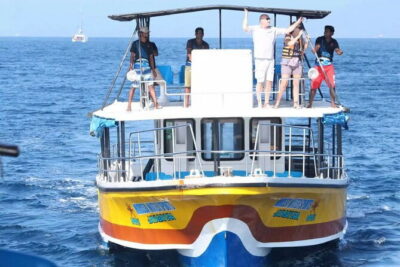
The boat is described as comfortable and double-decker, giving you a choice of viewing levels. A higher deck can help you scan a wider section of sea, while a lower area may feel more sheltered if the movement of the boat becomes tiring. The supplied information does not specify seating arrangements, shade, or restroom facilities, so do not assume that every comfort you want will be available.
The maximum group size is 50 people. That is not an intimate private cruise, but it is also a controlled number rather than an unlimited crowd. I would expect the upper viewing area to become popular when something appears, especially if dolphins come close or a whale surfaces.
The crew’s response matters more than fancy boat details on a trip like this. One account praised the operation as well organized and the crew as good. Another noted that staff stayed alert, followed signs of whales, and started the engines quickly when a possible sighting appeared. That active search is one of the stronger reasons to choose this outing.
Searching for Sri Lanka’s largest animals
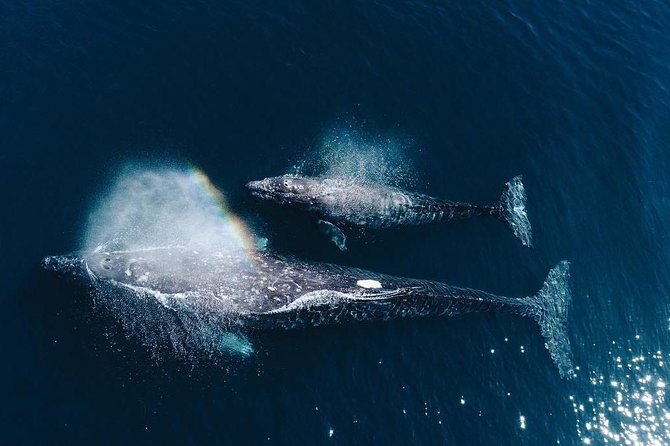
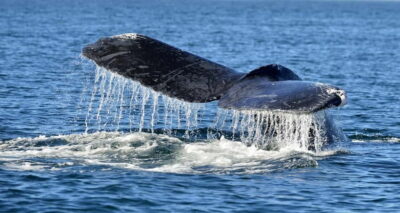
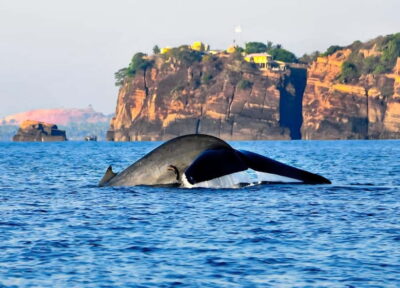
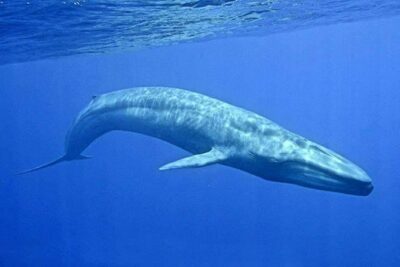
Blue whales are the headline attraction. They are the largest creatures on Earth, and seeing one surface in open water is a very different event from viewing a captive animal. You may see only a back, blow, or tail before the whale disappears again. That uncertainty is part of the experience, but it can test your patience.
The possible whale list is unusually broad. The trip may encounter blue whales, Bryde’s whales, sperm whales, killer whales, and fin whales. The information does not promise that all of these species appear on any one outing, so treat the list as a guide to what may be found in the area, not a menu of guaranteed sightings.
The crew’s job is to watch for signs and move toward them without turning the outing into a chase. The direct feedback about staff reacting quickly to whale signals suggests that the search is taken seriously. At the same time, you should accept that animals control the schedule. A boat can be well run and still return without a whale sighting.
Dolphins, turtles, and flying fish add variety
Dolphins may provide the most active moments of the morning. Possible species include common dolphins, bottlenose dolphins, spinner dolphins, Risso’s dolphins, and striped dolphins. The description promises playful behavior such as somersaulting and moving across the waves, but the exact encounter will depend on where the pods are and how close they come.
One outing saw dolphins but no whales. That is not a failed trip. Dolphins can keep the sea watch lively while you continue looking for larger animals, and they give you something to focus on during long quiet stretches.
You might also see flying fish, turtles, manta rays, or sharks. These are possible sightings, not assurances. Still, the range of marine life gives the trip more value than a single-target whale hunt. If a whale does not appear, you could still come away with a morning of varied wildlife watching.
A different kind of day out entirely:
- Galle: Traditional Gems & Jewellery Workshop with Transfers
★ 4.9 · 539 reviews - Sea waves sri lankan cooking class
★ 5.0 · 467 reviews - Galle Fort Walking tour
★ 4.9 · 285 reviews - Snorkeling with Turtles in Mirissa
★ 5.0 · 268 reviews
Four hours of waiting, watching, and reacting
The stated duration is about four hours. That is long enough to travel out, search a useful area, and return without making the entire day disappear. It is also long enough for the pace to feel slow if the sea is quiet.
You should expect a rhythm of movement and waiting. The boat travels, the guides watch the water, someone spots a possible sign, and the crew responds. Then the ocean may go quiet again. This is normal for wildlife viewing, but it is worth knowing before you book.
The on-board guides add value by helping you understand what you are seeing and by directing attention when something appears. The available details do not provide their names or formal qualifications, so I would judge this part by the practical help they offer during the search rather than by expecting a lecture-style natural history program.
Snacks are included. That is a modest feature, but useful on an early morning at sea. You do not have to think about food during the four-hour outing, though no details are given about the snack selection or dietary options.
How much value do you get for $70?
At $70 per person, the price covers the boat trip, on-board guides, snacks, and Mirissa tuk-tuk transfers. The transport is especially helpful because it connects the shore meeting point with your accommodation area without requiring you to arrange a separate early ride.
The value depends on how you measure success. If you need a guaranteed close whale photograph, no operator can honestly promise that, and this trip may disappoint. If you value a properly organized search for wild marine life, the price is easier to justify.
The good organization praised in the feedback supports the cost. So does the crew’s apparent alertness when a whale signal appears. The price would feel less worthwhile if the boat simply went out, drifted around, and returned, but the available information points to an active effort by the crew.
A group of up to 50 also affects the value. You are paying for a shared outing, not a private charter. A larger group can make the trip more affordable than hiring your own boat, though it may mean more competition for the best viewing positions.
What can go wrong, and how to think about it
The biggest risk is nature. You may see dolphins and miss whales, as happened on one outing. You may also have a quieter morning with fewer sightings than expected. That is not necessarily a sign of poor organization.
Weather is another factor. The activity requires good weather, and if poor conditions cancel the trip, you are offered another date or a full refund. This is a useful protection, since a rough or unsafe sea would ruin the purpose of the outing.
There is also a minimum number of participants. If that minimum is not reached and the activity is canceled, you are offered another date, another experience, or a full refund. For the normal cancellation terms, you must cancel at least 24 hours before the start time to receive a full refund. Changes or cancellations made inside that 24-hour window are not accepted for a refund.
I would avoid placing the whale trip on the most important morning of a short Sri Lanka visit. Booking it early in your stay gives you some room to adjust if weather or minimum numbers cause a cancellation.
Who will enjoy this Mirissa boat trip?
I would recommend it to anyone who wants to see marine animals in the wild and accepts that the sea makes the final decision. Families, couples, solo sightseers, and small groups can all take part, since most people can participate and the group limit is 50.
It suits you particularly well if you appreciate practical organization. The early tuk-tuk connection, snacks, guides, and return to Mirissa keep the outing straightforward. You can focus on the water rather than arranging every small part yourself.
It is less suitable if you dislike early mornings, boat travel, or periods of waiting. It may also frustrate you if your main goal is a certain species. The species list is impressive, but it describes possibilities, not a fixed program.
Bring realistic expectations. The best result may be a blue whale, but it might instead be dolphins, a turtle, flying fish, or simply the experience of searching a wide stretch of ocean with an alert crew.
Booking advice for the 43-day lead time
The average booking lead time is 43 days, which suggests that this activity often sells ahead rather than being a last-minute decision. If whale watching is high on your Sri Lanka plans, reserve early, especially if your dates are fixed.
Keep the morning flexible around the 6:00 a.m. departure. Since the activity lasts about four hours and finishes back at the meeting point, you should avoid scheduling another time-sensitive activity immediately afterward.
Check the pickup details and start time carefully. The published information gives Mirissa as both the start and end location, with tuk-tuk transfers offered, but local pickup instructions still matter at dawn.
Should you book the Mirissa whale-watching experience?
Book it if you want a well-organized, shared search for whales and other marine life, and if you can accept an uncertain result. I especially like the combination of active crew, double-decker boat, included transfers, snacks, and a manageable four-hour duration.
Think twice if $70 feels too high for a wildlife outing without a sighting guarantee, or if you need a private boat and a quiet atmosphere. For most people, the fair call is to book early, keep expectations honest, and treat every animal sighting as a bonus rather than a promise.
FAQ
Where does the whale-watching tour start?
It starts in Mirissa, Sri Lanka, with the listed meeting point at Mirissa.
What time does the tour begin?
The scheduled start time is 6:00 a.m.
How long does the experience last?
The boat trip lasts approximately four hours.
Where does the tour finish?
The activity ends back at the meeting point in Mirissa.
Is pickup included?
Yes. Mirissa tuk-tuk pickup and drop-off are included.
How much does the experience cost?
The listed price is $70 per person.
What animals might I see?
Possible sightings include blue, Bryde’s, sperm, killer, and fin whales; common, bottlenose, spinner, Risso’s, and striped dolphins; plus flying fish, turtles, manta rays, and sharks.
Is a whale sighting guaranteed?
No. Wildlife sightings are not guaranteed. One outing saw dolphins but did not see whales.
How many people can join the tour?
The activity allows a maximum of 50 participants.
What happens if bad weather cancels the tour?
You are offered a different date or a full refund if poor weather causes cancellation.
Just added in Galle
- Sri Lankan Cooking with Tricks★ 5.0 · 1 review
- Private Transfer and Whale Watching Tour from Hikkaduwa and Galle★ 5.0 · 1 review
- Surfing Lessons★ 4.5 · 7 reviews
- Udawalawa National Park Safari trip from Hikkaduwa/Galle/Weligama★ 4.5 · 7 reviews
- Airport Transfer by Hikkaduwa Taxi Service★ 5.0 · 5 reviews
- Sinharaja Rainforest Trip★ 5.0 · 7 reviews
- One Day Udawalawe Safari from Galle/Mirissa/Unawatuna/Hikkaduwa★ 5.0 · 10 reviews
- Hikkaduwa/ Galle/ Mirissa : With Udawalawe safari – Day trip★ 5.0 · 2 reviews
Whale Watching, compared.
Whales and Dolphins Watching-Luxury Super Grade Cruiser(Hotel Pick up offered)
Read our review →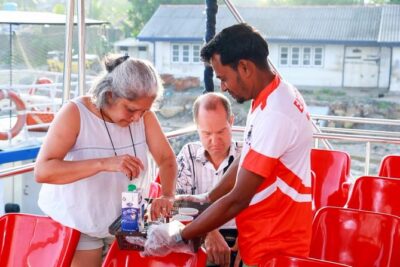
All Inclusive Mirissa Whale and Dolphin Watching Boat Ride
Read our review →Browse the lists this tour appears in