
Review · WALKING TOURS
Agro village: guided walking tour and local lunch
Sri Lankan lunch starts with a farm walk. This five-hour private outing from Kalutara takes you into the countryside for a close look at tea, rubber, coconut, cinnamon, and village food traditions. I like that the experience is hands-on rather than a quick photo stop, and that the meal comes from a local farm kitchen instead of a standard hotel buffet.
I also like the personal scale. You travel by air-conditioned car or van with a chauffeur driver, then walk through the farm with a guide. Tharuka, who handled one recent visit, was praised for being punctual and friendly throughout the day. The main consideration is access: this is a walking-based farm visit and is not suitable for wheelchair users.
In This Review
- Key points to know before you book
- The countryside road from Kalutara
- A drum welcome at the Agro Village
- Tea plucking and the story of Ceylon tea
- Coconut, cinnamon, rubber, and practical village skills
- Making traditional sweets with village women
- A farm lunch of rice and curries
- What the guide adds to the day
- Is $141 per person good value?
- Who will enjoy this farm experience?
- Practical details for a smooth visit
- Should you book the Agro Village tour?
- FAQ
- How long does the Agro Village tour last?
- Where does hotel pickup take place?
- Is transport included?
- What languages are available for the guide?
- Is this a private tour?
- What food is included?
- Can I take part in making traditional sweets?
- Is the tour suitable for wheelchair users?
Key points to know before you book
- Tea is shown from leaf to cup: You can watch tea plucking and hear how Ceylon tea is gathered and processed.
- The farm covers more than one crop: Rubber trees, coconut palms, cinnamon, bananas, spices, and other plants are part of the visit.
- You get to make local sweets: Village women demonstrate traditional sweetmaking, then invite you to join in.
- Lunch is a real part of the experience: Expect rice, several local curries, sweets, fresh farm fruit, and Ceylon tea or local coffee.
- It is a private five-hour outing: Pickup is included from hotels in Kalutara, Wadduwa, Waskaduwa, and Panadura.
- The price reflects private transport and guiding: At $141 per person, the value is strongest for couples, families, or small private groups who want a focused cultural visit.
The countryside road from Kalutara
The experience begins with pickup at your hotel in Kalutara, Wadduwa, Waskaduwa, or Panadura. Your driver meets you inside the hotel lobby, so you should wait there about 10 minutes before the scheduled time.
The ride takes you through a rural area before reaching the Agro Village in Kalutara. That transfer matters because the outing starts before you enter the farm. You leave the built-up coastal hotel zone and see a more ordinary side of the Western Province, with roads and countryside replacing the usual resort setting.
Transport is by air-conditioned car or van with a chauffeur driver. That is useful in Sri Lanka’s warm climate, especially before and after the walking portion. The transport is also private, so you do not need to organize shared transfers or wait for a large group at several hotels.
The tour lasts five hours, including transport, the farm walk, food demonstrations, hands-on sweetmaking, and lunch. Ask for the exact starting time when you check availability, since the available departure time is not fixed in the information provided.
More Walking Tours in Colombo
- Colombo Walking Tour with Ajeet De Soyza
★ 5.0 · 43 reviews - Glimpse Of Colombo City Walk
★ 4.5 · 11 reviews - Colombo Social and Political Walk
★ 5.0 · 4 reviews
A drum welcome at the Agro Village
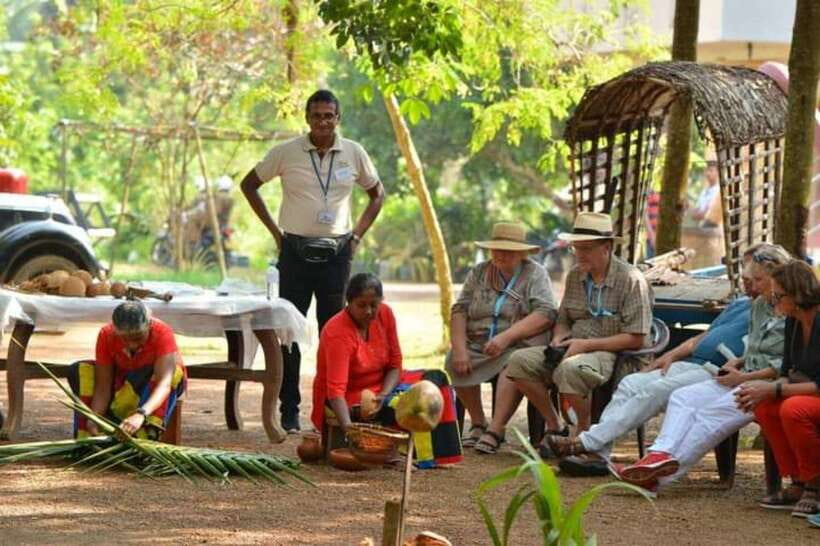
Arrival begins with a local welcome accompanied by a traditional drum. It is a small detail, but it sets the tone. You are not simply being dropped at a farm and handed a map. The welcome introduces the place through a local custom before the walking tour begins.
A guided walk follows. The farm is family-run, and the owner explains the plants and agricultural work in person. One especially strong account of the visit described the owner showing everything from rubber trees and banana plants to coconut palms, spices, and tea. That kind of direct explanation gives the tour its value.
You should expect the visit to feel educational, but not like a formal classroom. The focus is on seeing the plants, watching practical demonstrations, and asking questions. If you have an interest in how everyday products are made, you will get much more from this than from a sightseeing stop built around photographs.
The private group format helps here. You can keep the pace with your own party and spend more time on the parts that interest you most. Families may want to linger over the food preparation, while keen cooks may prefer more explanation about coconut, cinnamon, or spices.
Tea plucking and the story of Ceylon tea
Tea is one of the main subjects of the walk. You get the chance to witness tea plucking and hear an explanation from the farmer about Ceylon tea.
That is more useful than simply being told that Sri Lanka produces tea. You see the crop in its growing setting and learn about the first stage of production. The experience connects the drink in your cup with the plants and workers behind it.
The tour does not promise a full factory visit or a complete industrial processing tour, so you should not book it expecting an extensive tea museum or tasting session. Its strength is the farm-level view, where the guide can explain the crop as part of a working agricultural setting.
The final cup of Ceylon tea gives the subject a pleasant finish. You can also choose local coffee, which makes the closing refreshment suitable for people who are less interested in tea.
Coconut, cinnamon, rubber, and practical village skills
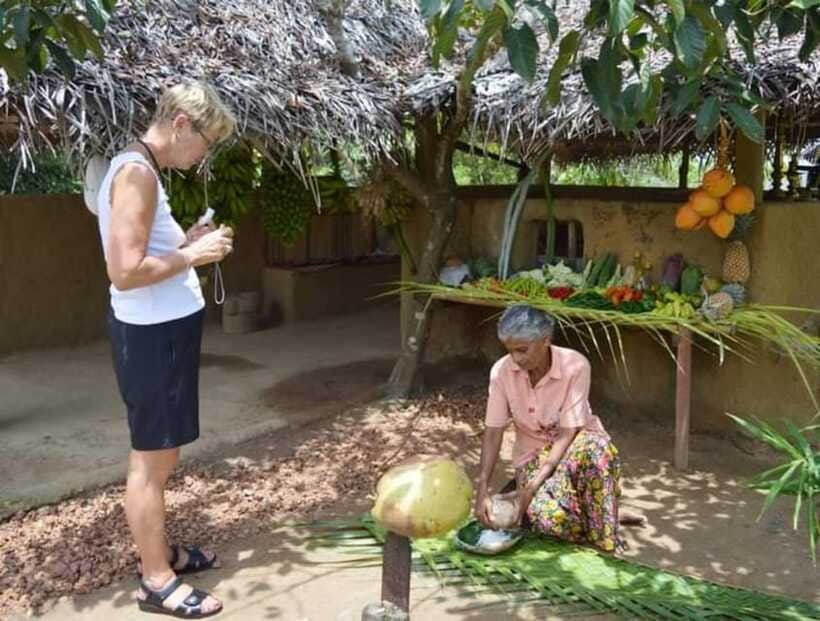
The farm visit covers several demonstrations, and this variety keeps the five-hour program from feeling like a single-crop tour.
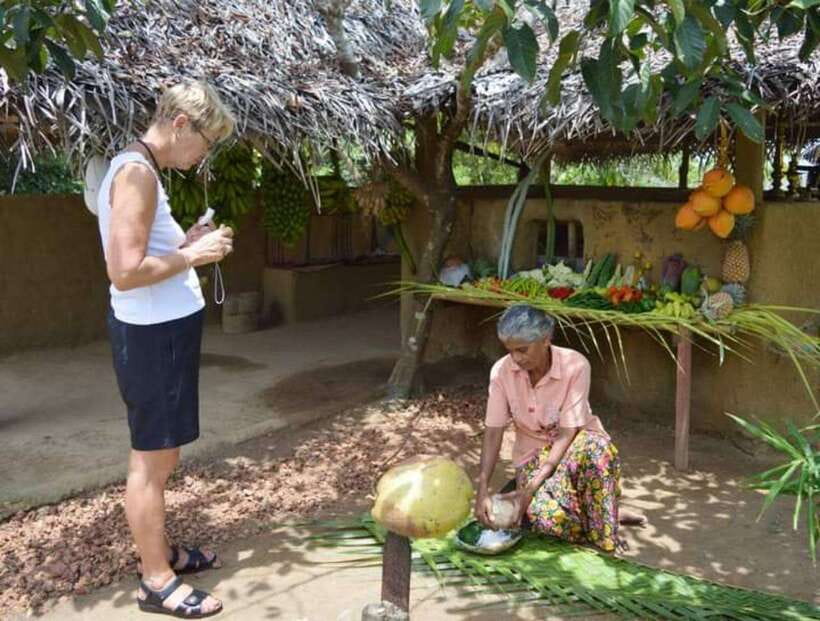
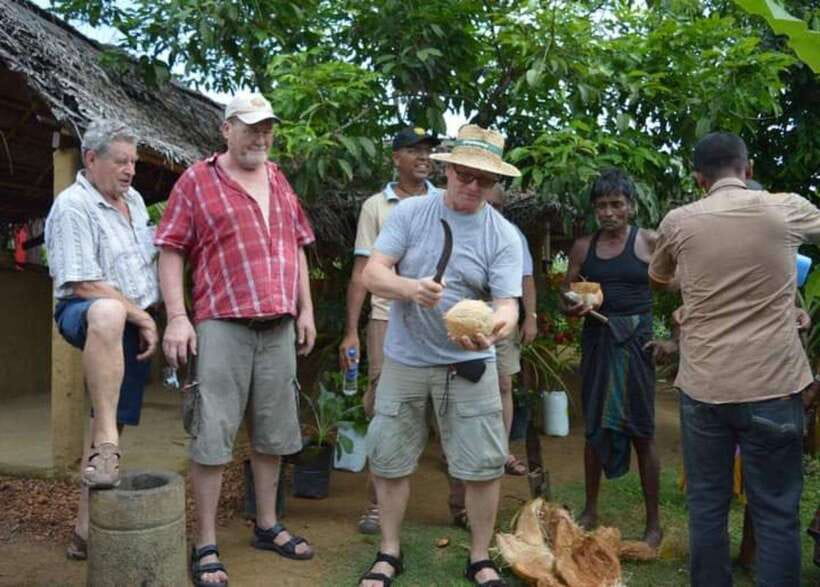
You can see cinnamon peeling, a careful task that shows how a familiar spice is prepared. You also learn about coconut scraping and coconut oil making. Coconut is central to Sri Lankan cooking, so these demonstrations help explain why it appears in so many local dishes and household products.
The program also includes coir products and coconut leaf weaving. These parts are especially useful because they show that the coconut palm provides far more than food. Its fibers and leaves can be turned into practical items, and the demonstrations connect agriculture with village craft.
Rubber tapping is another major stop. The farm shows how rubber trees are used and explains the process. For many visitors, rubber is something encountered only as a finished product. Seeing the tree and the tapping method makes the crop easier to understand.
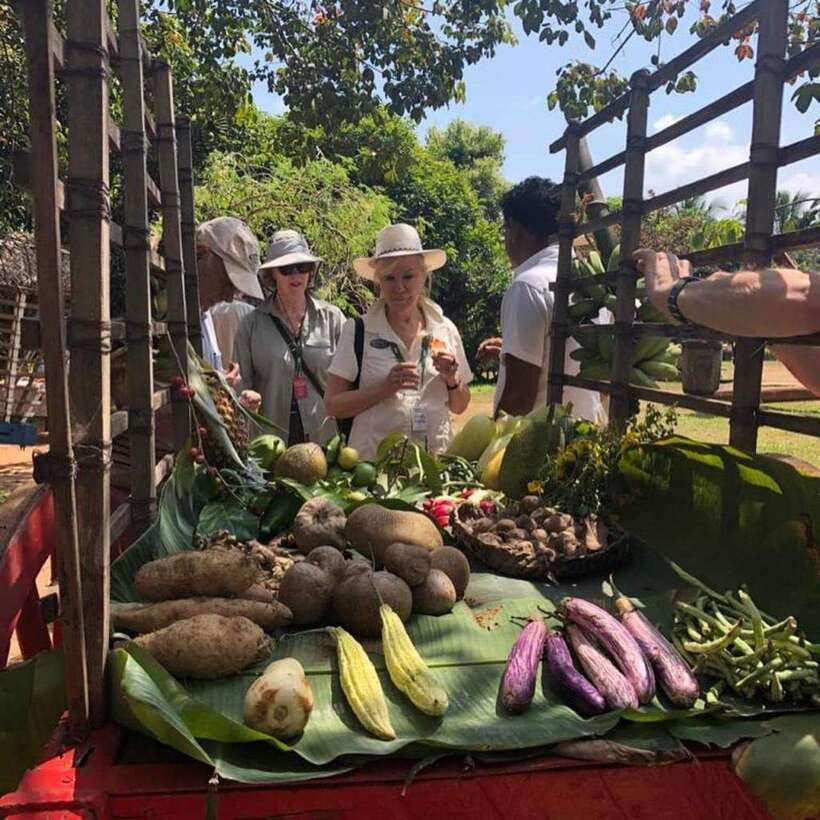
You may also see banana plants, spices, and other farm crops. The exact balance of time between demonstrations can vary, but the broad theme is clear: this is an introduction to how several everyday Sri Lankan products are grown, collected, and prepared.
I would recommend wearing comfortable clothing and shoes suitable for walking on a farm. The operator does not describe the surface in detail, so you should be ready for a less formal walking environment rather than paved museum paths.
A few more options to weigh up in Kalutara
- Half Day Udawalawe Safari from Kalutara (Entrance + Lunch)
★ 5.0 · 9 reviews - Private Dambulla Sigiriya Tour from Kandy with Lunch
★ 5.0 · 166 reviews - Colombo: Lotus Tower Experience with Lunch or Dinner Buffet
★ 4.5 · 126 reviews - Yala: Private Safari Day Trip with Lunch & Entry Fees
★ 4.7 · 109 reviews
Making traditional sweets with village women
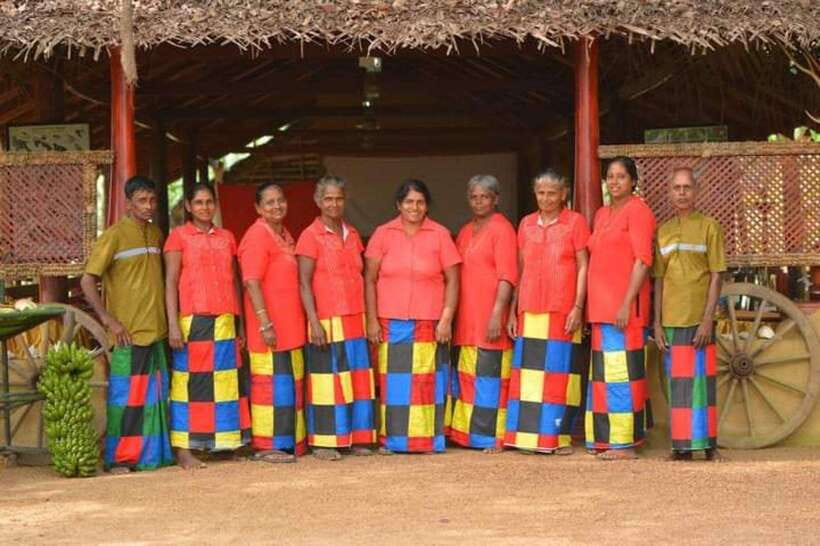
The most hands-on part of the visit is the sweetmaking demonstration. Local women show you how traditional sweets are made, and you can join them rather than simply watch from the side.
This is where the experience becomes more personal. Agricultural demonstrations explain how ingredients are produced, but making food shows how those ingredients reach the household table. You get to handle the process, taste the result, and share a simple activity with local people.
The information does not name the specific sweets, so you should not expect a promised menu of particular recipes. Still, the chance to make and taste traditional food is a strong reason to choose this tour if you enjoy cooking or food culture.
It is also a good activity for families. Children may find the practical work more memorable than a long explanation about crops, while adults get a direct look at village cooking traditions. Just remember that this is a guided cultural experience, not a full cooking class with a recipe booklet or take-home meal.
A farm lunch of rice and curries
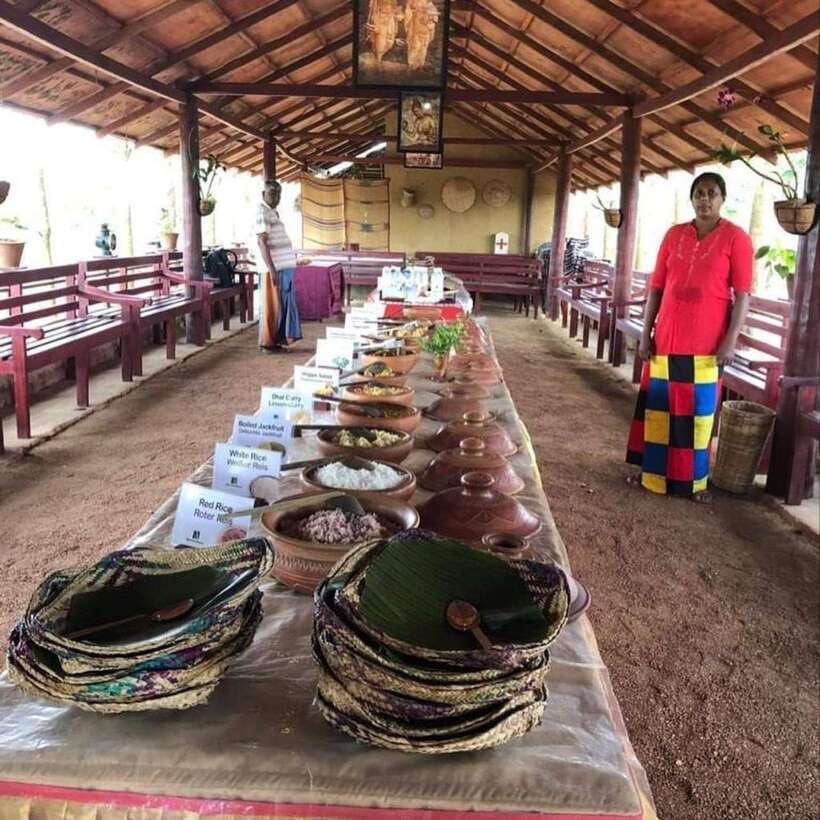
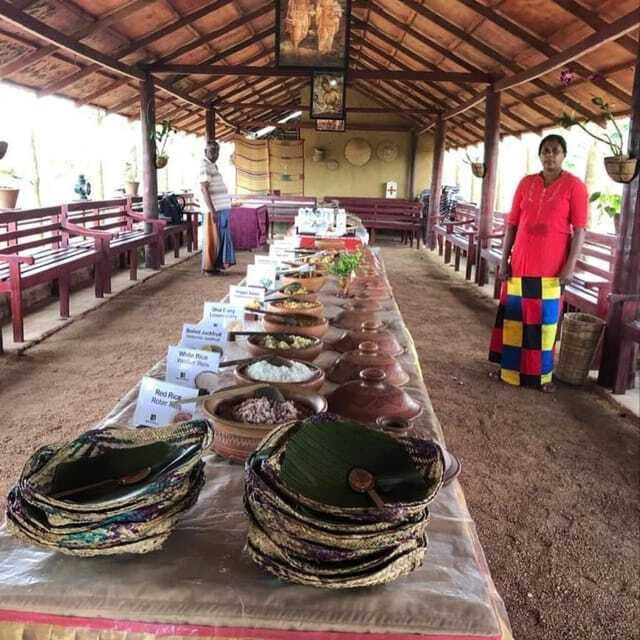
Lunch takes place at the local restaurant on the farm. The meal includes rice and different local curries, followed by traditional sweets and fresh farm fruit.
This is the part I would value most if I wanted to get away from hotel food. A hotel buffet may offer familiar Sri Lankan dishes, but a farm lunch gives the meal a stronger connection to the place you have just explored. You have seen the crops, learned about coconut and spices, and then sit down to eat local cooking in the same setting.
The meal is presented as a local buffet, so you can try several dishes rather than commit to one unfamiliar plate. That makes it easier to sample different flavors and textures. The available information does not specify vegetarian, vegan, allergy, or dietary arrangements, so you should ask the provider in advance if those details matter to you.
Dessert includes local sweets and farm-fresh fruit. The meal ends with a cup of Ceylon tea or local coffee. That final drink ties together the two main parts of the outing: farm production and food on the table.
One recent German visitor described the lunch as delicious, authentic, and much better than the tourist-style food served in hotels in the area. That is a strong endorsement of the meal’s character, although tastes vary and the exact dishes may change.
What the guide adds to the day
A private farm visit depends heavily on the guide. The information provided lists English and German as guide languages, which is helpful if you want explanations rather than a quiet walk through the property.
Tharuka was specifically praised for arriving on time and being very friendly throughout the outing. That detail matters because a five-hour private experience can feel very different with a rushed escort compared with a guide who stays engaged from pickup to drop-off.
The guide’s job is not only to point out plants. You can expect help understanding the demonstrations, joining the sweetmaking, and following the rhythm of the farm visit. If you have particular interests, such as tea, rubber, cooking, or coconut crafts, mention them early so the tour can give those subjects proper attention.
The owner’s participation is another advantage. Direct explanations from the person who runs the family farm can make the visit feel grounded in daily work, rather than packaged as a performance for visitors.
Is $141 per person good value?
The price is $141 per person for five hours. That is not a cheap half-day outing, especially when compared with a simple sightseeing transfer or a standard meal. The value comes from what is bundled into the price.
You receive private air-conditioned transport, a chauffeur driver, hotel pickup and drop-off in the listed coastal areas, a guided farm walk, a welcome drink, food demonstrations, sweetmaking, and a local buffet lunch. You are paying for a private service with several activities, not only entry to a farm.
For a couple or small private group, the price can make sense if you want a relaxed cultural experience without arranging separate transport, lunch, and guiding. It is less attractive if your main goal is simply to see a tea plant or eat one Sri Lankan meal.
The price applies to people starting from Kalutara. Pickup is also included from Wadduwa, Waskaduwa, and Panadura, but additional charges apply if you start from other cities. Check that cost before booking, since a long transfer could change the value considerably.
The reserve-now-and-pay-later option gives you some planning flexibility, and free cancellation is available up to 24 hours before the tour for a full refund. These terms are useful if your beach holiday plans are not yet fixed.
Who will enjoy this farm experience?
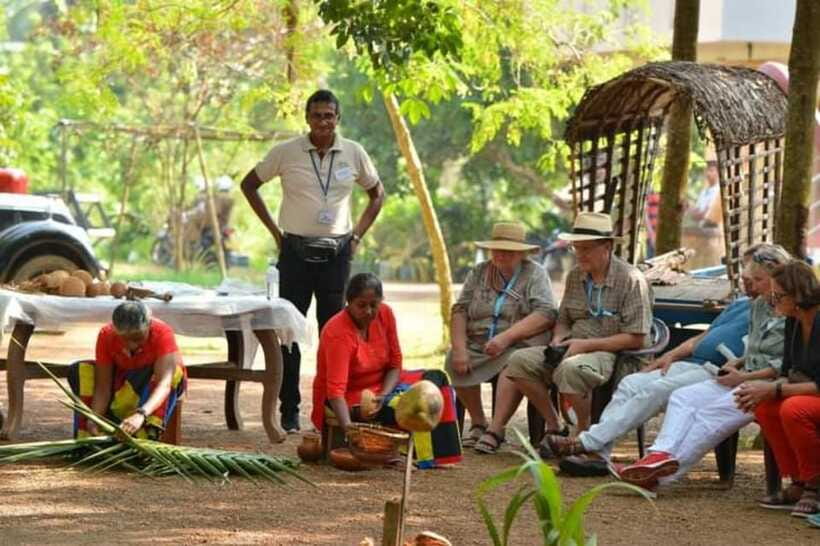
I would choose this outing for you if you want to see how local products are grown and used, not just visit another attraction. It suits people who enjoy food, small-scale agriculture, village crafts, and guided walks.
It is also a good fit for:
- Couples looking for a private half-day away from the coast
- Families who prefer hands-on activities
- Visitors interested in Sri Lankan tea and spices
- People who want a local lunch rather than hotel dining
- Small private groups that value flexible pacing
- English or German speakers who want a live guide
You may want to skip it if you dislike walking, have mobility needs that require wheelchair access, or prefer polished attractions with fixed displays. This is a working farm and cultural visit. Its appeal lies in the practical demonstrations and personal contact, not in grand buildings or elaborate staging.
You should also keep your expectations in the right place. The tour gives you an introduction to many agricultural and food traditions in one morning or afternoon. It does not claim to be a full course in tea production, rubber processing, or Sri Lankan cooking.
Practical details for a smooth visit
Wear shoes that you can walk in comfortably and clothing suited to warm weather. The tour includes a farm walk and several hands-on demonstrations, so clothes that allow easy movement are a sensible choice.
Wait in your hotel lobby 10 minutes before pickup. The driver comes inside to meet you, which is helpful in larger hotels where finding a parked vehicle can take time.
Pickup is included from hotels in Kalutara, Wadduwa, Waskaduwa, and Panadura. If you are staying elsewhere, ask about the additional charge before confirming.
The experience is private, with English or German guiding available. It is not suitable for wheelchair users. For dietary needs, the supplied details do not give specific arrangements, so contact the provider before booking rather than assuming the buffet can be changed.
The operator is Aufurlaub. You can cancel up to 24 hours in advance for a full refund, and you can reserve now while paying later.
Should you book the Agro Village tour?
Book it if you want a personal, food-focused look at rural Sri Lanka and value private transport, a local guide, and a meal tied to the farm. Tea plucking, rubber tapping, coconut work, cinnamon peeling, sweetmaking, and lunch give the five hours a clear sense of place.
I would be especially inclined to book if you are staying in Kalutara and want one well-organized day away from the beach. Tharuka’s punctual, friendly service and the owner’s detailed explanations add confidence to the experience.
Skip it if $141 feels high for a half-day, if you want a large commercial tea factory, or if walking access is a concern. For the right visitor, though, this is a useful and tasty way to understand the ordinary work behind some of Sri Lanka’s most familiar crops.
FAQ
How long does the Agro Village tour last?
The experience lasts five hours, including transport, the guided farm walk, demonstrations, sweetmaking, and the local lunch.
Where does hotel pickup take place?
Pickup is included from hotels in Kalutara, Wadduwa, Waskaduwa, and Panadura. You should wait in the hotel lobby 10 minutes before the scheduled pickup time.
Is transport included?
Yes. Transport is provided in an air-conditioned car or van with a chauffeur driver, including hotel pickup and drop-off in the listed areas.
What languages are available for the guide?
Live guiding is available in English and German.
Is this a private tour?
Yes. The activity is arranged for a private group.
What food is included?
The experience includes a welcome drink, a local buffet lunch with rice and different curries, local sweets, farm-fresh fruit, and a final cup of Ceylon tea or local coffee.
Can I take part in making traditional sweets?
Yes. Local village women demonstrate traditional sweetmaking, and you can join them to make and taste the sweets.
Is the tour suitable for wheelchair users?
No. The experience is not suitable for wheelchair users because it includes a guided walking tour inside the farm.
More Walking Tours in Kalutara
- Galle Fort Walking tour
★ 4.9 · 285 reviews - Galle Fort Walking Tour with a Resident
★ 5.0 · 88 reviews - Sigiriya: Rock Fortress Private Guided Walking Tour
★ 4.8 · 34 reviews - Galle Fortt Guided Walking Tour with a Local
★ 4.9 · 33 reviews
Just added in Kalutara
- Yala National Park (Day Tour)★ 5.0 · 5 reviews
- Water Amusement and Karting★ 5.0 · 1 review
- Wake Boarding in Bentota★ 5.0 · 1 review
- Udawalawe Jeep Safari from Bentota Aluthgama Berawula Area★ 5.0 · 1 review
- Madu River Sunrise Mangrove Kayaking★ 5.0 · 5 reviews
- Udawalawa National Park Day Tour★ 4.5 · 5 reviews
- Half Day Udawalawe Safari from Kalutara (Entrance + Lunch)★ 5.0 · 9 reviews
- Sigiriya and Dambulla Day Tour from Kalutara All Inclusive★ 5.0 · 2 reviews
Walking Tours, compared.
Galle Fort Heritage Walk by a Certified Heritage Interpreter
Read our review →
Browse the lists this tour appears in