
Review · GALLE FORT TOURS
Galle Fort Walk with a Local
History has a handsome setting here. This two-hour walk gives you a useful introduction to Galle Fort, where Portuguese foundations, Dutch ramparts, British buildings, museums, shops, and daily life all share the same compact streets. I like the combination of personal attention from a local guide and a clear route through the fort’s major sights. I also like that the walk includes the ramparts, Galle Lighthouse, museums, and a short drink break rather than stopping at architecture alone. The main consideration is that the fort involves cobbles, walking, and some steps, so it is not a gentle stroll for anyone with serious leg or breathing problems.
The tour costs $65 per person, with a minimum of two people and a maximum of 12. That price makes the most sense for a couple, family, or small group that wants history explained without joining a large crowd. Food and drinks are extra, hotel transport is not provided, and the quality of the experience depends heavily on the individual guide assigned to your group.
The local connection can be a real strength. Guides named Shirat and Chirath have been praised for explaining Galle’s past, restoration work, architecture, and local customs in an easy manner. One guide also has family ties to the fort and operates a small tea shop. Still, one account described a guide who spoke very little and gave uncertain dates, so I would confirm the guide, meeting time, and language before setting out.
In This Review
- Key points to know before booking
- Why Galle Fort is worth two hours
- Meeting at National Tea Rooms
- Walking the Portuguese and Dutch fortifications
- Museums and the fort’s working past
- Along the ramparts to Galle Lighthouse
- Tea, king coconut, and local recommendations
- What the guide adds, and where the risk lies
- Is $65 a fair price?
- Who should book this Galle Fort walk?
- Should you book the Galle Fort Walk with a Local?
- FAQ
- How long does the Galle Fort Walk with a Local last?
- Where does the tour begin?
- Where does the tour end?
- Is this a private tour?
- How many people are required to book?
- What is the maximum group size?
- Is hotel pickup included?
- Are entrance fees included?
- Are food and drinks included?
- What should I wear for the walk?
- Can I cancel for a full refund?
Key points to know before booking
- Start at National Tea Rooms: Meet outside National Tea Rooms at 10 Lighthouse Street, inside the Galle Fort area.
- Two hours covers the essential sights: Expect a focused introduction, not a full-day study of every museum and building.
- The ramparts are a highlight: The walk reaches the famous Galle Lighthouse and gives you a different view of the fort walls and harbor.
- History comes in three colonial layers: Portuguese beginnings, Dutch expansion, and British additions shape the route.
- This is a private group tour: Only your party participates, with two people required and 12 allowed at most.
- Plan for heat and uneven ground: Comfortable shoes and a hat are sensible, and an early start can make the walk easier.
Why Galle Fort is worth two hours
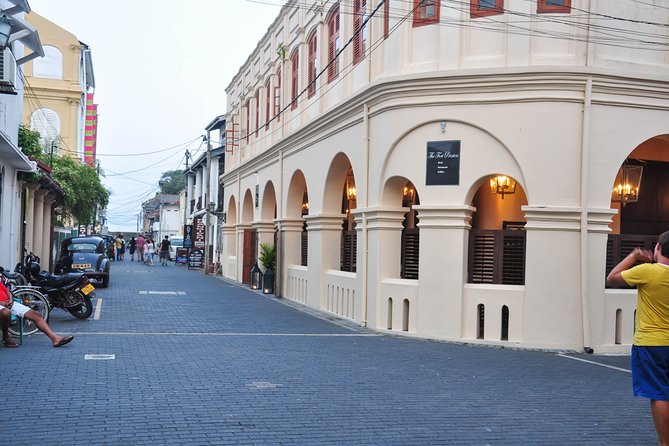
Galle Fort is not simply a single monument with a gate and a plaque. It is a working town enclosed by old defenses, with narrow streets, religious buildings, former administrative offices, museums, restaurants, and shops. That makes a guided walk useful because the story is spread across the whole area.
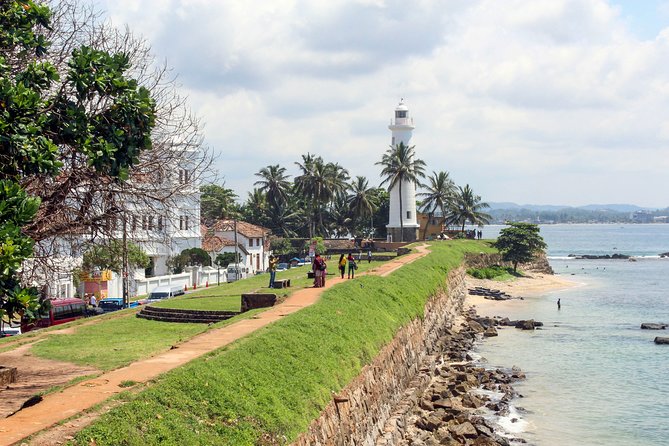
The natural harbor gave Galle importance long before the colonial fort was built. It was known as a port as far back as 1400 BC and was linked to the export of cinnamon. The Portuguese took control in the 1500s, then the Dutch captured the fort in the 1600s and greatly expanded its defenses. The British arrived in 1796 and added their own buildings, including the lighthouse completed in 1938.
I like this sequence because it keeps the history grounded in what you can see. A low building, a street name, a church, or a section of stone wall may look ordinary until your guide explains which colonial period shaped it. You get a better sense of how control of the harbor changed the town, rather than simply memorizing dates.
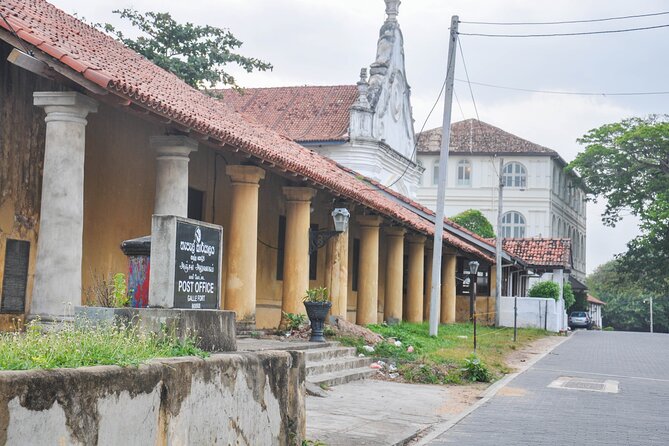
The fort is also a good place to see how old buildings are used today. Former government structures and residences now sit beside shops and restaurants. The result can feel polished in some streets and more lived-in in others. That mix is part of the appeal, though it also means the walk is not an untouched historical site.
More Walking Tours in Galle
- Galle Fort Walking tour
★ 4.9 · 285 reviews - Galle Fort Walking Tour with a Resident
★ 5.0 · 88 reviews - Galle Fortt Guided Walking Tour with a Local
★ 4.9 · 33 reviews
Meeting at National Tea Rooms
The walk begins outside National Tea Rooms at 10 Lighthouse Street. Since hotel pickup and drop-off are not included, you need to reach the meeting point yourself. The fort is near public transportation, but the supplied details do not specify a pickup service or transport arrangement from hotels.
The starting point has a local connection beyond its practical role as a landmark. One guide’s family history is tied to Galle, and his grandfather created a tea room where local people could drink tea. That gives the opening a human touch, especially if your guide shares more about the family business and the way the fort has changed.
You should arrive ready to walk rather than treating the tea room as a formal waiting lounge. Bring a hat, wear shoes that handle cobbled streets, and carry water if you need it. The planned tea or king coconut break is at your own expense, so keep some money available.
An early start is worth considering. A 6:30 a.m. departure worked well for one group because it allowed the main sights to be covered before the heat became uncomfortable. The standard tour timing may differ, but the lesson is sound: ask for an early start if your schedule permits.
Walking the Portuguese and Dutch fortifications
The first part of the route introduces Galle’s origins and the major colonial changes. The Portuguese established Galle as a headquarters and built an early fort from earth and palisades. Later, the Dutch took over Portuguese holdings and replaced much of that earlier work with a more substantial stone defense system.
The Dutch fortification is the part you can read most clearly in the walls and bastions. The Dutch added high stone ramparts, storm drains, a church, administrative buildings, and residences. Their work was not only military. It created an organized settlement with spaces for government, worship, trade, and daily life.
Your guide points out the practical details that make the fort more than a scenic backdrop. Look for low, gabled houses, old Dutch street names, churches, public buildings, and monuments. The streets are compact, but the story is layered, so a guide can help you understand why one building has a Dutch form while another reflects British use.
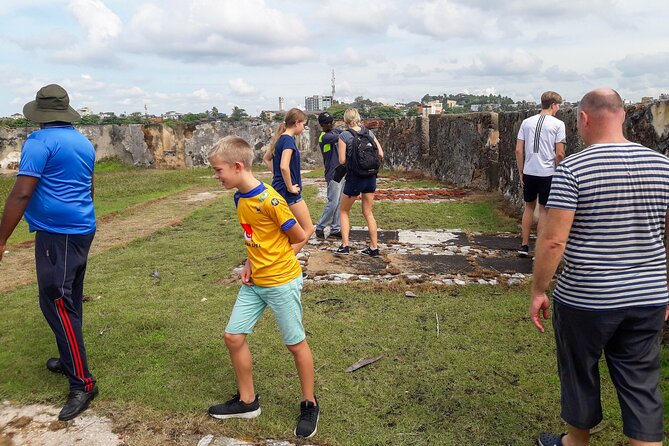
The tour is described as a medium walking route. That matters. You are not merely crossing a flat plaza between photo stops. Cobbles, ramparts, and steps are part of the experience. Most people can participate, but anyone with severe leg problems or asthma should take the physical demands seriously and ask about the route before booking.
Museums and the fort’s working past

The museum visits add objects and documents to the outdoor history. The fort’s walls tell you how the settlement was defended, while the museums help explain the people, trade, administration, and harbor activity behind those defenses.
You will see artifacts connected with Galle Fort and Galle harbor, along with archives that help trace the area’s past. This part of the walk is especially useful if you are visiting Galle for only one day. Instead of wandering through several collections without a framework, you have a guide to point out what matters and connect it to the streets outside.
The museum portion may be the strongest reason to choose a guide rather than explore alone. It can be difficult to understand the role of a document or object without context, especially when the fort’s story crosses Portuguese, Dutch, and British periods. A good guide can also explain how UNESCO recognition relates to restoration and preservation.
That said, a two-hour tour has limits. You should expect a selection of key museums and exhibits, not a close reading of every archive. If you want long museum visits, detailed architectural study, or time for extended shopping, you may need to continue independently after the walk.
More Galle Fort walks:
- Galle Fort cooking class
★ 5.0 · 60 reviews - Galle Fort Heritage Walk by a Certified Heritage Interpreter
★ 5.0 · 31 reviews - Galle Fort and City Cycling Tour – Choice of E-Bike or Manual
★ 5.0 · 28 reviews - Galle Fort Walk with Glamorous Stories
★ 5.0 · 17 reviews
Along the ramparts to Galle Lighthouse
The walk along the ramparts is the most scenic part of the route. From the walls, you can see the fort’s position beside the harbor and understand why this location mattered for centuries. The ramparts also give you a break from the narrow streets and bring the fort’s defensive purpose into view.
The route leads toward Galle Lighthouse, one of the fort’s best-known landmarks. The current beacon dates to the British period and is a replica of the first lighthouse built there. Its location on the edge of the fort makes it an easy visual marker and a natural point for photographs.
I would not treat the lighthouse as a standalone attraction. Its real value comes from seeing it as part of the fort’s changing story. Portuguese and Dutch defenses shaped the walls, British rule added later buildings, and the lighthouse represents the fort’s continued role as a working port settlement.
Take care on the ramparts. The walk is exposed, and the combination of sun, stone, and uneven surfaces can be tiring. The supplied advice to wear a hat and comfortable shoes is practical rather than decorative. If you prefer cooler conditions, request an early start.
Tea, king coconut, and local recommendations

The break is simple: Ceylon tea or king coconut milk, with the cost paid separately. It is not presented as a full meal, so you should eat beforehand if you need more than a short refreshment stop.
This pause can be one of the more personal parts of the experience. One guide runs a small tea shop and has family ties to the fort, while another account praised the tea room’s local roots. That kind of stop gives you a chance to ask about life inside the fort, not just its colonial rulers.
The guides have also helped with recommendations for places to eat and shop. This is useful at the end of a walking tour because you can ask for suggestions suited to your plans. Still, keep commercial stops in perspective. One account described a visit to a gem shop, so if you prefer to avoid shopping suggestions, say so clearly at the start.
The break is also a good time to ask questions. Previous praise has focused on explanations of UNESCO status, restoration work, architecture, and local history. A private format gives you more room to steer the conversation toward the subjects you care about.
What the guide adds, and where the risk lies
The strongest feature of this experience is the chance to ask questions as you walk. A guide with family links to Galle can explain changes that are not obvious from a sign. The best feedback describes concise, expert history delivered with humor, along with answers to questions about restoration and UNESCO protection.
A guide named Shirat has been praised for showing places that are easy to miss on your own. Chirath has also been praised for arriving on time and providing a strong history and architecture-focused tour. These details suggest that the guiding can be warm, flexible, and well suited to a first visit.
But you should not assume every guide will deliver the same level of detail. One account described a pleasant guide who spoke very little and gave a date that did not match the signs. That is a fair warning for anyone booking mainly for historical accuracy.
You can reduce that risk by confirming the guide’s name and language, asking for an early start if wanted, and explaining your interests before the walk begins. If you care most about architecture, museums, or local life, say so. A private tour should give you room to shape the emphasis.
Is $65 a fair price?

At $65 per person, this is not the cheapest way to walk through Galle Fort. The value comes from the private format, local guide, planned route, museum access, and the time saved by having the main sights selected for you.
For two people, the total is $130. That can be reasonable if you want a focused introduction and the chance to ask questions throughout. For a group of six to 12, the per-person cost may feel more attractive, since the guide and private format are shared across your party. Group discounts may also be available, though the exact reduction is not specified.
The price includes entrance fees according to the tour details, but food and drinks are not included. Hotel pickup and drop-off are also excluded. You are paying mainly for interpretation and organization, not transportation or a meal.
I would choose this tour if I had one day in Galle and wanted to understand the fort before exploring alone. If I had several days, enjoyed reading historical signs, and preferred a slow independent pace, I might skip it and spend the money on separate museum visits. The deciding factor is how much value you place on a local explanation.
Who should book this Galle Fort walk?
This experience suits couples, families, and small groups who want a private introduction to Galle’s main sights. It is also a good fit if you are visiting for a single day and want to learn about the fort’s history, architecture, and restoration before choosing where to spend more time.
You will probably enjoy it most if you like walking, asking questions, and seeing several types of places in one outing. The route combines streets, museums, ramparts, a lighthouse, and a short refreshment stop, so it has more variety than a simple architecture walk.
It is less suitable if you want a silent stroll, extensive museum time, or a fully flat route. The fort has cobbles and steps, and the heat can be strong. Anyone with severe leg problems or asthma should ask for more detail before booking.
The private arrangement also makes it useful for groups with different interests. One person can ask about colonial buildings, another about UNESCO restoration, and another about food or shopping afterward. Just remember that the minimum booking is two people.
Should you book the Galle Fort Walk with a Local?
I would book this walk if I wanted a clear, compact introduction to Galle Fort and valued a local voice over exploring every street alone. The museums, ramparts, lighthouse, and family connection give the two hours a good shape, while the private format keeps the pace personal.
Book with realistic expectations. This is a walking orientation, not a full academic tour or a day-long museum program. Confirm the guide details, request an early start to avoid the worst heat, and be ready for cobbles and steps.
For a first visit, especially with only one day in Galle, the $65 price can be worthwhile. If historical detail is your main reason for booking, make sure your guide will provide the level of explanation you want.
FAQ
How long does the Galle Fort Walk with a Local last?
The experience lasts approximately two hours.
Where does the tour begin?
The meeting point is outside National Tea Rooms at 10 Lighthouse Street, Galle 80000, Sri Lanka.
Where does the tour end?
The walk ends back at the starting point.
Is this a private tour?
Yes. Only your group participates in the activity.
How many people are required to book?
A minimum of two people is required per booking.
What is the maximum group size?
The maximum is 12 people per booking.
Is hotel pickup included?
No. Hotel pickup and drop-off are not included.
Are entrance fees included?
Yes. The tour information states that entrance fees are included.
Are food and drinks included?
No. Food and drinks are not included. You may stop for Ceylon tea or king coconut milk at your own expense.
What should I wear for the walk?
Comfortable walking shoes and a hat are recommended. The route includes cobbled streets and steps.
Can I cancel for a full refund?
Yes, if you cancel at least 24 hours before the experience start time. Cancellations made less than 24 hours in advance are not refunded.
Just added in Galle
- Sri Lankan Cooking with Tricks★ 5.0 · 1 review
- Private Transfer and Whale Watching Tour from Hikkaduwa and Galle★ 5.0 · 1 review
- Udawalawa National Park Safari trip from Hikkaduwa/Galle/Weligama★ 4.5 · 7 reviews
- Surfing Lessons★ 4.5 · 7 reviews
- Airport Transfer by Hikkaduwa Taxi Service★ 5.0 · 5 reviews
- Sinharaja Rainforest Trip★ 5.0 · 7 reviews
- One Day Udawalawe Safari from Galle/Mirissa/Unawatuna/Hikkaduwa★ 5.0 · 10 reviews
- Hikkaduwa/ Galle/ Mirissa : With Udawalawe safari – Day trip★ 5.0 · 2 reviews
Galle Fort Tours, compared.


Galle Fort Heritage Walk by a Certified Heritage Interpreter
Read our review →
Galle Fort and City Cycling Tour – Choice of E-Bike or Manual
Read our review →
From Colombo to Galle Fort and Unawatuna Beach Day Trip
Read our review →
From Colombo to Galle Fort and Jungle Beach Day Trip
Read our review →
Browse the lists this tour appears in