
Review · COOKING CLASSES
Ella: Traditional Sri Lankan Cooking Class
Sri Lankan food starts with fire and spice. In Ella, this two-hour class takes you into an open-air kitchen, where Ranjani guides you through home-style dishes, traditional tools, and the health uses of local herbs. I like the hands-on group cooking, and I especially like that the meal is served on a banana leaf, just as it might be at home. The main thing to consider is that you cook together at shared stations rather than preparing a private dish at your own cooker.
This is a warm, social activity with unusually good food for the price. You may help grate coconut, make coconut milk, prepare dhal, or stir a curry, but the instructor handles some of the harder techniques. If you want a polished cooking-school setup with one workstation per person, this will feel more like a family kitchen lesson than a formal course.
In This Review
- Key things to know before you book
- Starting in Ella with tea, ingredients, and a friendly welcome
- Preparing coconut, spices, and the foundations of Sri Lankan food
- Cooking a Sri Lankan feast instead of one small dish
- Learning the health uses of herbs and spices
- Eating from a banana leaf at the end
- What makes the $19 price good value
- Group size, participation, and the class style
- Recipes you can take back to your own kitchen
- Who should book this Ella cooking class?
- Should you book it?
- FAQ
- Where does the cooking class take place?
- How long does the class last?
- What times are normally available?
- How much does the experience cost?
- Is transportation included?
- What food might I learn to prepare?
- Can vegetarians or vegans take part?
- What languages does the instructor speak?
- How do I receive the recipes afterward?
Key things to know before you book
- Traditional open-air kitchen: You cook in a simple setting surrounded by greenery, with fresh air and a close look at old-fashioned Sri Lankan methods.
- Ranjani leads the class: She explains spices, cooking methods, and the health uses of ingredients in English or Singhalese.
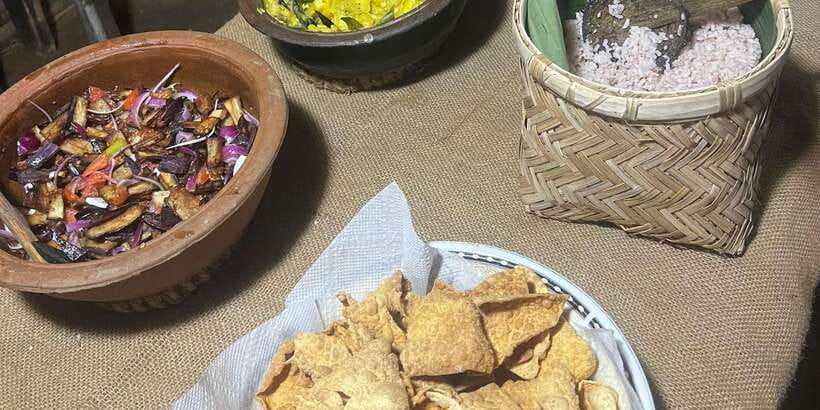
- A full shared meal follows: Depending on the session, you might prepare dhal curry, chicken curry, aubergine salad, coconut sambol, papadam, rice, hoppers, string hoppers, or honey roti.
- Banana-leaf dining: Once the food is ready, you sit down together and eat without plates, keeping the meal close to local custom.
- Good value at $19: Fresh ingredients, instruction, water, and the finished meal are included.
- Plan for extra time: The official duration is two hours, but one detailed account allowed about two and a half hours, especially when there was a lot of food to eat.
Starting in Ella with tea, ingredients, and a friendly welcome
You check in with staff at Chamathka Cooking Class and meet your instructor, generally Ranjani. Some sessions begin with tea and biscuits, a small touch that helps the group settle in before the chopping starts.
The setting is part of the appeal. This is not a bright studio kitchen built for tourists. It is an open-air cooking space where you can see the surrounding greenery, feel the air moving through the room, and watch food being prepared with traditional equipment. That gives the class a more homely feel, though it also means the experience may be less streamlined than a professional cooking school.
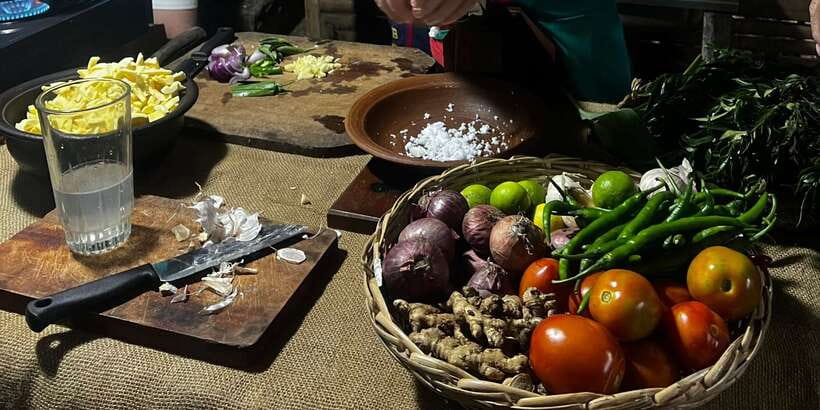
Ranjani begins by introducing the ingredients. Sri Lankan cooking relies on more than heat and chili. Coconut, lentils, eggplant, rice, herbs, and fragrant spices each play a part, and she explains how they are used in the kitchen and for traditional home remedies.
I would pay attention here, even if you already cook often. The useful lesson is not simply which ingredients go into a curry. It is learning how Sri Lankan cooks build flavor, prepare coconut, balance spices, and choose the right cooking method for each dish.
More Cooking Classes in Ella
- Ella: Sri Lankan Cooking Class with Neranji at Homestay
★ 5.0 · 276 reviews - Ella : Cooking class with amazing Spice Garden Tour
★ 5.0 · 239 reviews - Ella Sri Lanka : Mom’s Kitchen Cooking class
★ 5.0 · 113 reviews
Preparing coconut, spices, and the foundations of Sri Lankan food
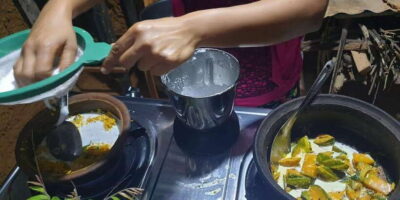
One of the most interesting parts of the session is seeing how much work can go into ingredients that arrive ready-made in many Western kitchens. You might watch or help grate coconut and turn it into coconut milk. You may also take part in making sambol, a fresh coconut mixture that adds a sharp, spicy lift to the meal.
The class also covers basic techniques such as preparing dhal and cooking rice properly. These dishes may look simple, but small choices matter. The amount of water, the timing of the spices, and the way ingredients are combined can change the texture and flavor.
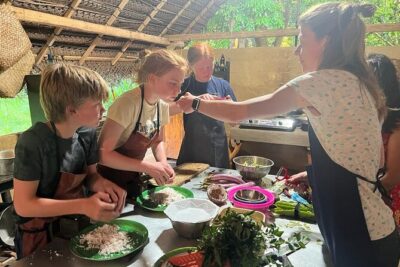
The format is shared. Ranjani demonstrates the more complicated steps, then invites people to chop, mix, season, taste, or stir. This means you will not control every part of one individual recipe, but you will see a wider range of dishes than you likely could make alone in two hours.
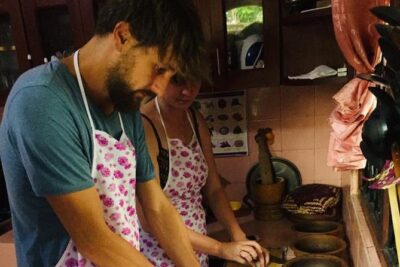
That setup suits people who want to learn by watching and helping. It may disappoint you if your ideal class means cooking every course from start to finish at your own station. One participant described the class as working at a single station with the instructor demonstrating key techniques, while others took turns with smaller tasks. That is a fair description of what to expect.
Cooking a Sri Lankan feast instead of one small dish
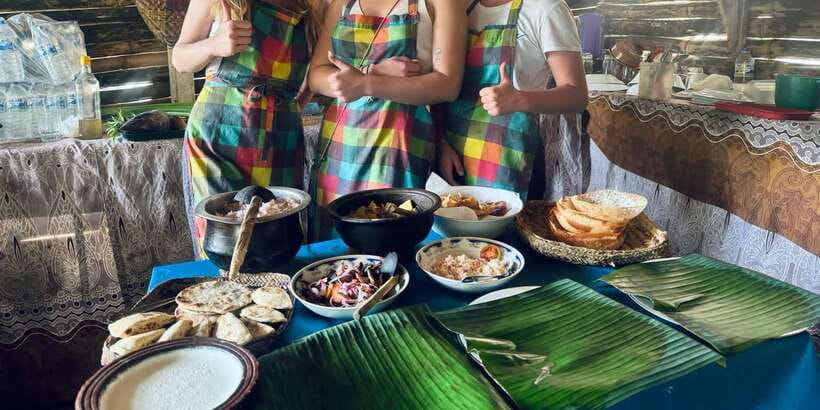
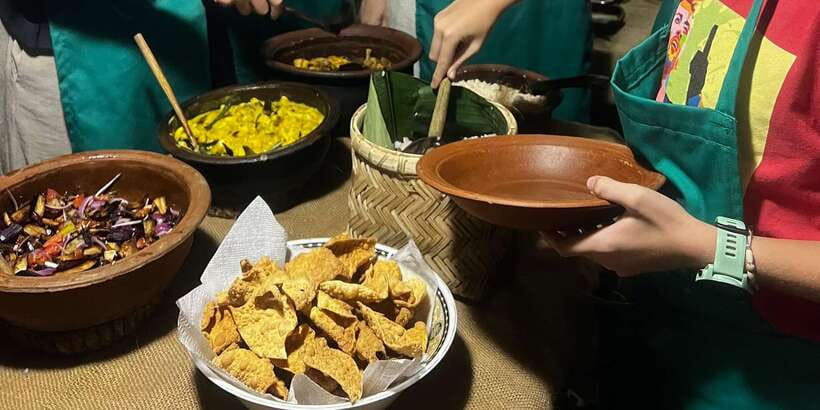
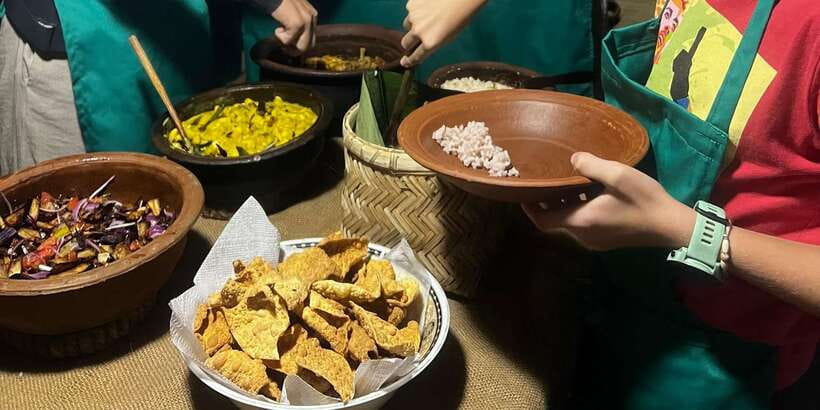
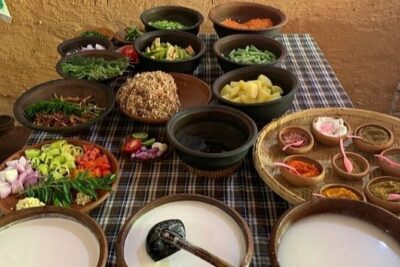
The exact menu can vary, and you do not choose the dishes yourself. The class has included five-dish meals with both vegetarian and non-vegetarian choices, as well as combinations such as dhal curry, chicken curry, aubergine salad, coconut sambol, papadam, and rice.
Other dishes named for the class include hoppers, string hoppers, and honey roti. Hoppers are bowl-shaped pancakes with crisp edges and a softer center. String hoppers are delicate rice-flour noodles pressed into thin nests. Honey roti brings a sweeter finish to the list.
This broad menu is one of the strongest reasons to book. You are not learning a single curry and then waiting around. Instead, you see how several dishes fit together into a Sri Lankan meal, with different textures and levels of heat on the same banana leaf.
The food is also made with fresh ingredients, including farm-fresh produce. That matters in a cuisine where vegetables, coconut, herbs, and spices carry much of the flavor. The result is not just a lesson about curry powder. It is a look at how everyday Sri Lankan meals are assembled from basic local foods.
Vegetarian and vegan diners should tell the instructor about their diet at the start. One vegan participant was able to eat all but one dish, and the class has offered both vegetarian and non-vegetarian options. The supplied details do not promise a fully vegan menu, so clear communication is wise.
Learning the health uses of herbs and spices
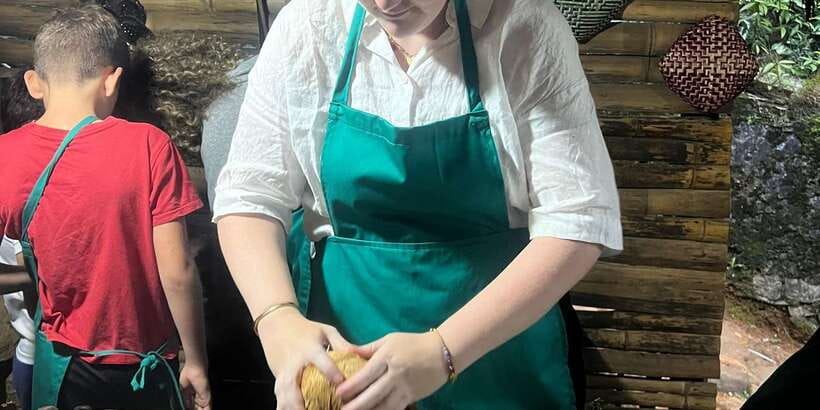
Ranjani’s explanations go beyond recipes. She talks about the health benefits traditionally associated with the spices, herbs, and other ingredients used in the meal.
You should treat this as cultural food knowledge rather than medical advice. Still, it adds useful context. Instead of seeing turmeric, coconut, lentils, or other ingredients as items on a shopping list, you learn how they fit into Sri Lankan home cooking and traditional ideas about natural remedies.
This part receives some of the strongest praise from people who have taken the class. The instructor is described as patient, warm, and thorough, with plenty of advice about how to use ingredients at home. That makes the included recipes more useful because you learn the reasoning behind the dishes, not only the measurements.
The class also appears designed with home kitchens abroad in mind. One detailed account noted that Ranjani chose recipes that could be recreated in Europe, where some Sri Lankan ingredients may be harder to find. You should still expect to adapt a few items depending on where you live, but the goal is practical cooking rather than a demonstration you can never repeat.
A different kind of day out entirely:
- Ella: Drop to Tangalle/Hiriketiya/Mirissa/Galle & Yala Tour
★ 4.9 · 518 reviews - Ella: Little Adam’s Peak, Nine Arches Bridge & Waterfalls
★ 4.9 · 402 reviews - ELLA: Drop to Tangalle/Hiriketiya/Mirissa/Galle & Yala Tour
★ 4.1 · 336 reviews - From Ella: Drop to Tangalle/Hiriketiya/Mirissa & Yala Safari
★ 4.8 · 296 reviews
Eating from a banana leaf at the end
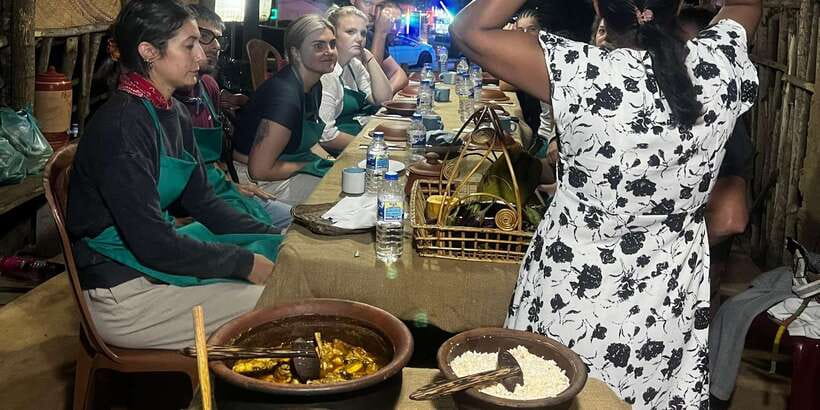
After the cooking is finished, you sit down to eat what the group has made. The meal is served on banana leaves, which cuts down on washing up and gives the experience a clear local touch.
Do not expect a tiny tasting plate. Several accounts describe a large amount of food, with enough left over in some sessions for second portions. That makes the $19 price especially strong. You receive the class, ingredients, bottled water, and a substantial meal in one short activity.
The meal is also the social high point. You eat together, compare the dishes, and meet people from different countries. Ella has plenty of scenic activities, but an evening around a shared meal can give you a more direct connection with daily life than another viewpoint or photo stop.
The banana leaf is not just decoration. It changes the rhythm of the meal. You serve yourself from the spread, sample several dishes, and focus on the food rather than formal table service. Bring an appetite, but keep in mind that the meal comes after the lesson, not during it.
What makes the $19 price good value
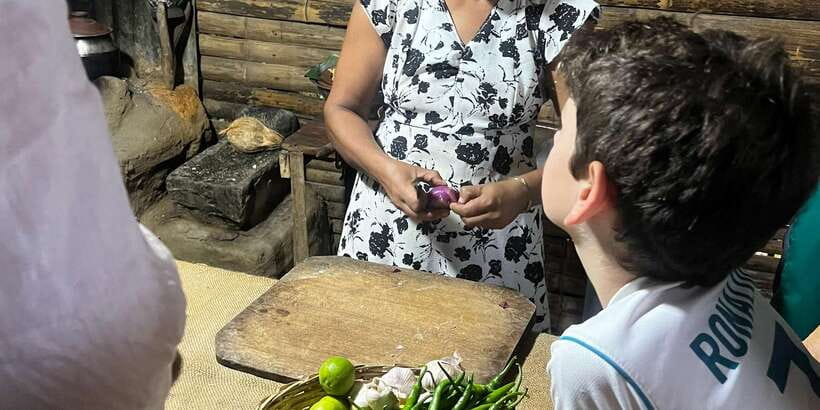
At $19 per person, this is one of the easier Ella activities to justify. The price includes an instructor, fresh ingredients, the cooking lesson, the meal, and bottled water. Transportation to the meeting point is not included, so you need to make your own way to Chamathka Cooking Class.
The value is strongest if you are interested in food. A good meal in Sri Lanka can already account for a meaningful part of this cost, and here you also receive instruction and recipes to use later. The digital recipes are sent through WhatsApp after class, giving you a practical reminder once the aromas and techniques are no longer fresh.
The class also works well on a rainy day. Ella weather can interrupt outdoor plans, and this activity gives you a useful two-hour alternative. The open-air kitchen may not offer complete shelter in every condition, but one session handled difficult weather well and kept the group cooking.
Do allow some flexibility around the schedule. Classes normally run at 11:00 AM and 5:00 PM, and the provider may be able to adjust the time if you contact them in advance. The class is advertised as two hours, but a slower meal and a late start can push the visit closer to two and a half hours. If you have a train, taxi, or airport transfer afterward, do not book the timing too tightly.
Group size, participation, and the class style
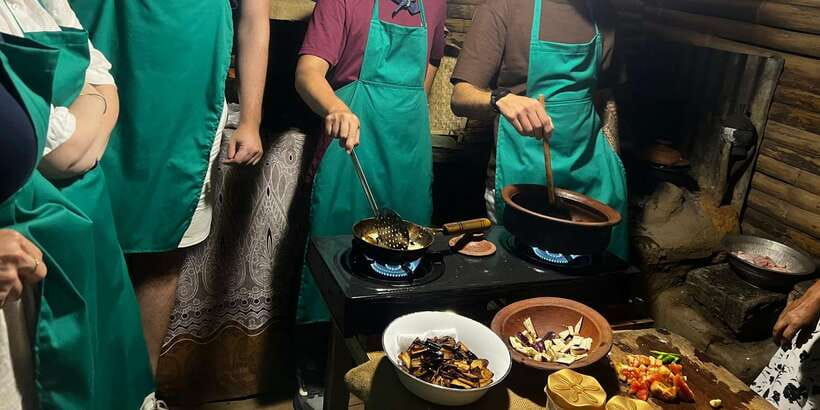
The activity is presented as a small group limited to eight people. That should make it easier to ask questions and get a turn at the cooking tasks.
There is one point worth checking before you go. A separate account described a group of 13, while still saying that everyone had a chance to help. This may reflect an unusually busy session or a change in operating arrangements. If a very small class matters to you, confirm the expected group size before booking.
The shared format can be a strength. You see the whole meal come together, and you get to socialize without the pressure of performing every technique yourself. It also lets the instructor keep difficult steps under control, which is helpful when working with traditional tools or unfamiliar methods.
The tradeoff is limited individual practice. You may not personally make every hopper, stir every curry, or complete each recipe from beginning to end. I would choose this class for cultural context, generous food, and a relaxed group atmosphere. I would choose another type of course if your priority is intensive personal cooking time.
Recipes you can take back to your own kitchen
The recipes are sent digitally through WhatsApp after class. That is useful because you do not need to carry a printed booklet, and you can save the instructions on your phone before heading home.
The dishes are also selected with repeat cooking in mind. You may learn how to make dhal, curry, sambol, rice, or other dishes that can fit into a normal home meal rather than requiring a full Sri Lankan pantry.
The class is especially worthwhile if you have enjoyed Sri Lankan food but found it hard to identify the flavors. Once you understand how coconut milk, spices, lentils, vegetables, and rice work together, restaurant meals become easier to read. You may also find yourself ordering more confidently for the rest of your trip.
Who should book this Ella cooking class?
I would recommend it to couples, solo visitors, families with an interest in food, and anyone looking for an evening activity that is both social and useful. It suits beginners because the instructions are step by step, but experienced home cooks should also pick up new methods, especially around coconut, rice, dhal, and spice preparation.
It is a strong choice for vegetarians, provided you confirm the menu in advance. It is also a good option for people who want to meet others without signing up for a long tour.
I would hesitate only if you need a private lesson, require a fully personalized menu, or want your own cooking station. The shared kitchen is the point, not a flaw, but it will not suit every learning style.
Should you book it?
Book this class if you want a tasty, friendly introduction to Sri Lankan home cooking and like the idea of learning in a traditional kitchen. The combination of Ranjani’s explanations, fresh ingredients, a generous shared meal, banana-leaf dining, and digital recipes makes $19 excellent value.
Before booking, confirm the class time, expected group size, and any dietary needs. Leave extra time after the official two-hour schedule. If those details work for you, this is an easy Ella activity to recommend, especially on a rainy afternoon or a free evening.
FAQ
Where does the cooking class take place?
You check in with staff at Chamathka Cooking Class in Ella. The lesson takes place in an open-air kitchen surrounded by greenery.
How long does the class last?
The stated duration is two hours. You should allow closer to two and a half hours if the meal runs long or the class starts late.
What times are normally available?
Classes normally take place at 11:00 AM and 5:00 PM. The provider may be flexible with the time if you contact them in advance.
How much does the experience cost?
The price is $19 per person.
Is transportation included?
No. Transportation to the meeting point is not included, so you need to arrange your own way to Chamathka Cooking Class.
What food might I learn to prepare?
Possible dishes include hoppers, rice and curry, string hoppers, honey roti, dhal curry, chicken curry, aubergine salad, coconut sambol, and papadam. The menu can vary, and you do not choose the dishes yourself.
Can vegetarians or vegans take part?
Vegetarian and non-vegetarian options are available. The supplied information does not promise a fully vegan menu, so vegans should speak with the instructor before cooking.
What languages does the instructor speak?
Instruction is available in English and Singhalese.
How do I receive the recipes afterward?
The recipes are sent digitally through WhatsApp after the class.
Just added in Ella
- Sri Lanka private tour package 10 Days. and luxury hotel★ 5.0 · 3 reviews
- Sri Lanka Private 10-Day Round Tour Car, Guide, Hotels, Food★ 4.8 · 10 reviews
- Sri Lanka, Kandy: Hill Country 3-Day Private Tour★ 5.0 · 1 review
- Cooking Experience from Ella★ 4.9 · 2 reviews
- Sri Lanka: 9-Day Private Round Tour With H/B Accommodation★ 5.0 · 1 review
- Sri Lanka: 2N3Day guided FULL TOUR with hotel accommodations★ 5.0 · 2 reviews
- Private Tour from Ella to Hiriketiya with Yala Safari★ 5.0 · 1 review
- Private cooking class – Personalized classic menu★ 5.0 · 5 reviews
Cooking Classes, compared.
Organic cooking class sigiriya (kumara & family)
Read our review →
Sri Lankan Cooking Class with Neranji at Homestay
Read our review →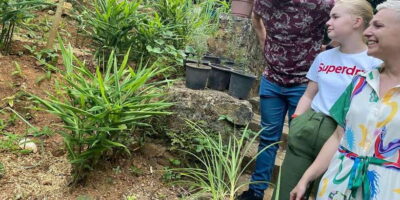
Browse the lists this tour appears in