
Review · COOKING CLASSES
Authentic Sri Lankan Cooking Class in Kandy by Local Family
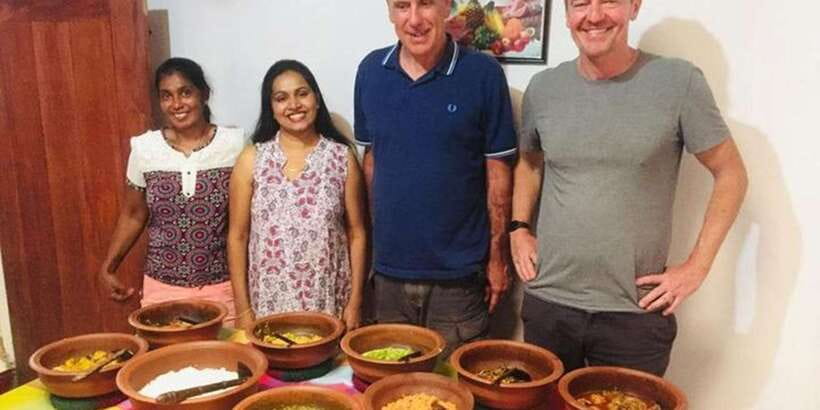
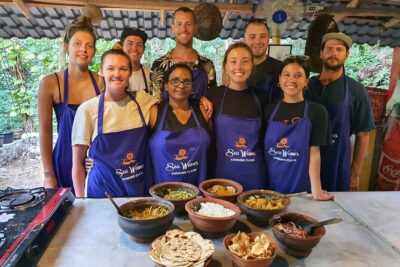
Skip the restaurant tonight. This three-hour Kandy cooking class brings you into a local family home near the Bahirawakanda Buddha statue, where cooking is tied to daily life rather than a polished demonstration. I like the calm green setting and the chance to learn from the host’s wife, sister, and mother, who cook traditional food as part of everyday family life.
I also like the optional market visit with Dinesha, where you can see the vegetables and spices before they reach the cooking pots. The main consideration is the sheer amount of food: the class includes ten vegetable dishes, fish or chicken, coconut sambol, and coconut roti, so the cooking may be more guided than fully hands-on.
The class costs $99 for a group of up to two people. That is not the cheapest food activity in Sri Lanka, but it covers a private-feeling small-group experience, a large meal, recipes to take home, and pickup and drop-off around Kandy town. For two people, the price works out to about $49.50 each.
In This Review
- Key Details Before You Book
- Reaching the Family Home Near Bahirawakanda
- The Optional Market Visit With Dinesha
- Tea, Pancakes, and a Warm Family Welcome
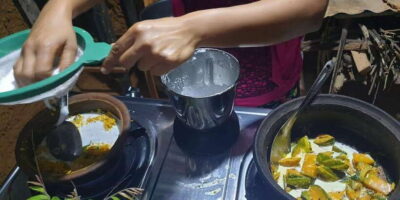
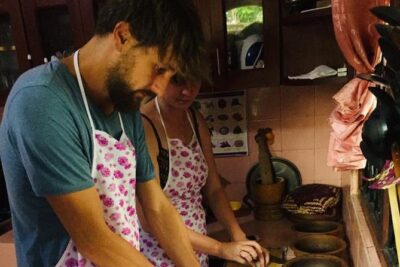
- Preparing Ten Vegetable Dishes and a Main Curry
- The Sambol Stone and Traditional Kitchen Tools
- Coconut Roti, Snacks, and the Final Meal
- What the $99 Price Really Buys
- Who Will Enjoy This Kandy Cooking Class
- Should You Book the Best Kandy Kitchen?
- FAQ
- How long does the cooking class last?
- How much does the experience cost?
- Is pickup and drop-off included?
- What food is included?
- Can I choose fish or chicken?
- Is the market visit included?
- Is the class wheelchair accessible?
Key Details Before You Book
- Cook in a real family kitchen: You learn inside the home of the host’s wife, sister, and mother, with family life forming part of the experience.
- Start at the local market if you wish: Dinesha can guide you through the market and explain Sri Lankan spices and vegetables before cooking begins.
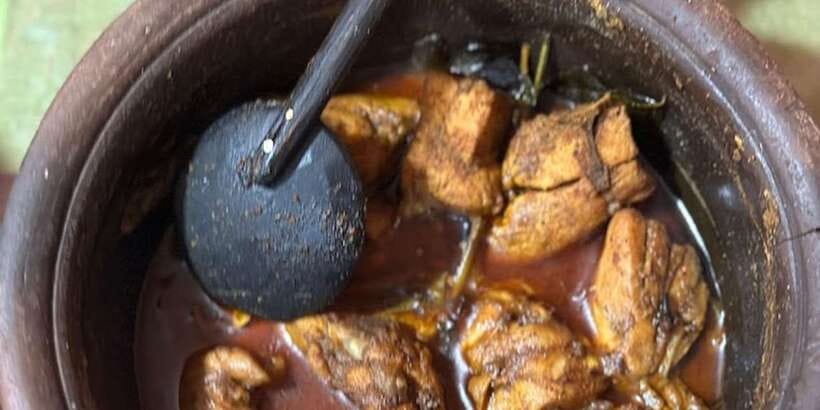
- Expect a feast, not a single recipe: The meal includes ten vegetable dishes, fish or chicken, coconut sambol, and coconut roti.
- Watch for the century-old sambol stone: The traditional stone board used to make sambol is one of the class’s most memorable features.
- Plan for a small group: The experience is limited to two participants, which allows plenty of room for questions and personal help.
- Save room for dinner: The meal is substantial, and one useful tip is to skip lunch or eat lightly beforehand.
Reaching the Family Home Near Bahirawakanda
The home is close to Kandy city center and near the large Buddha statue on Bahirawakanda Mountain. It is described as a calm, green place, a welcome change from Kandy’s busy roads and crowded central streets.
Pickup and drop-off are included around Kandy town. You should wait in your hotel lobby ten minutes before the scheduled pickup time and provide your pickup details when booking. Since the included transfer area is limited to Kandy town, confirm that your accommodation falls within it.
The setting matters here. You are not being taken to a restaurant designed for tourists or a teaching kitchen built for classes. You enter a family home, and that changes the pace. The food lesson becomes part cooking class and part look at how one Sri Lankan household prepares and shares meals.
The class is not suitable for wheelchair users. Pets are not allowed, although assistance dogs are permitted. Bring a charged phone or camera, some cash, and a change of clothes. The clothing advice is practical for a home kitchen, especially when working with spices, coconut, and cooking heat.
More Cooking Classes in Kandy
- Kandy Village Cooking Class
★ 5.0 · 536 reviews - Private Traditional Sri Lankan Cooking Class in Kandy with Hotel Transfers
★ 5.0 · 115 reviews - Cooking With Village Family
★ 5.0 · 104 reviews
The Optional Market Visit With Dinesha
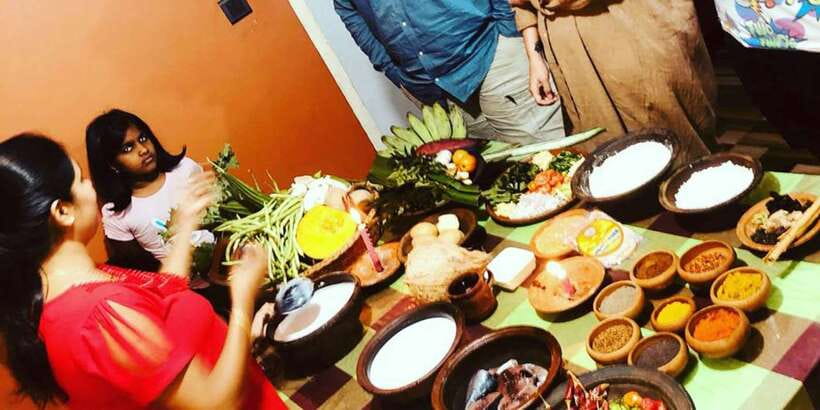
If you want more than cooking, ask for the local market visit. Dinesha can accompany you to buy ingredients for the meal and explain the vegetables and spices along the way.
This is a useful start because Sri Lankan cooking depends on combinations that may not be familiar at first glance. The market gives you a chance to connect the raw ingredients with the dishes you will later eat. You can ask questions about the spice mix, the vegetables, and how the family uses them at home.
The market visit is optional, so the timing may vary depending on what you choose and the available starting time. The class itself lasts three hours, and the market stop is part of the broader experience rather than a separately timed attraction.
One particularly warm account described returning from the market to tea and pancakes before the main cooking began. That pause gives the visit an easy, social feel. You are not rushed straight from shopping into a long list of recipes.
Tea, Pancakes, and a Warm Family Welcome
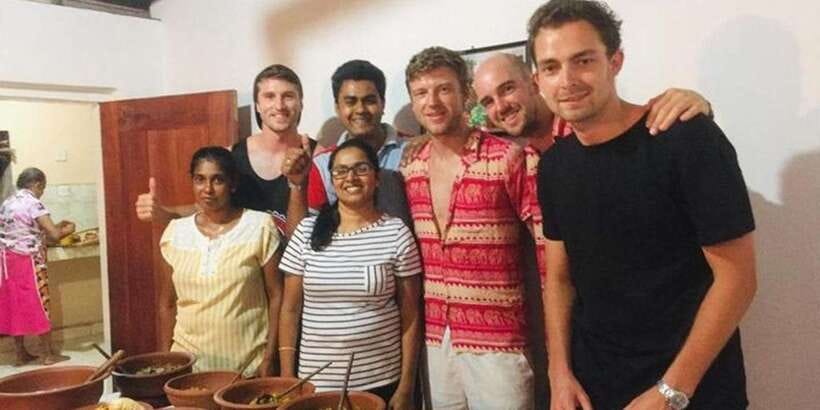
The family includes the host’s wife, sister, and mother. The host also says that his three young daughters sometimes join the class. That can make the experience feel less like a formal lesson and more like an invitation into a working household.
The family’s approach is central to the appeal. You are not being taught by a restaurant chef. The hosts openly explain that the class is led by family members who prepare traditional food day after day. For you, that means the focus is on practical home cooking, familiar methods, and the food the family actually knows best.
English is the teaching language. Previous sessions included clear explanations of the spice mixtures and plenty of time for questions. If you are curious about why a dish is seasoned in a particular way, this is the kind of small group where you can ask without feeling lost in a crowd.
The class is limited to two participants. That is a major advantage for couples or friends who want direct contact with the family. It also means the price is based on the group, not on a large shared class. Solo visitors should check the booking terms carefully, since the advertised rate covers a group of up to two.
Preparing Ten Vegetable Dishes and a Main Curry
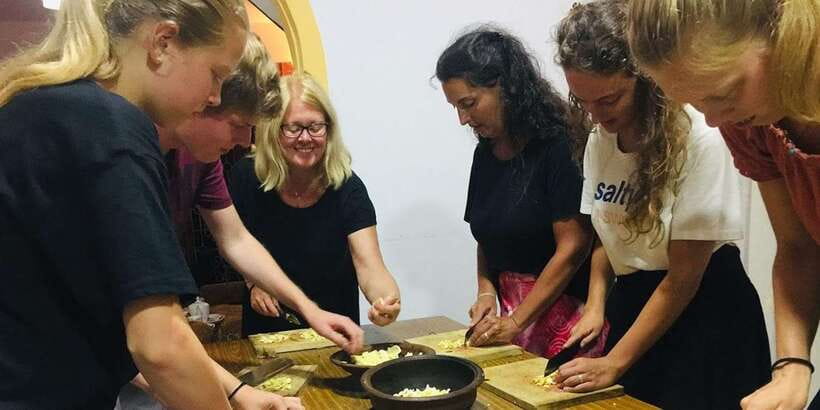
The food list is ambitious. You can expect ten types of vegetable dishes, plus your choice of fish or chicken, coconut sambol, and coconut roti. Some sessions have included 13 dishes, so the final number may vary with the day’s menu and the family’s preparation.
The variety is the point. Sri Lankan meals are not built around one large main course and a small side dish. Several vegetable preparations appear together, each with its own seasoning, texture, and level of heat. You begin to understand how a plate can feel full and varied even when much of it is made from vegetables.
There is one practical limitation. With so many dishes to prepare in only three hours, the family will do some of the cooking. That does not make the lesson poor, but it is important to set your expectations. You will season the dishes yourself and learn the process, yet you are unlikely to personally complete every step of every recipe.
I see that as a fair trade. A class that required you to make 13 dishes from start to finish would either run much longer or become rushed. Here, the hosts can keep the meal moving while still explaining the methods and letting you take part where it counts.
The eggplant and mushroom curry have been particular favorites, and they show why the class works well for people who want more than a basic curry lesson. You are exposed to the range of Sri Lankan home food, not just one famous dish.
A different kind of day out entirely:
- Kandy Private Guided City Tour by Tuk Tuk
★ 4.9 · 1,307 reviews - From Kandy: Sigiriya Rock & Dambulla Cave Temple Adventure
★ 4.9 · 785 reviews - Kandy to Ella Train Tickets – Reserved Seats
★ 4.5 · 523 reviews - From Kandy: Pinnawala Day Tour
★ 4.8 · 331 reviews
The Sambol Stone and Traditional Kitchen Tools
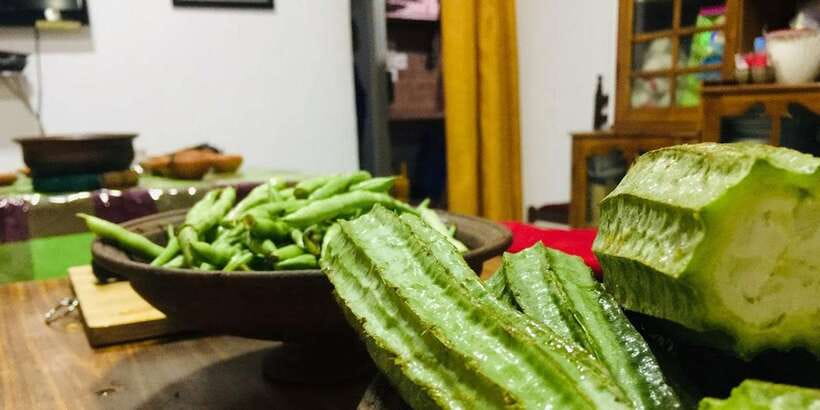
The coconut sambol is a key part of the class. You will also see a 100-year-old stone board used to make it. This tool is not just a decorative prop. It connects the meal to older household methods and gives you a feel for the physical work behind the food.
Sambol has a bright, fresh role on the plate, balancing the curries and rice-based dishes. Making it with a traditional stone tool gives the lesson a clear sense of place. You may remember that tool as much as the recipe.
The kitchen itself is part of the teaching. You are working inside the family’s home, not standing behind a counter in a professional school. That can mean less space and a more informal rhythm, but it also gives you a better look at Sri Lankan family cooking.
The hosts may prepare some parts in advance or handle steps that need to happen quickly. Pay attention to the order of seasoning and ask questions as the dishes come together. The useful lesson is often not a single ingredient, but how several simple ingredients are layered into a meal.
Coconut Roti, Snacks, and the Final Meal
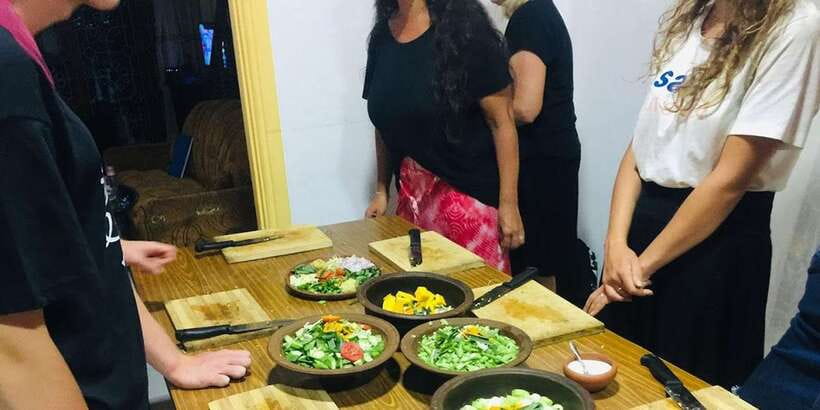
Coconut roti is included, along with snacks made during the cooking. The roti adds another texture to the meal and gives you a chance to work with a simple, filling staple.
The food is served at the end, and this is where the three hours pay off. You are not sampling a tiny portion from each dish. The menu is designed as a full meal, with enough variety to make lunch or dinner the main event of the day.
Plan accordingly. Eating lightly beforehand is sensible, especially if you want to try every curry. The menu can include ten vegetable dishes, a meat or fish dish, sambol, roti, snacks, and drinks. Bottled water is included.
You can choose fish or chicken. That small choice makes the experience easier to fit to your taste. The provided information does not specify vegetarian substitutions, so vegetarians should ask before booking rather than assume the fish or chicken can simply be removed.
The meal also gives you a chance to compare the dishes side by side. A curry that seems mild on its own may taste different once paired with sambol or roti. This is the sort of learning that is hard to get from a recipe alone.
What the $99 Price Really Buys
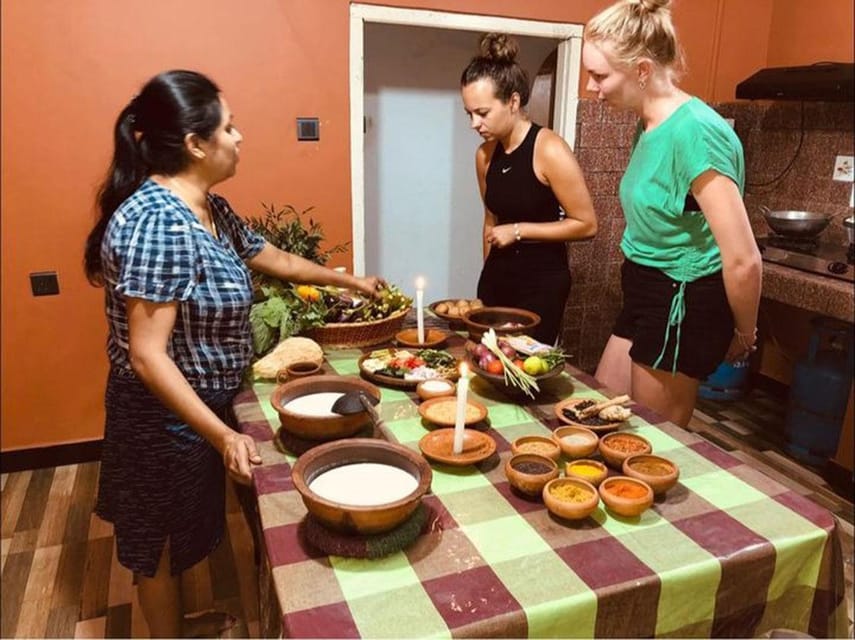
At $99 per group of up to two, the class is best judged as a private small-group outing rather than a cheap cooking lesson. For a couple, the per-person cost is reasonable when you include the market option, transport around Kandy town, a large meal, drinks, and recipes.
The family setting is the real value. You are paying for access to people who cook this food as part of ordinary life, not just for a demonstration built around visitors. The class also offers a closer connection to Kandy than a restaurant meal can provide.
The value is weaker if you only want to learn one or two recipes and spend most of the time cooking yourself. The number of dishes means the family must handle much of the preparation. You should book this for the setting, food range, and cultural contact, not for a highly technical chef-led workshop.
The free cancellation up to 24 hours before the activity and the reserve-now, pay-later option add useful flexibility. Starting times vary, so check availability before building the class into a packed Kandy schedule.
Who Will Enjoy This Kandy Cooking Class
I would recommend it most to couples, close friends, and solo visitors who care about home cooking and personal contact. The two-person limit suits people who prefer a quiet lesson where they can ask questions freely.
It is also a good choice for anyone who wants to understand Sri Lankan food beyond restaurant menus. The market visit, family kitchen, old sambol stone, and broad menu give you several ways into the local food culture.
Families with children may enjoy meeting the host’s daughters if they happen to join, but the activity is still a three-hour cooking session. The information does not give a specific child age range, so parents should check suitability before booking.
You should be comfortable with an informal home environment. If you need a wheelchair-accessible setting, this is not the right choice. If you want a polished professional kitchen with every participant making every dish, choose a different type of class.
Should You Book the Best Kandy Kitchen?
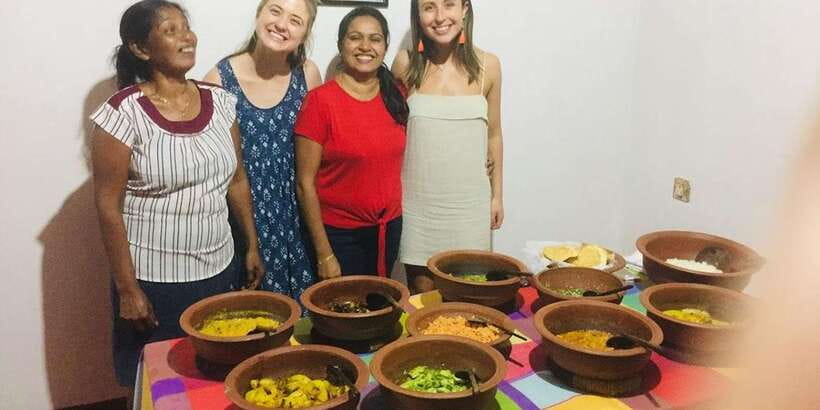
Book it if you want the family, not just the food. The best parts are the calm home near Bahirawakanda, the optional market trip with Dinesha, the old sambol stone, and the chance to learn from several generations of one household.
The main tradeoff is hands-on time. Because the menu is so large, you will help season and prepare dishes, but the family will handle much of the cooking. For most people, that is sensible: you get a broad meal and a clear lesson without spending the whole day in the kitchen.
At $99 for up to two people, the experience offers good value for a couple who want a substantial meal, recipes, local pickup, and a genuine family setting. Eat lightly beforehand, bring a charged phone, confirm your hotel is within the Kandy pickup area, and ask about vegetarian needs in advance.
FAQ
How long does the cooking class last?
The class lasts three hours. Starting times vary, so you should check availability when booking.
How much does the experience cost?
The price is $99 per group of up to two participants.
Is pickup and drop-off included?
Yes. Pickup and drop-off are included for hotels around Kandy town. You should wait in the hotel lobby ten minutes before pickup and provide your details to confirm the booking.
What food is included?
The menu includes ten types of vegetable dishes, fish or chicken, coconut sambol, coconut roti, bottled water, and snacks made during the cooking. Some sessions may prepare more than ten dishes.
Can I choose fish or chicken?
Yes. Fish or chicken is offered as your choice. If you need a vegetarian option, ask before booking because no specific substitution is provided.
Is the market visit included?
The family can guide you to a local market if you want that experience. The visit includes help with buying ingredients and explanations about Sri Lankan spices and vegetables.
Is the class wheelchair accessible?
No. The experience is not suitable for wheelchair users. Pets are not allowed, but assistance dogs are permitted.
Just added in Kandy
- Day Tour of Nuwara Eliya★ 5.0 · 3 reviews
- Full day Kandy City Tour by Tuk Tuk★ 5.0 · 1 review
- Day Tour Kandy to Sigiriya with Dambulla Cave Temple Excursion★ 5.0 · 3 reviews
- Day Tour for Outdoor and Adventure Lovers★ 4.5 · 4 reviews
- Culture Tour in Kandy★ 5.0 · 1 review
- Dambulla, Sigiriya and Pidurangala Tour from Kandy★ 5.0 · 9 reviews
- Ambuluwawa Tower and Kandy City Tuk Tuk Tour with Epic views★ 5.0 · 9 reviews
- Kandy to Nallathanniya (Climb Adams Peak)★ 5.0 · 1 review
Cooking Classes, compared.
Organic cooking class sigiriya (kumara & family)
Read our review →
Sri Lankan Cooking Class with Neranji at Homestay
Read our review →
Browse the lists this tour appears in