
Review · COOKING CLASSES
Authentic Sri Lankan Cooking Experience
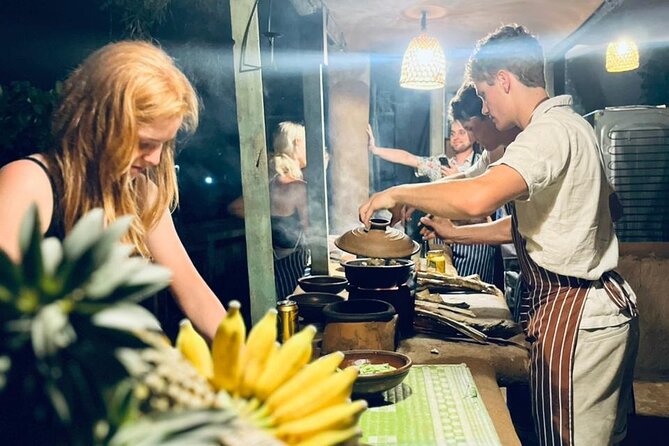
Skip the restaurant tonight. At Kandy Living Villa & Homestay, you cook a full Sri Lankan meal in a quiet village home, using vegetables and herbs picked from the garden. I like the old-style clay pots, coconut spoons, and wood-fire stove, which make this feel like a family kitchen rather than a staged food demonstration. I also like the cultural side: the chef explains local ingredients, Ayurvedic ideas, and family cooking customs as you work. The main point to consider is transport, since pickup costs extra if you need it arranged.
The two-and-a-half-hour session starts at 11 a.m. and ends back at the meeting point. Past sessions have included seven dishes plus roti, with herbal tea or fresh iced tea served while the food cooks. Sandy has been praised for being flexible when a participant arrived late, and the warm family welcome is a major part of the experience.
In This Review
- Key points at a glance
- Why this Kandy cooking class feels personal
- Arriving at Kandy Living Villa & Homestay
- A garden tour before the cooking begins
- Cooking seven dishes over a wood fire
- Tea, stories, and the slow part of the meal
- Eating the meal you helped prepare
- The people make the cooking class work
- Who will get the most from this experience
- Timing, cancellation, and practical planning
- Is the $25 price good value?
- Should you book the Kandy cooking class?
- FAQ
- Where does the cooking class begin?
- What time does the experience start?
- How long does the cooking class last?
- Is transportation included?
- Are vegetarian and vegan options available?
- What is the cancellation policy?
Key points at a glance
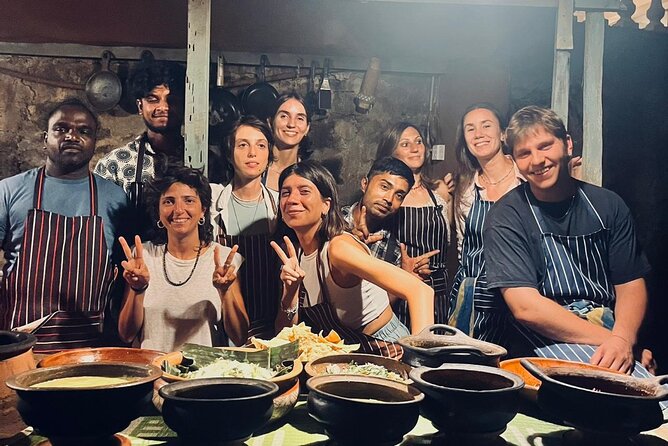
- Garden-to-kitchen cooking: You may pick or handle organic vegetables, herbs, and spices grown at the resort.
- A real wood-fire setting: Traditional clay pots, coconut spoons, a clay hearth, and firewood shape the cooking.
- A full meal, not a quick demo: The class has included seven dishes and roti, followed by lunch or dinner.
- Private group format: Only your group takes part, making it easier to ask questions and work at your own pace.
- Strong choice for plant-based diets: Vegetarian and vegan options are included.
- Kandy location with added transport cost: The meeting point is Kandy Living Villa & Homestay, and arranged pickup costs extra.
Why this Kandy cooking class feels personal
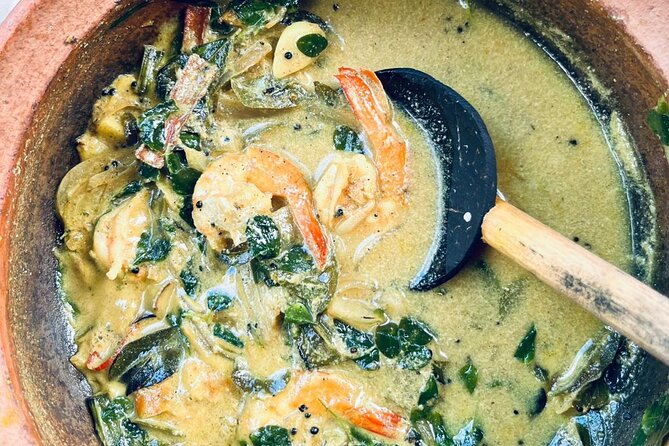
Many cooking classes show you how to prepare food. This one tries to show you why the food matters.
The setting is described as a recreation of a grandmother’s kitchen, placed in a quiet village home surrounded by a garden. That detail matters. You are not simply standing at a counter with measured ingredients. You are learning in a place connected to family life, gardens, simple tools, and slower cooking.
I like that the class links food with health. The chef explains how herbs, vegetables, and spices fit into traditional Ayurvedic thinking. You should not expect a medical consultation, but you can expect context about why particular plants and ingredients are valued in Sri Lankan cooking.
The private format is another advantage. Since only your group participates, you can ask about spice levels, cooking methods, or unfamiliar ingredients without waiting for a large class to catch up. It also suits couples, families, and small groups who want a quieter experience.
More Cooking Classes in Kandy
- Kandy Village Cooking Class
★ 5.0 · 536 reviews - Private Traditional Sri Lankan Cooking Class in Kandy with Hotel Transfers
★ 5.0 · 115 reviews - Cooking With Village Family
★ 5.0 · 104 reviews
Arriving at Kandy Living Villa & Homestay
The official meeting point is Kandy Living Villa & Homestay on Maithree Mawatha in Kandy, postal code 20000. The activity begins at 11 a.m. and finishes at the same place.
Private transportation is not included. If you need pickup arranged, an extra charge applies, based on the distance and vehicle type. I would check this before booking, especially if your hotel is outside central Kandy or you are carrying luggage.
The location is near public transportation, but the information provided does not specify the best bus route or walking time. Ask the provider for current directions rather than relying on a rough map estimate. A cooking class is more enjoyable when you arrive calm, not after a frantic search through unfamiliar lanes.
The start time works well for a meal-focused morning. You can cook through the late morning, eat lunch afterward, and still have the afternoon free. The same food can also be arranged as dinner in the broader description, but the listed start time is 11 a.m., so confirm the exact meal timing when you reserve.
A garden tour before the cooking begins
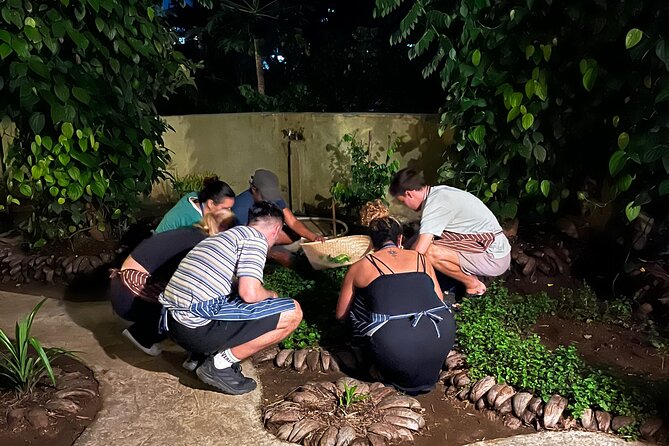
The garden is more than decoration. The class introduces you to vegetables, herbs, and spices grown organically at the resort, with explanations of their uses and health associations.
One of the most praised parts of the experience is this ingredient introduction. You get to connect the plant in the garden with the ingredient that later reaches your plate. That simple link can change how you understand Sri Lankan food. Curry is no longer just a sauce with heat. It becomes a meeting of leaves, roots, seeds, coconut, vegetables, and careful cooking.
The exact plants in season are not listed, so the garden experience may vary. That is normal for a working garden. You might find different herbs or vegetables depending on the time of year, rather than a fixed display prepared for every class.
Take the opportunity to ask about anything you do not recognize. The class is designed around cultural exchange, and the quiet setting gives you room to listen and ask questions instead of rushing from one station to the next.
Cooking seven dishes over a wood fire
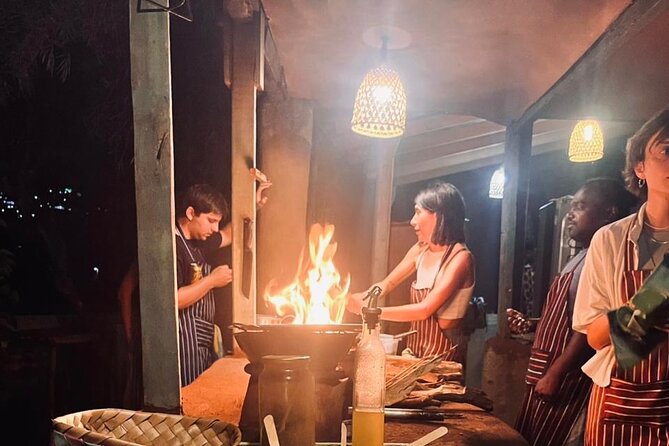
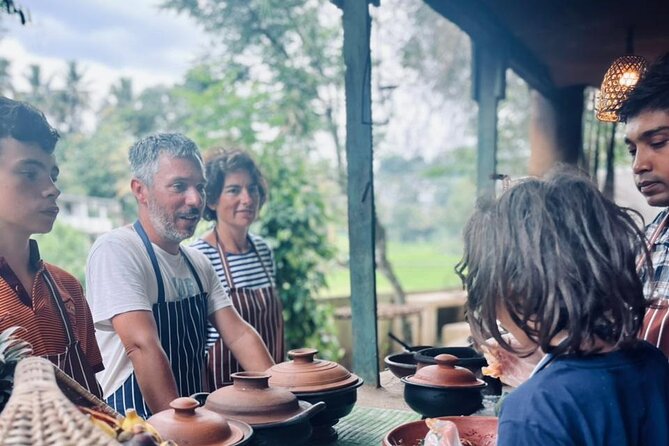
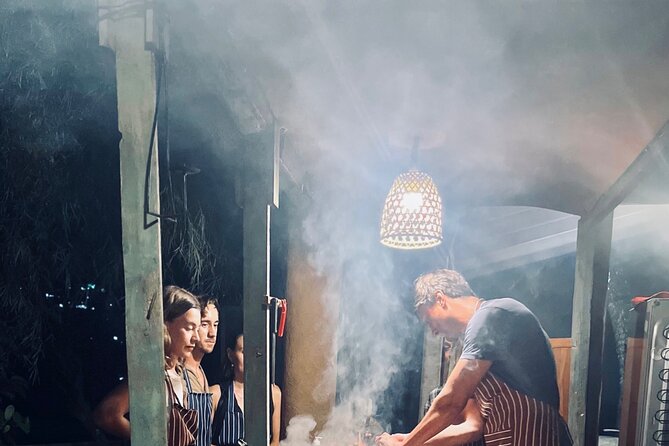
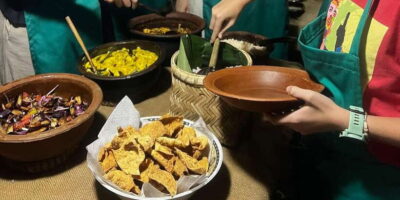
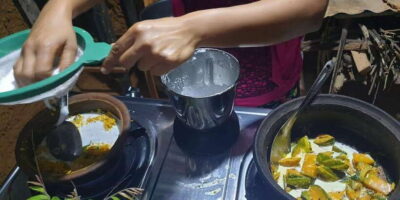
The main event takes place in a traditional outdoor kitchen. You work with a clay hearth and firewood stove, along with clay pots and coconut spoons.
These tools are not just charming props. Clay cooking changes the feel of the session. You must pay attention to heat, timing, and the way ingredients soften. Wood fire also requires more patience than a modern gas burner. That slower pace is part of the lesson.
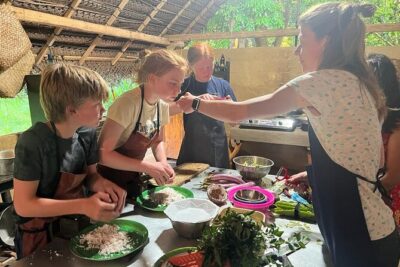
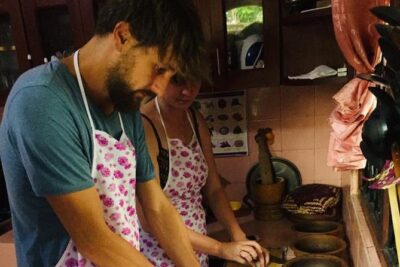
Past classes have included seven dishes and roti, a generous amount of cooking for a two-and-a-half-hour activity. You are not merely watching an auntie or chef prepare everything while you take notes. The description promises hands-on work, and the strongest praise centers on being able to prepare the dishes yourself.
The dishes are not named, so do not book expecting a particular curry or dessert. The advantage is that the menu can reflect the available garden produce and the family’s cooking traditions. The tradeoff is that you may not know the exact meal in advance.
You will learn techniques as well as recipes. Expect explanations of how ingredients are handled, how flavors develop, and how several dishes can be prepared as one meal. The class also shares family methods passed down through generations, which gives the food a sense of place that a printed recipe alone cannot provide.
A different kind of day out entirely:
- Kandy Private Guided City Tour by Tuk Tuk
★ 4.9 · 1,307 reviews - From Kandy: Sigiriya Rock & Dambulla Cave Temple Adventure
★ 4.9 · 785 reviews - Kandy to Ella Train Tickets – Reserved Seats
★ 4.5 · 523 reviews - From Kandy: Pinnawala Day Tour
★ 4.8 · 331 reviews
Tea, stories, and the slow part of the meal
While the food simmers, you can have homemade herbal tea or iced tea. This pause is useful. It lets the fire do its work and gives you a chance to talk with the family and chef.
The social side is central. Stories, laughter, and conversation are part of the experience, not filler between cooking steps. If you want a fast class that gets you back onto a sightseeing schedule, this may feel slow. If you enjoy sitting down with local people and learning through conversation, the pause will likely be one of the best parts.
The garden and tea also add value to the $25 price. You are paying for food, but you are also getting instruction, ingredients, a private setting, cultural background, and a meal. The price is especially fair if the class serves your group alone and includes the quantity of food described.
Still, keep the transport charge in mind. A low advertised price can rise if you need a long-distance pickup or a larger vehicle. Ask for the total before committing.
Eating the meal you helped prepare
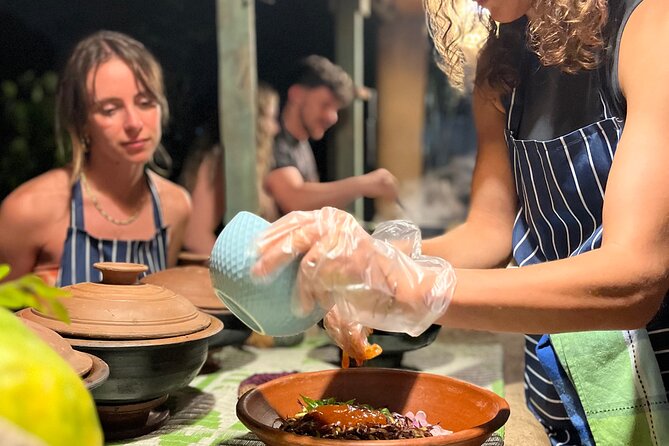
Lunch and dinner are listed as included, though the 11 a.m. start points most clearly toward lunch. You eat the meal made during the class, with fresh local flavors and herbs that you have handled yourself.
This makes the meal more satisfying than a standard restaurant stop. You know how the dishes were prepared, and you can identify the work that went into each one. Roti adds a hands-on element and gives you something familiar to practice at home.
Vegetarian and vegan options are included, making this a useful choice for plant-based diners. If you have allergies or strict dietary needs, tell the provider before the class. The available information confirms vegetarian and vegan meals, but it does not list allergy procedures or substitutions.
Do not expect a polished restaurant dining room. The appeal is the village kitchen, the wood fire, and the family atmosphere. Some people will prefer that honesty. Others may want air conditioning, formal service, and a predictable menu. Know which kind of meal you are booking.
The people make the cooking class work
A class like this depends heavily on the person leading it. The experience is associated with Kandy Traditional Cooking Classes by Kandy Living, and the sessions are led by a local chef and family members.
Sandy has been described as accommodating and attentive, including when one participant arrived 45 minutes late. That does not mean you should plan to arrive late, but it suggests that the host tries to keep the experience welcoming rather than rigid.
An auntie also teaches parts of the cooking, according to the available descriptions. Her presence fits the central idea of the class: food learned through family practice, not only through professional culinary training.
The strongest praise focuses on friendly instruction, clear explanations, and a warm welcome. Those qualities matter more here than fancy equipment. You are paying for access to people who are happy to explain their food and daily traditions.
The class is private, but the precise maximum group size is not given. One session had four people, which is a useful indication that the format can be small, though you should confirm your own group arrangement.
Who will get the most from this experience
I would recommend this class to you if you want to understand Sri Lankan food through ingredients, tools, and family customs. It suits people who enjoy participating rather than watching.
It is also a good match for:
- Couples seeking a calm cultural activity in Kandy
- Families who can manage a two-and-a-half-hour session
- Vegetarians and vegans
- Home cooks who want techniques they can repeat
- Visitors who prefer small private activities
- Anyone curious about Ayurvedic food traditions and local herbs
You may want to choose another activity if you dislike spicy or unfamiliar food, though dietary choices can be discussed. You may also find the traditional setting less comfortable than a modern cooking studio, especially in poor weather.
The outdoor kitchen is weather-dependent. If bad weather forces a cancellation, you are offered another date or a full refund. That policy protects you, but it also means you should keep some flexibility in your Kandy schedule.
Timing, cancellation, and practical planning
The activity lasts about two hours and 30 minutes. Since the class begins at 11 a.m., leave enough time to reach Maithree Mawatha without rushing.
Your booking confirmation arrives at the time of reservation. The experience is near public transportation, but arranged private pickup is extra and depends on distance and vehicle type.
Free cancellation applies if you cancel at least 24 hours before the local start time. Inside that 24-hour window, you receive no refund, and changes are not accepted. If weather cancels the class, you can choose a new date or receive a full refund.
Bring an appetite and a willingness to work with traditional tools. You do not need to treat this like a formal culinary exam. The point is to take part, ask questions, and enjoy the meal afterward.
Is the $25 price good value?
At $25 per person, this is strong value if the class delivers the full format described: garden introduction, hands-on preparation, several dishes, roti, tea, instruction, and a shared meal.
The private setup improves the value. You are not paying for a crowded demonstration where you only watch one dish being made. You have a better chance to handle ingredients, ask questions, and get help with technique.
The value is also cultural. A restaurant meal gives you food. This class gives you a connection between the garden, the kitchen, the cooking tools, and the people preparing the meal. That is the part you cannot easily reproduce on your own in Kandy.
The price does not include private transportation, and the food menu is not specified. Those are the two details I would clarify before booking. For most visitors who enjoy local food and personal contact, the included meal and instruction make the base price appealing.
Should you book the Kandy cooking class?
Yes, if you want a personal and practical way to learn about Sri Lankan food. The garden, traditional kitchen, wood fire, private format, and family instruction give it more character than a standard cooking demonstration.
I would book it for a relaxed morning in Kandy, especially if you eat vegetarian or vegan food. Confirm the pickup cost, meal timing, and menu expectations first. If you want an exact list of dishes or modern kitchen comforts, this may not be the right fit. If you want to cook seven dishes, eat what you make, and spend time with a welcoming local family, it is an easy choice.
FAQ
Where does the cooking class begin?
It begins at Kandy Living Villa & Homestay, Maithree Mawatha, Kandy 20000, Sri Lanka. The activity ends back at the same meeting point.
What time does the experience start?
The listed start time is 11 a.m.
How long does the cooking class last?
The experience lasts approximately two hours and 30 minutes.
Is transportation included?
No. Private transportation is not included. If pickup is arranged, an additional charge applies according to the distance and vehicle type.
Are vegetarian and vegan options available?
Yes. Vegetarian and vegan options are included.
What is the cancellation policy?
You can cancel at least 24 hours before the local start time for a full refund. Cancellations or changes made within 24 hours are not accepted and are not refundable. If poor weather causes the class to be canceled, you can choose another date or receive a full refund.
Just added in Kandy
- Day Tour of Nuwara Eliya★ 5.0 · 3 reviews
- Full day Kandy City Tour by Tuk Tuk★ 5.0 · 1 review
- Day Tour Kandy to Sigiriya with Dambulla Cave Temple Excursion★ 5.0 · 3 reviews
- Day Tour for Outdoor and Adventure Lovers★ 4.5 · 4 reviews
- Ambuluwawa Tower and Kandy City Tuk Tuk Tour with Epic views★ 5.0 · 9 reviews
- Culture Tour in Kandy★ 5.0 · 1 review
- Dambulla, Sigiriya and Pidurangala Tour from Kandy★ 5.0 · 9 reviews
- Kandy to Nallathanniya (Climb Adams Peak)★ 5.0 · 1 review
Cooking Classes, compared.
Organic cooking class sigiriya (kumara & family)
Read our review →
Sri Lankan Cooking Class with Neranji at Homestay
Read our review →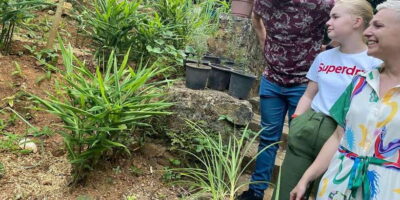
Browse the lists this tour appears in