
Review · COOKING CLASSES
Cooking Class Sri Lanka with Locals
Sri Lankan cooking begins at the market. I like the local-home setting and the chance to shop for produce with Anu and Danuka before cooking. I also like the focus on fresh ingredients and natural spices, with no artificial additives. The main drawback is that drop-off is not included, so you must arrange your own ride afterward.
This four-hour Colombo experience costs $40 per person, a fair price when you consider the market visit, private instruction, food, and air-conditioned pickup. You can choose your preferred time, but the format may suit people who enjoy a relaxed, hands-on activity more than a tightly scheduled sightseeing tour.
In This Review
- Key points at a glance
- A four-hour introduction to Sri Lankan food
- Starting at a local market in Colombo
- Cooking inside a Colombo family home
- Natural spices and the central role of coconut
- Lunch or dinner that you helped prepare
- How pickup and transport affect the day
- Is $40 a fair price?
- Who will enjoy this cooking class most?
- Booking tips for a smoother visit
- Should you book Cooking Class Sri Lanka with Locals?
- FAQ
- How long does the cooking class last?
- Where does the experience take place?
- Who leads the cooking class?
- Is the market visit included?
- Is food included in the price?
- Is hotel pickup available?
- Is return transportation included?
- Is this a private activity?
- What is the cancellation policy?
Key points at a glance
- Market shopping comes first: You help select fruit, vegetables, and other ingredients rather than arriving to find everything prepared.
- You cook in a real Colombo home: Anu, Danuka, and Danuka’s mother guide the class in their family setting.
- Coconut takes center stage: You learn why coconut is such an important part of Sri Lankan cooking.
- Lunch or dinner is included: The meal you help prepare becomes part of the experience.
- Pickup is provided: An air-conditioned vehicle can collect you, though return transport is not included.
- Private participation: Only your own group takes part, making the class more personal than a large demonstration.
A four-hour introduction to Sri Lankan food
Cooking Class Sri Lanka with Locals is built around a simple idea: food makes more sense when you see where it starts. Instead of going directly to a kitchen for a prepared demonstration, you first visit a local market and help choose the ingredients.
That small change matters. You get to look at the produce, sample local fruit, and learn how fresh items are selected. The market is not just a stop for supplies. It gives you a first look at everyday food culture in Colombo.
The full activity lasts about four hours. That leaves enough time for the market visit, cooking, conversation, and the final meal without turning the day into a rushed race from one task to the next. You can choose your preferred timing, which is useful if your Colombo schedule is built around other tours or a late arrival.
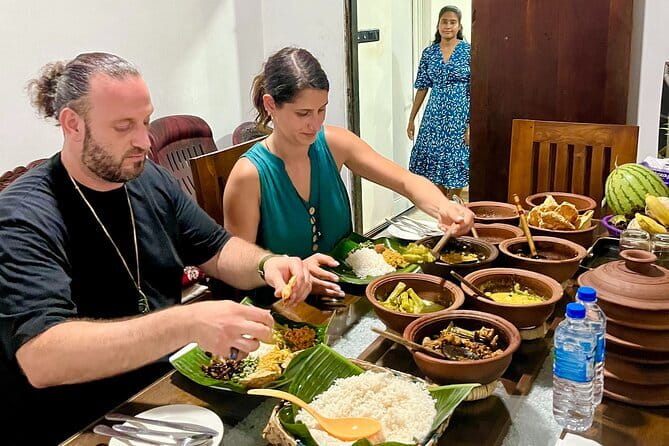
The experience includes lunch or dinner, depending on the time you choose. You are not simply watching someone cook and then leaving. You help make the food, sit down to eat, and connect the dishes to the ingredients and traditions behind them.
More Cooking Classes in Colombo
- Colombo Cooking Class
★ 5.0 · 151 reviews - Market Tour and Hands-On Cooking Class Colombo
★ 5.0 · 140 reviews - Colombo Cooking Experiance with Explore Market
★ 4.7 · 33 reviews
Starting at a local market in Colombo
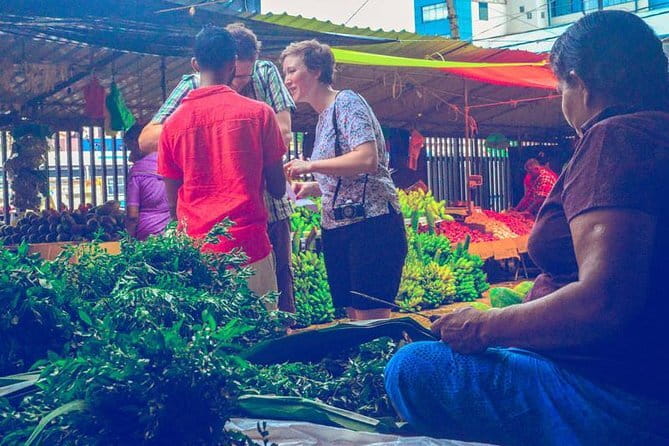
The market visit is one of the strongest parts of this activity. Anu and Danuka show you how to choose fruit and vegetables, then help you understand how those ingredients fit into Sri Lankan meals.
For a visitor, this is useful in ways a standard market walk may not be. You are not only looking at unfamiliar produce or taking photographs. You have local guidance on what to buy and why it matters in the kitchen.
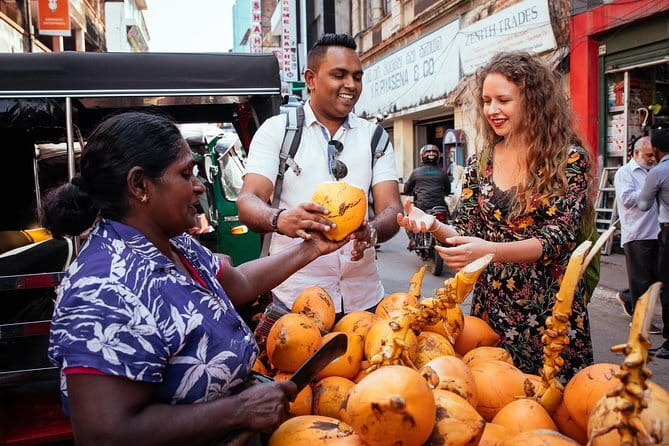
You also get to sample some of the local fruit. That makes the stop more lively and practical, especially if you are still learning the difference between Sri Lankan ingredients. The market gives you a chance to ask questions before the cooking begins, when the names, colors, and textures are still fresh in your mind.
The trade-off is that the market is part of an ordinary local outing, not a polished food hall designed for visitors. That is precisely the appeal for some people, but it also means the pace and surroundings may feel less controlled than those of a formal cooking school.
I would pay close attention during this first part. Ask which ingredients are used every day, which ones are seasonal, and which flavors are meant to be strong or mild. The information you gain here will help you understand the food later.
Cooking inside a Colombo family home
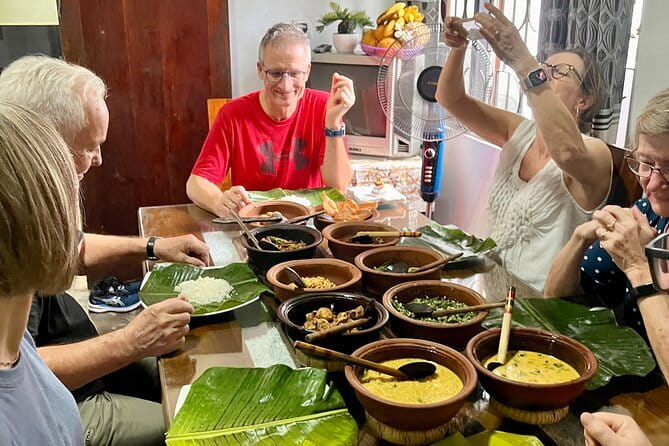
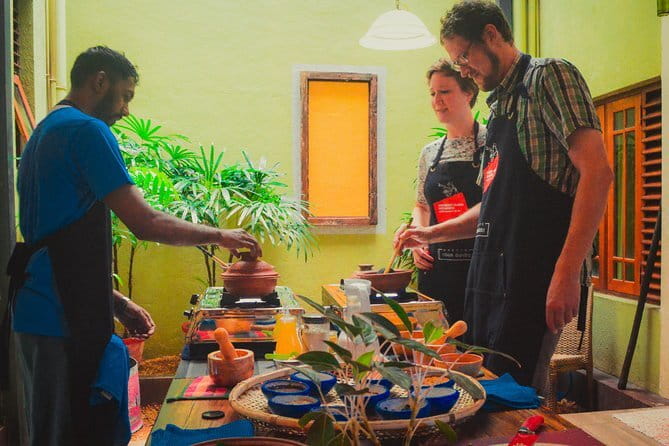
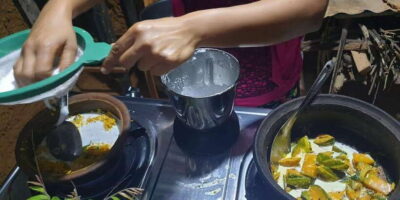
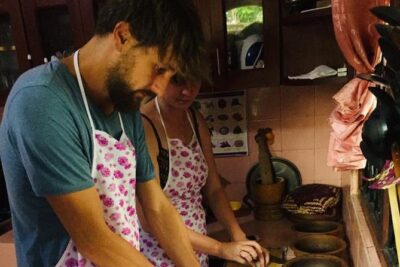
After the market, you go to Danuka’s family home. Anu, Danuka, and Danuka’s mother personally guide the cooking, giving the class a family feel rather than a restaurant-classroom atmosphere.
The home is described as clean and hygienic, an important point when you are preparing food in a private residence. You can expect a warm setting, direct instruction, and a chance to see how Sri Lankan food is prepared in a local household.
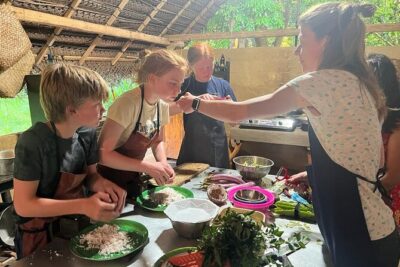
A private activity also helps. Only your group participates, so you are not competing with a large class for access to the cooking area or the instructor’s attention. If you want to ask basic questions, pause to watch a technique, or request clarification, this format should make that easier.
The family involvement is especially valuable because cooking traditions are often passed along through ordinary household routines. You may learn not only what goes into a dish, but how ingredients are handled, combined, and adjusted at home.
Still, you should keep your expectations realistic. The description does not provide a fixed menu, the names of specific dishes, or a detailed list of equipment. Menus may vary, and the class is best understood as a flexible family cooking session rather than a formal course with a printed lesson plan.
Natural spices and the central role of coconut
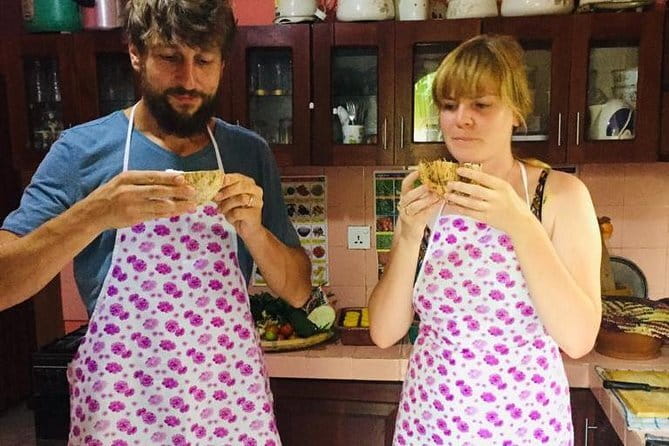
The cooking uses local spices and avoids artificial additives. That focus gives you a clearer sense of Sri Lankan flavor, where a small number of fresh ingredients can do a great deal of work.
One of the most useful lessons is the importance of coconut. A previous participant was surprised to learn that less can be better and that coconut is central to the cuisine. That is a helpful correction for anyone who assumes Sri Lankan food is simply about piling on hot spices.
Coconut may appear in several forms, including milk, grated coconut, or other preparations, but the supplied details do not promise exact dishes or methods. What you can expect is an explanation of why it matters and how it supports the character of the food.
The emphasis on using less is worth remembering. A good Sri Lankan meal is not necessarily defined by the number of ingredients in the pot. Balance, freshness, and the relationship between coconut, spices, vegetables, and other local foods are just as important.
I like this part of the class because it gives you something to take home beyond a recipe. Afterward, you are more likely to think about how a dish gets its body, fragrance, and heat instead of treating all seasoning as one category.
A different kind of day out entirely:
- Colombo: Private Tuk-Tuk City Tour with All Entry Fees
★ 4.9 · 2,154 reviews - Sri Lanka Personal Tour Driver in private vehicle
★ 5.0 · 747 reviews - Colombo Tuk Tuk City Tour -Sightseeing Entry Fees & Food Included
★ 5.0 · 678 reviews - Udawalawe National Park: Elephant Safari with Expert Guide
★ 4.9 · 641 reviews
Lunch or dinner that you helped prepare
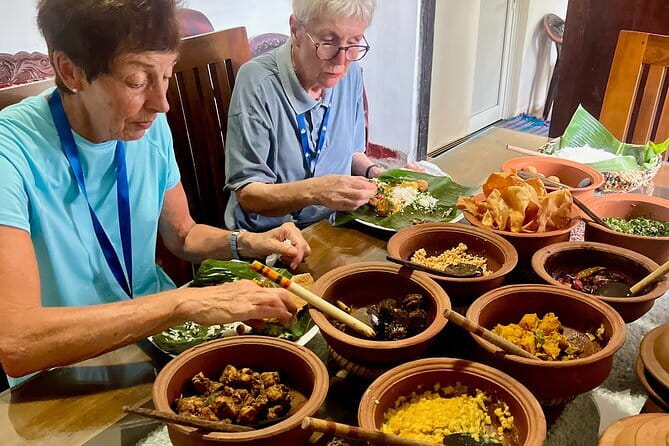
The included meal is the payoff, but it is also part of the lesson. You sit down to eat what you have helped cook, which makes the food more memorable than a dish served to you without explanation.
The meal may be lunch or dinner according to the time selected. This flexibility is handy for different itineraries, especially if you are using the class as a relaxed midday break or as an evening activity.
The exact menu is not specified, so do not book this expecting one particular curry or a guaranteed list of dishes. If you have dietary needs or strong preferences, ask about the menu before confirming. The overview notes diverse menus and inclusive options, but it does not list specific dietary arrangements.
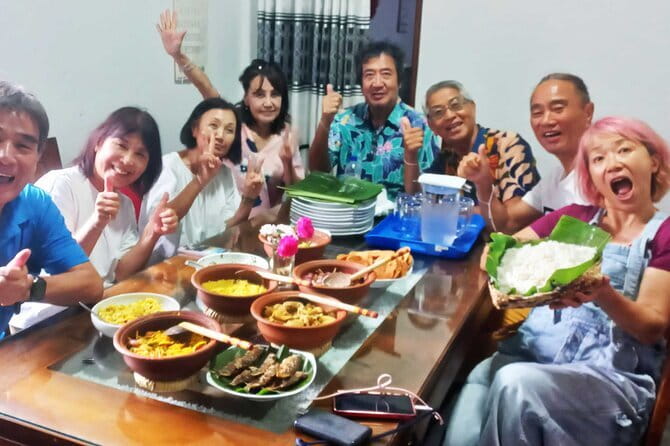
The meal also gives you time to talk with your hosts. One of the most praised features of the experience is the personal welcome from the family. The conversation is not an extra decoration. It is part of how you learn about Sri Lankan food traditions and daily life.
I would allow yourself to linger here. The class is not only about getting a plate of food at the end. It is about understanding how the ingredients came together and sharing the result in the home where the cooking took place.
How pickup and transport affect the day
Pickup is included in an air-conditioned vehicle, which makes the start of the activity easier. Colombo can be hot, and having collection arranged removes one practical chore before the market visit.
The listing does not specify every pickup area or the exact meeting procedure, so confirm those details at booking. Confirmation is received when you book, and the experience is near public transportation as well.
Drop-off is not included. This is the main logistical weakness, but it is manageable. You can use Uber or PickMe, take a taxi, or ask the hosts to help arrange a ride from the home.
I would plan the return before the class ends, particularly if you have a flight, train, or evening booking. You do not need to treat this as a major obstacle, but it is worth remembering that the activity does not deliver you back to your hotel.
Because the tour is private, the return arrangement can be easier to discuss than it would be with a large group. Still, the cost of your ride afterward is separate from the $40 price.
Is $40 a fair price?
At $40 per person, this class offers good value for someone who wants more than a meal. The price includes the market visit, instruction from local hosts, food, and pickup in an air-conditioned vehicle.
A private cooking activity can cost more than a group demonstration, but here only your own group participates. That gives you more room for questions and more direct contact with Anu and Danuka’s family.
The value is strongest if you enjoy participation. If you only want to sample Sri Lankan dishes, a restaurant meal will likely be simpler. If you want to learn how the ingredients are chosen and prepared, the market and cooking time make the price easier to justify.
There are a few unknowns. The menu is not fixed in the information provided, and the class does not spell out the size of each group, the exact pickup area, or the number of dishes prepared. Those details may matter to you, so ask before booking if you need a specific menu or a tightly structured lesson.
The activity had more than 10 bookings in the previous month and carries a five-star rating from 101 reviews, with 100 percent recommending it. Those figures suggest strong demand and consistent satisfaction, though they should not replace your own check of the menu and transport details.
Who will enjoy this cooking class most?
I would recommend this class to people who want a personal introduction to Sri Lankan food and family life. It suits couples, families, and small private groups who enjoy learning by doing.
It is also a good choice for first-time visitors who want help understanding local ingredients. The market guidance gives you a useful starting point, while the cooking session shows how those ingredients move from a stall to a home kitchen.
Food lovers will appreciate the attention to coconut, fresh produce, and natural spices. People who enjoy cultural conversation may value the family setting as much as the meal itself.
This may be less suitable if you want a professional cooking school with a fixed menu, printed recipes, or a formal skills certificate. It may also be inconvenient if you need return transportation included or if you have very limited time in Colombo.
The class requires good weather. If poor weather forces a cancellation, you are offered another date or a full refund. Since the market visit is an important part of the outing, that weather condition makes practical sense.
Booking tips for a smoother visit
Choose a time that matches the meal you want. A midday booking connects naturally with lunch, while a later booking may lead into dinner.
Ask about the planned menu if you have dietary restrictions. The experience offers inclusive options, but exact ingredients and substitutions are not listed in the available details.
Confirm the pickup area and prepare a plan for the return trip. Uber and PickMe are available options mentioned for getting away from the home, and the hosts can help arrange a taxi.
Wear something comfortable for a four-hour activity and bring room for conversation. The class includes movement through a market, food preparation, and a sit-down meal, so it is not simply a passive demonstration.
Finally, remember the cancellation deadline. You receive a full refund if you cancel at least 24 hours before the start time. Changes or cancellations inside that window are not accepted for a refund, and cut-off times follow local time.
Should you book Cooking Class Sri Lanka with Locals?
Book it if you want a private, family-led introduction to Sri Lankan food, especially one that begins with shopping and ends with a meal you helped prepare. The market visit, coconut lesson, and home setting give the class a clear sense of place.
I would choose it over a standard cooking demonstration if you value conversation and personal attention. I would hesitate only if you need a guaranteed menu, formal culinary instruction, or transport back to your hotel.
For $40, the combination of pickup, market guidance, cooking, and lunch or dinner is a solid deal. Just confirm the menu and pickup details, then plan your own ride home.
FAQ
How long does the cooking class last?
The experience lasts approximately four hours.
Where does the experience take place?
It takes place in Colombo, beginning with a visit to a local market and continuing at a real local family home.
Who leads the cooking class?
Anu and Danuka, along with Danuka’s mother, personally guide the cooking session.
Is the market visit included?
Yes. You visit a local market with the hosts to choose fresh fruit, vegetables, and other ingredients.
Is food included in the price?
Yes. Lunch or dinner is included, depending on the timing of your activity.
Is hotel pickup available?
Pickup is included in an air-conditioned vehicle. Confirm the pickup details for your location when booking.
Is return transportation included?
No. Drop-off is not included. You can use a taxi, Uber, or PickMe, or ask the hosts to help arrange transportation.
Is this a private activity?
Yes. Only your own group participates.
What is the cancellation policy?
You can cancel at least 24 hours before the start time for a full refund. Cancellations or changes made less than 24 hours before the start time are not refunded. If poor weather causes the experience to be canceled, you can choose a different date or receive a full refund.
Just added in Colombo
- Yala National Park (Day Tour)★ 5.0 · 5 reviews
- Water Amusement and Karting★ 5.0 · 1 review
- Wake Boarding in Bentota★ 5.0 · 1 review
- Udawalawe Jeep Safari from Bentota Aluthgama Berawula Area★ 5.0 · 1 review
- Madu River Sunrise Mangrove Kayaking★ 5.0 · 5 reviews
- Udawalawa National Park Day Tour★ 4.5 · 5 reviews
- Half Day Udawalawe Safari from Kalutara (Entrance + Lunch)★ 5.0 · 9 reviews
- Sigiriya and Dambulla Day Tour from Kalutara All Inclusive★ 5.0 · 2 reviews
Cooking Classes, compared.
Organic cooking class sigiriya (kumara & family)
Read our review →
Sri Lankan Cooking Class with Neranji at Homestay
Read our review →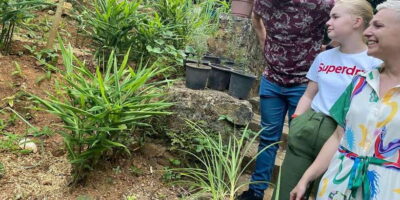
Browse the lists this tour appears in