
Review · COOKING CLASSES
Cooking Classes in Sri Lanka
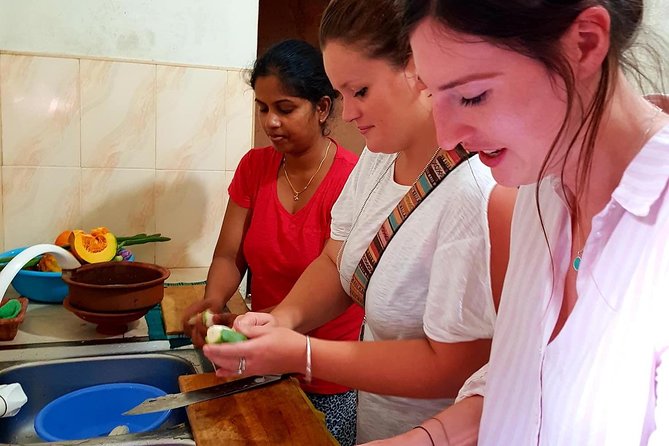
Sri Lanka tastes better when you cook it yourself. This three-hour private class in Negombo takes you into a local family home, where you learn to make coconut milk, curry, rice, spices, herbs, and a traditional dessert before sitting down to eat. I like the hands-on preparation, especially chopping your own vegetables instead of watching a demonstration. I also like the simple family setting, which gives the meal a personal feel that a restaurant lesson cannot easily match.
The class costs $45 per person, a fair price for a private lesson, dinner, and direct attention from your host. The main consideration is that the activity depends on good weather and a minimum number of participants, and the optional market visit costs extra. You also need to reach the meeting point in Andiambalama, near Katunayake, rather than expecting hotel pickup based on the information provided.
In This Review
- Key points at a glance
- A family kitchen instead of a staged restaurant lesson
- Starting with coconut milk, a key Sri Lankan skill
- Choosing vegetables and learning to chop
- Spices, herbs, and the judgment behind curry
- The optional market visit adds a useful first chapter
- Sitting down to eat what you made
- What $45 buys you in Negombo
- Timing, meeting point, and practical planning
- Who will enjoy this class most
- Final verdict: book it for the personal meal
- FAQ
- Where does the cooking class take place?
- How long does the activity last?
- Where does the activity end?
- How much does the class cost?
- Is this a private cooking class?
- Is the class suitable for vegetarians?
- What do you cook during the class?
- Can I choose the vegetables for my curry?
- Is a market visit included?
- Can I cancel for a full refund?
Key points at a glance
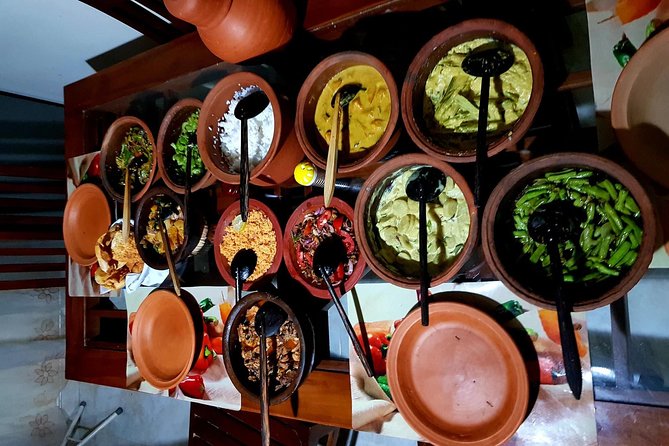
- Cook inside a local family home: This is a private class held in a real household setting, not a large demonstration kitchen.
- Make coconut milk from the start: You learn a basic part of Sri Lankan cooking that helps explain the texture and flavor of many curries.
- Choose and prepare your vegetables: You select the vegetables for your curry, then cut and chop them yourself.
- Learn spices and herbs by using them: The class gives you an introduction to the ingredients behind Sri Lankan home cooking.
- Eat what you prepare: The lesson ends with dinner, including a traditional dessert.
- Add a market visit if you want more context: The upgrade lets you help choose vegetables and hear about local spices and herbs.
A family kitchen instead of a staged restaurant lesson
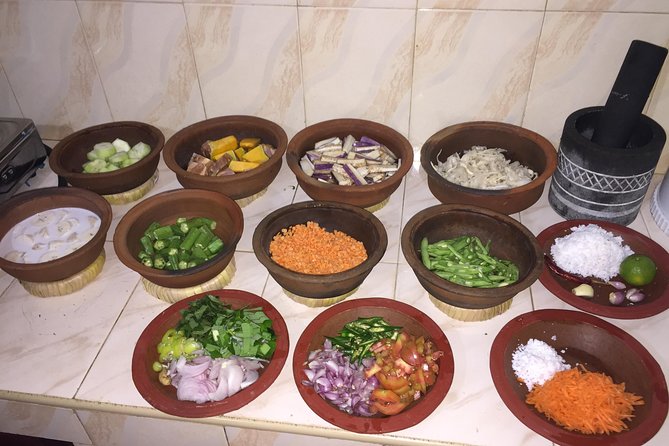
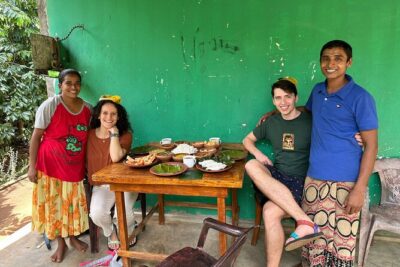
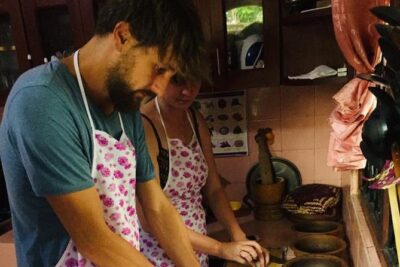
The best reason to book this class is the setting. You are welcomed into a family home in Negombo, where the cooking reflects everyday Sri Lankan habits rather than a polished restaurant routine. That matters because home cooking often depends on touch, smell, timing, and judgment instead of strict measurements.
You begin with tea or coffee. It is a small detail, but it sets a friendly pace and gives you a moment to settle in before handling ingredients. The welcome also helps the class feel like an invitation into someone’s home, rather than a quick commercial demonstration.
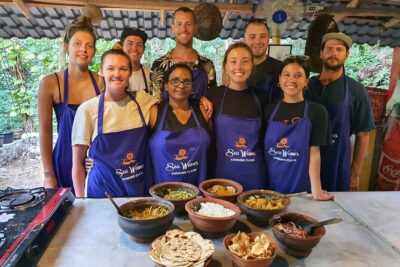
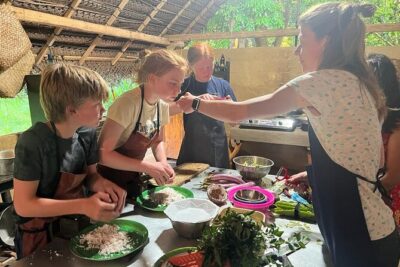
This is a private activity, so only your own group takes part. That is useful if you want to ask questions, work at your own speed, or focus on vegetarian cooking. It also means you will not be placed in a large class where some people can only watch from the back.
The information provided does not identify the host by name, so you should not expect a named celebrity chef or a formal culinary school instructor. The appeal is the household setting and direct contact with a local cook. If your idea of a cooking class is a professional kitchen with measured recipes and printed instructions, this may feel informal. If you want to see how food is prepared at home, the informality is the point.
More Cooking Classes in Negombo:
- Ella: Traditional Sri Lankan Cooking Class
★ 4.9 · 788 reviews - Organic cooking class sigiriya (kumara & family)
★ 5.0 · 650 reviews - Kandy Village Cooking Class
★ 5.0 · 536 reviews
Starting with coconut milk, a key Sri Lankan skill
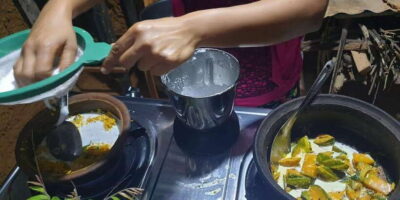
After your tea or coffee, the class explains how to make coconut milk. This is more important than it may first sound. Coconut milk is central to many Sri Lankan dishes, and learning how it is prepared gives you a better sense of how curries get their body and gentle sweetness.
You are not simply handed a finished carton or bowl. The lesson focuses on the process, helping you understand one of the foundations of the meal. Since the class avoids relying on recipes, you are likely to pay attention to the look and feel of the ingredients rather than just copying a list of instructions.
That recipe-free approach can be a strength and a weakness. I like it because you learn a method you may be able to repeat at home, even if you do not have precisely the same vegetables or spices. On the other hand, anyone hoping to take home a detailed written recipe may need to make their own notes during the class.
Ask questions as you go. Since this is private, you have a better chance of clarifying how coconut milk is used, how the curry is adjusted, and which ingredients can be changed. The supplied information does not promise recipe cards, so bring a phone or small notebook if you want to remember exact steps.
Choosing vegetables and learning to chop
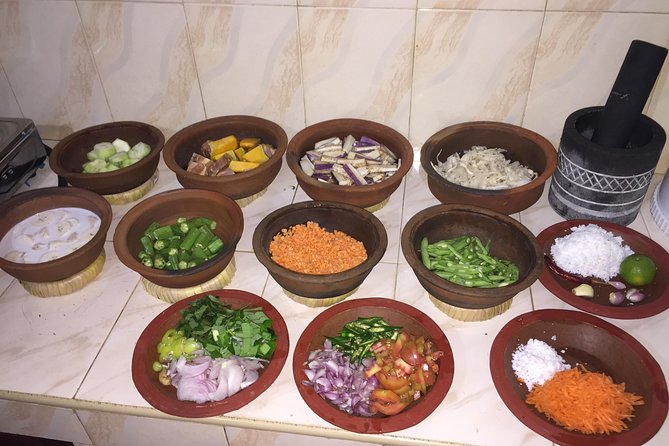
One of the most appealing parts comes when you choose which vegetables to use for the curry. This puts you closer to the way a home meal is planned. Instead of following a fixed menu that treats every group exactly alike, you have some say in what ends up in the pot.
You then cut and chop the vegetables yourself. I consider this a major advantage over classes where the instructor has already completed all the preparation. Cutting vegetables may sound basic, but it is where you begin to understand the size, shape, and cooking time needed for each ingredient.
The class is suitable for people who eat meat and for vegetarians. The supplied details specifically describe it as suitable for non-vegetarians and vegetarians, though the listed cooking steps focus on vegetables, curry, rice, coconut milk, and related dishes. If you have a strict dietary requirement, ask about it before booking, since no full allergy or substitution policy is provided.
The lesson is also a good fit for mixed groups. One person can enjoy learning vegetarian dishes while another simply wants to understand Sri Lankan curry. Because the activity is private, your group can discuss food preferences before cooking, although the exact menu is not specified in advance.
Spices, herbs, and the judgment behind curry
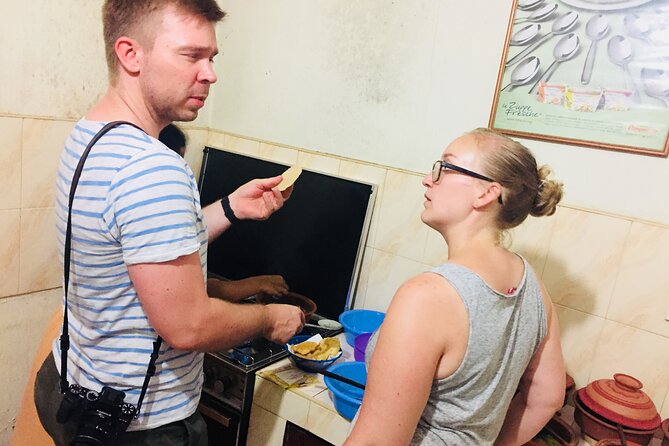
Sri Lankan food is not just about heat. It depends on how spices, herbs, coconut, vegetables, and cooking time work together. This class gives you an introduction to Sri Lankan spices and herbs, then shows you how they are used in the cooking.
That practical order is helpful. You first see and handle ingredients, then learn how to cook with them. You are not left with a table full of unfamiliar powders and no idea what they do.
The class does not promise a full catalog of Sri Lankan spices, and three hours is not enough to cover every regional dish. Still, it gives you a useful starting point. I would pay close attention to which ingredients are used for aroma, which affect color, and which add heat or depth.
Since you are learning directly from a local cook, the lesson may include small adjustments that a recipe cannot explain. The supplied description emphasizes learning without recipes, so expect guidance based on observation rather than exact quantities. That makes the food feel more like home cooking, but it also asks you to stay engaged.
If you want the class to be especially useful, do not rush through the spice section. Ask what can be bought outside Sri Lanka, what should be stored carefully, and which ingredients are essential. Those details are not guaranteed, but a private class gives you the best opportunity to ask.
A few more options to weigh up in Negombo
- AirPort CMB to Colombo (Private Taxi 24/7) Car, Van, Minibus
★ 5.0 · 604 reviews - 8 Days tour in Sri Lanka with privet driver and accommodations
★ 5.0 · 472 reviews - Negombo city tour by Tuk Tuk Hotel Pickup & Guide
★ 5.0 · 221 reviews - Private Car & Driver for 07 Days Tour In Sri Lanka
★ 5.0 · 199 reviews
The optional market visit adds a useful first chapter
You can upgrade the class to include a market visit. The market option lets you help choose vegetables and hear about local spices and herbs before cooking begins.
This upgrade makes sense if you want a fuller food experience. The market helps connect the ingredients to daily life, and choosing vegetables before entering the kitchen gives the meal a clearer beginning. It also adds context to the curry instead of treating the produce as anonymous items already laid out for you.
The market visit is optional, not part of the basic $45 package as described. Check the price and timing of the upgrade before you commit. The total duration is listed at about three hours, but the information does not explain how much of that time belongs to the market and how much belongs to cooking.
If you have limited time in Negombo, the standard class may be enough. If food shopping and local ingredients are what interest you most, the upgrade is likely the better choice. I would especially consider it for anyone who wants to understand the connection between a market basket and a Sri Lankan home meal.
Sitting down to eat what you made
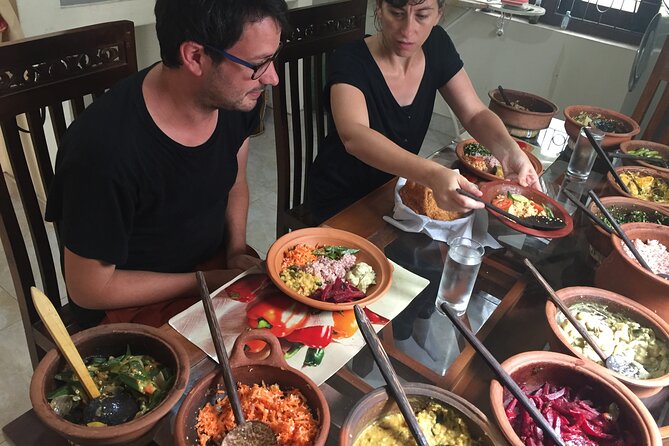
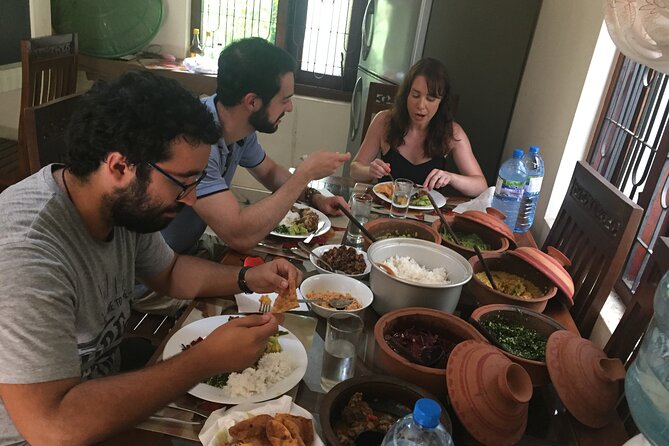
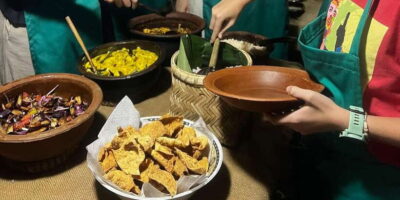
The class ends with dinner around the host’s table. This is more satisfying than being served a meal at the beginning because you can connect each dish to the work that produced it.
You prepare curry, rice, coconut milk, and other food, then eat the finished meal. The menu is not fully fixed in the information provided, since the vegetables can be chosen during the class. That flexibility is useful, but it also means you should not book expecting a particular named dish.
A traditional dessert is included as well. It gives the meal a proper finish and adds another taste beyond the savory cooking. The dessert is not identified, so treat it as a pleasant part of the meal rather than a specific promise.
The meal has received especially warm praise for its relaxed, hands-on quality and for dishes such as fresh coconut sambal and dhal. Those examples suggest that the class is strongest when you take part in simple staples and learn how they come together, rather than chasing an elaborate restaurant menu.
You should allow yourself time to eat slowly and ask questions at the table. The shared dinner is not just a reward at the end. It is part of the lesson, since tasting the finished food helps you understand balance, texture, and the effect of coconut and spices.
What $45 buys you in Negombo
At $45 per person, this is not the cheapest way to eat in Sri Lanka. You can find an inexpensive meal for much less. The value comes from combining instruction, ingredients, a private setting, and dinner in one three-hour activity.
I think the price is reasonable if you care about food and want more than a quick meal. You are paying for access to a private household and for the chance to prepare the dishes yourself. A large group class might cost less, but it would not necessarily offer the same direct attention.
The value is also stronger for couples, families, and small groups who want a shared activity. Since only your group participates, you are not paying for a public class filled with people whose interests may differ from yours.
The cost is harder to justify if you only want to taste Sri Lankan food or if you have already taken several cooking classes. It is also worth remembering that the market visit is an upgrade, so the final price may be higher if you choose it.
The class is booked, on average, 36 days ahead. That does not mean you must reserve exactly that early, but it suggests that advance planning is sensible, particularly if your time in Negombo is short. One booking was reportedly accepted with less than 24 hours notice, so last-minute availability can happen, but I would not rely on it.
Timing, meeting point, and practical planning
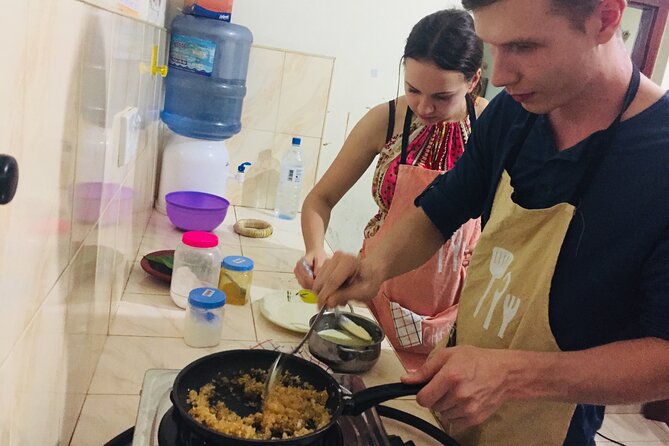
The activity lasts about three hours. That is long enough for a welcome drink, ingredient preparation, cooking, dinner, and dessert without taking an entire day from your Sri Lanka itinerary.
The meeting point is listed as Negombo Cooking Class, Andiambalama Katunayake, Negombo 11450, Sri Lanka. The activity ends back at this same meeting point. The information says the location is near public transportation, but it does not specify hotel pickup or return transport.
Plan your route carefully, especially if you are staying elsewhere in Negombo. The meeting point includes both Andiambalama and Katunayake in its address, so check the exact directions supplied after booking rather than assuming it is in the center of Negombo.
A mobile ticket is available, which makes the booking easy to keep on your phone. Confirmation is provided at the time of booking. I would still save the address and start time somewhere offline, since a cooking class is less forgiving if you arrive late and miss the preparation.
The experience requires good weather. If poor weather causes cancellation, you are offered another date or a full refund. There is also a minimum number of participants, so a cancellation for that reason brings the choice of another date or experience, or a full refund.
You can cancel for a full refund up to 24 hours before the start time. Changes or cancellations inside that 24-hour window are not accepted for a refund, and the cut-off follows local time in Sri Lanka.
Who will enjoy this class most
I would recommend this class to you if you enjoy food, prefer small-scale activities, and want to meet local people through an ordinary household routine. It suits couples, families, and private groups that want to cook together rather than watch a chef work from a distance.
Vegetarians should feel comfortable considering it because the class specifically accommodates vegetarian and non-vegetarian preferences. Still, ask about your exact needs before booking if you have allergies or require strict separation of ingredients.
The class also suits first-time visitors to Sri Lanka who want an introduction to curry, coconut milk, rice, herbs, and spices without signing up for a full culinary course. You do not need advanced cooking skills to chop vegetables and follow the host’s guidance.
It may not suit you if you need a formal menu, printed recipes, guaranteed dishes, or a highly structured professional lesson. The same relaxed style praised by many people can feel too loose if you want exact measurements and a certificate at the end.
Final verdict: book it for the personal meal
Book this Negombo cooking class if you want a private, hands-on introduction to Sri Lankan home food. The strongest features are the family setting, the chance to choose and chop vegetables, the lesson on making coconut milk, and the dinner that lets you taste your own work.
Choose the market upgrade if ingredients and shopping interest you, and reserve ahead if your schedule is tight. Skip it if you only want a cheap meal or if you need a formal recipe-based course.
For $45, the class offers good value because it combines food, instruction, and a personal setting. It is less about mastering every Sri Lankan dish and more about learning how an everyday curry meal comes together. That is a useful, enjoyable way to spend three hours in Negombo.
FAQ
Where does the cooking class take place?
The class takes place at Negombo Cooking Class, Andiambalama Katunayake, Negombo 11450, Sri Lanka.
How long does the activity last?
The cooking class and dinner take about three hours.
Where does the activity end?
The activity ends back at the meeting point.
How much does the class cost?
The listed price is $45 per person.
Is this a private cooking class?
Yes. Only your group participates in the activity.
Is the class suitable for vegetarians?
Yes. The class is described as suitable for both vegetarians and non-vegetarians.
What do you cook during the class?
You learn to prepare coconut milk, curry, rice, and other dishes. You also prepare a traditional dessert.
Can I choose the vegetables for my curry?
Yes. You can choose which vegetables you want to use, then cut and chop them yourself.
Is a market visit included?
A market visit is available as an optional upgrade. It lets you choose vegetables and learn about local spices and herbs.
Can I cancel for a full refund?
Yes. You can cancel at least 24 hours before the start time for a full refund. Cancellations or changes made less than 24 hours before the start time are not accepted for a refund.
Just added in Negombo
- Sunset Kayaking on the Negombo Lagoon★ 4.7 · 2 reviews
- Paramotoring in Negombo★ 5.0 · 1 review
- Negombo: private half day city tour with hotel transfers★ 5.0 · 12 reviews
- Negombo Private Tour: Market, Temples & Canal★ 4.9 · 15 reviews
- Negombo Lagoon (Mangrove ) Boat Excursion★ 5.0 · 3 reviews
- Negombo: Kayaking in the Lagoon★ 4.8 · 5 reviews
- Negombo: Fishing Village Highlights Private Tour by Tuk Tuk★ 4.6 · 5 reviews
- Negombo: Guided City Tour by Tuk Tuk with Hotel Pickup★ 4.7 · 20 reviews
Cooking Classes, compared.
Organic cooking class sigiriya (kumara & family)
Read our review →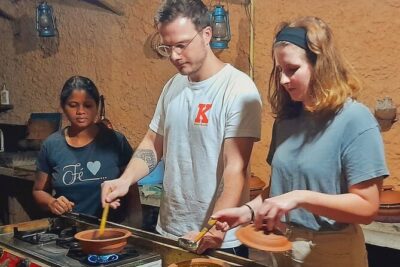
Sri Lankan Cooking Class with Neranji at Homestay
Read our review →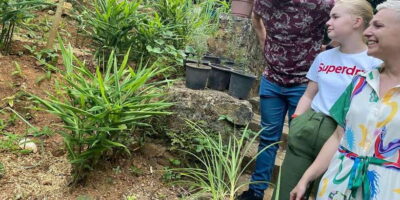
Browse the lists this tour appears in