
Review · COOKING CLASSES
Nilaveli: Sri Lankan Cooking Class with a Local Family
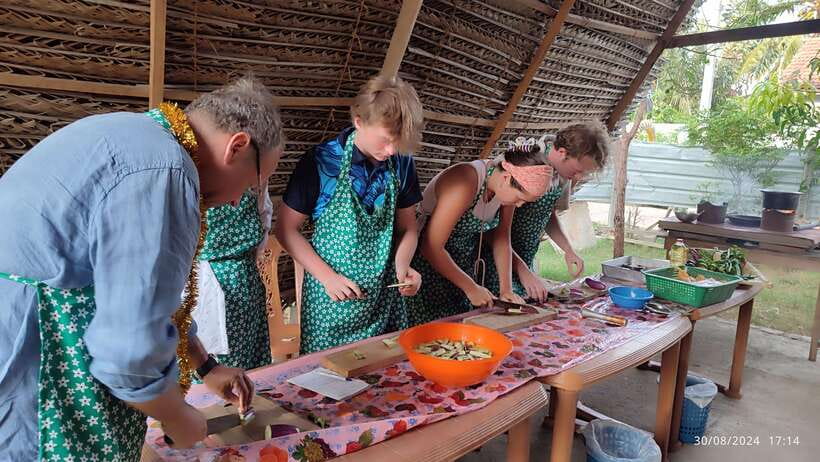
Sri Lankan food starts with fire and patience. This five-hour cooking class in Nilaveli takes you into the home life of Nimali Dinushika and her family, where you prepare classic dishes rather than simply watching a demonstration. I like the personal setting and the chance to cook with traditional wood stoves, and I also like that you can help shape the menu. The main catch is that fish, chicken, and seafood cost extra, and hotel pickup is not included.
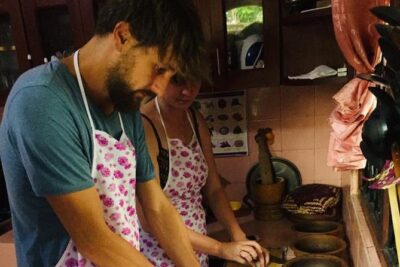
You should expect a relaxed family activity, not a polished school kitchen. You will learn about spices, curry powder, coconut, and several Sri Lankan staples, then sit down to eat what you made. The setting is wheelchair accessible, but the host asks people with food allergies not to book, so check the food arrangements carefully before paying.
In This Review
- Five details that shape the experience
- Meeting Nimali and finding the cooking spot
- The first lesson: spices, coconut, and curry powder
- Four hours of cooking, with plenty to do
- Choosing vegetarian, chicken, fish, or seafood
- Eating what you made
- What the five-hour length means
- Why the $22 price is fair
- What makes this class personal
- Accessibility, timing, and practical preparation
- Who should book this Nilaveli cooking class?
- Should you book it?
- FAQ
- How long does the Nilaveli cooking class last?
- Where does the cooking class meet?
- What dishes can I learn to cook?
- Are chicken, fish, and seafood included in the $22 price?
- Is hotel pickup included?
- Can I cancel the booking?
Five details that shape the experience
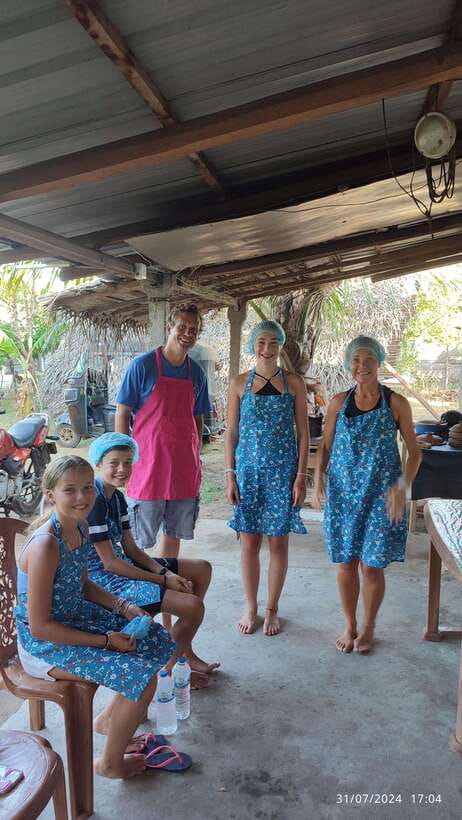
- Five hours in a family home: Plan on roughly four hours of cooking followed by about an hour of eating and talking.
- A wide menu: Depending on your choices, you may prepare rice and curry, string hoppers, hoppers, pittu, rotti, milk rice, sambols, sweets, and curry powder.
- Wood-fired cooking: Firewood and traditional wood stoves give the class a practical link to everyday Sri Lankan cooking.
- A personal host: Nimali Dinushika leads the activity with her family, and the class is conducted in English or Singhalese.
- Good value at $22: Ingredients, cooking tools, recipes, refreshments, and the meal are included, though meat and seafood bring extra charges.
Meeting Nimali and finding the cooking spot
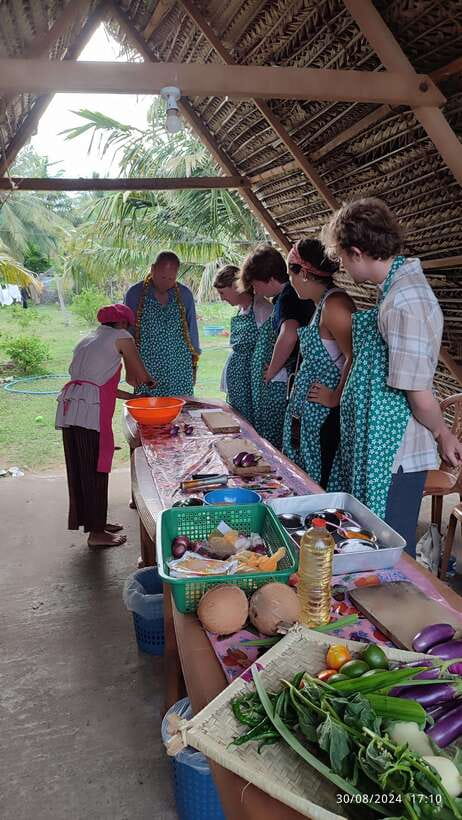
The meeting point is Pigeon Island Tours, at The Rice and Curry seafood restaurant and dive shop. The same location is used for the Cook with Nimali activity. Since hotel transportation is not included, you need to make your own way there and confirm the exact meeting details when booking.
From there, the class takes place in a traditional Sri Lankan home setting, sometimes using the garden area beside the house. That matters because the surroundings are part of the lesson. You are not only learning how to combine ingredients. You are seeing how a family prepares food with the space, tools, and heat sources available to them.
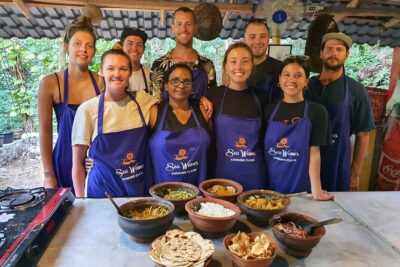
Nimali’s husband may also take part, giving the class a friendly family feel rather than a one-person demonstration. I would expect the pace to be conversational and hands-on. You should be ready to stand, chop, mix, shape, and cook for much of the session, so comfortable clothes are a better choice than anything precious.
More Cooking Classes in Sri Lanka:
- Ella: Traditional Sri Lankan Cooking Class
★ 4.9 · 788 reviews - Organic cooking class sigiriya (kumara & family)
★ 5.0 · 650 reviews - Kandy Village Cooking Class
★ 5.0 · 536 reviews
The first lesson: spices, coconut, and curry powder
Sri Lankan cooking can look simple on the plate, but the flavor comes from small decisions. You learn about the ingredients and spices used in local dishes, including how curry powder is made. That is useful because it helps you understand the difference between simply following a recipe and building a Sri Lankan flavor base.
Coconut is another important part of the class. One particularly memorable activity described by a participant involved opening a freshly fallen coconut with a hatchet, drinking the coconut water, and then using the coconut to make two sambols. That is the kind of small, practical moment that makes this class feel connected to home cooking rather than a standard restaurant lesson.
You may also learn how to make Sri Lankan sweets. Halapa, a traditional dessert made during one class, was served with tea and received special praise. Milk rice is another listed dish, offering a milder and more comforting contrast to hot curries and sharp sambols.
The exact menu is not fixed in the same way as a restaurant tasting menu. You can discuss preferences, including vegetarian, fish, or meat choices. That flexibility is a real advantage, but remember that the protein choice can affect the final price.
Four hours of cooking, with plenty to do
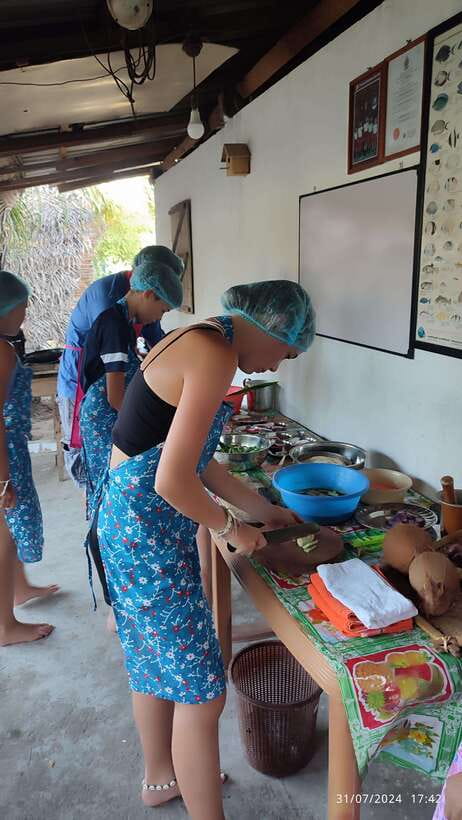
The class covers a long list of Sri Lankan staples. You may work on rice and curry, string hoppers, hoppers, pittu, rotti, milk rice, sambols, curry powder, and sweets. You are unlikely to prepare every item in exactly the same way each time, since the menu can respond to your requests.
String hoppers are delicate steamed rice-flour noodles. Learning to make them gives you a feel for one of Sri Lanka’s most recognizable breakfast foods. Hoppers are different again, with a bowl-shaped form and a crisp edge. They require a little more attention to shaping and cooking, which makes them satisfying to prepare rather than just eat.
Pittu brings another texture to the table. Rotti gives you a more substantial flatbread-style item. Rice and curry ties the whole meal together, showing how several separate dishes are served as one balanced spread.
The class is not only about recipes. It also shows how many dishes can come from a few basic ingredients, especially rice, coconut, spices, and vegetables. If you cook at home, you will come away with more than a list of instructions. You will have a better sense of how Sri Lankan meals are assembled.
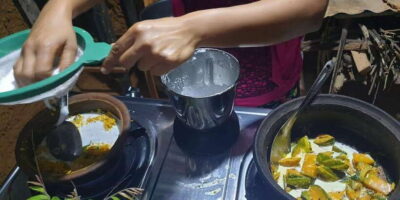
Because the cooking takes place over firewood and wood stoves, the process can be slower and less predictable than using a modern electric hob. That is part of the appeal, but it also means you should not expect a perfectly timed professional kitchen. Heat control, waiting, and shared work are all part of the experience.
Choosing vegetarian, chicken, fish, or seafood
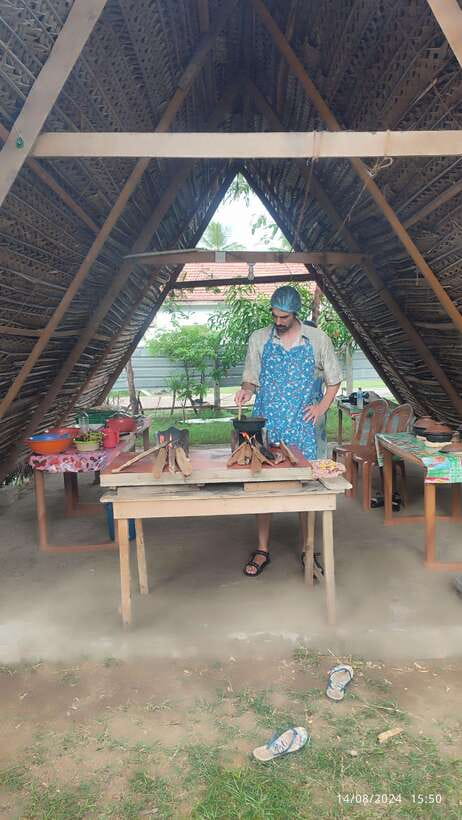
The base price is $22 per person, and the included food is enough to make this a strong value for anyone happy with the standard cooking ingredients and meal. Water, a refreshment, ingredients, personal cooking equipment, recipes, and dining are included.
If you want fish or chicken curry, the additional charge is 2,000 Sri Lankan rupees per person. Seafood has a separate extra cost based on what you request. Ask about the total before the class begins, especially if you have a particular fish, prawn, or other seafood dish in mind.
The menu flexibility has already proved useful for families and mixed groups. One class included hoppers, sweet sambol, pittu, chicken curry, prawn curry, and halapa. Another included jackfruit, string hoppers, rice, several curries, sambols, fruit juice, and a local sweet. These examples show how different the final meal can be.
Vegetarians should find the class particularly appealing because Sri Lankan cooking offers plenty of vegetable-based dishes. Still, you should state your preferences in advance rather than assume the menu will automatically suit you. People with food allergies are specifically listed as unsuitable for this activity, so this is not the right place to take chances with serious allergies.
A few more options to weigh up in Sri Lanka
- Trincomalee: Whales Watching and Navy Island Snorkeling Tour
★ 4.4 · 81 reviews - From Uppuveli Beach: Pigeon Island Snorkeling Tour
★ 4.5 · 58 reviews - Trincomalee: Whale & Dolphin Safari Tour with Expert Guides
★ 4.2 · 53 reviews - Snorkeling Trip To Pigeon Island
★ 4.1 · 38 reviews
Eating what you made
After the cooking comes roughly an hour of dining. This is not a quick sample at the end of a lesson. You sit down with the food you prepared, which lets you see how the separate dishes work together.
That final meal is one of the strongest parts of the class. You can taste how the sambol cuts through a creamy or spicy curry, how string hoppers carry sauce, and how rice or pittu softens stronger flavors. A tea service with halapa is another pleasant touch when available.
The meal also gives you time to talk with Nimali and her family. You can ask about their food, daily life, and the dishes you have just prepared. This personal exchange is likely to be most valuable for people who want a closer look at ordinary Sri Lankan home cooking, not just a restaurant meal.
The group may include other people from different countries. One participant described sharing the cooking session with other international visitors, which can add a social side without taking away from the family setting. Group size is not specified, so I would ask ahead if you need a private class or have a larger party.
What the five-hour length means
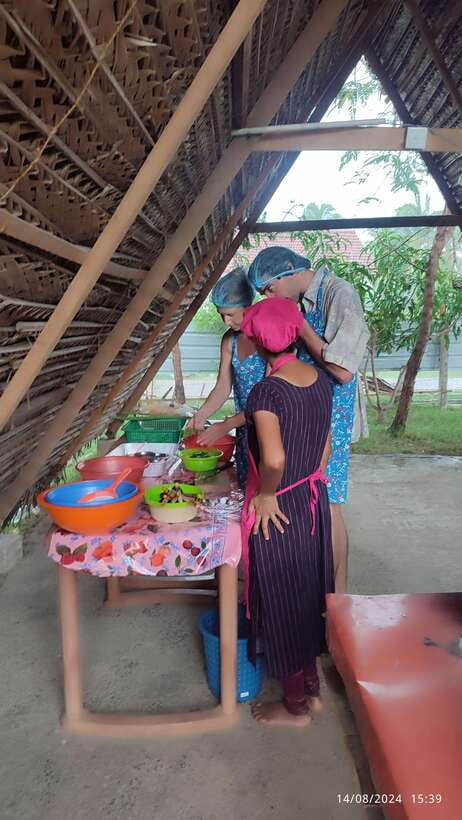
Five hours is a substantial block of your day. The cooking portion may last about four hours, with another hour for eating. That is enough time to cover several dishes, but it is too long for anyone looking for a quick activity between beach stops.
I see the length as a benefit if you enjoy hands-on learning. You get time to repeat techniques, ask questions, and understand how the dishes are prepared. You are not rushed from one recipe to the next.
On the other hand, the class may feel tiring if you are not comfortable spending several hours cooking in warm conditions. Wear light, comfortable clothing and bring a hat and sunscreen. Smoking, alcohol, and drugs are not allowed, and pets are not permitted.
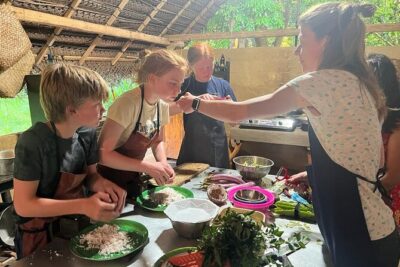
Children under two are not suitable for the activity. Older children can take part, and one family had children aged four and six who joined the cooking. That does not guarantee the same arrangement for every group, but it suggests the activity can work well for families with children who like to help in the kitchen.
Why the $22 price is fair
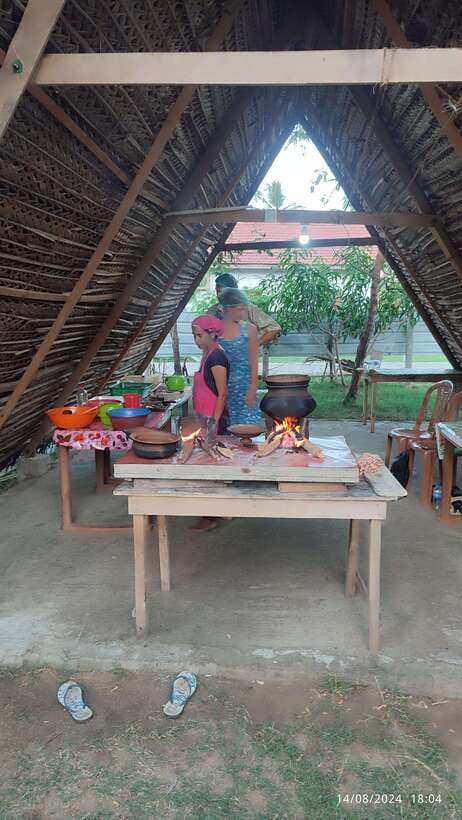
At $22 per person, this is not just a cooking lesson. You receive the ingredients, equipment, traditional cooking experience, recipes, water, refreshments, and the finished meal. The use of a family home and wood stove adds a sense of place that a restaurant class would struggle to match.
The value is best if you are willing to take part fully. If you only want to watch, you may feel the price is less attractive because the class is built around active cooking and a long shared meal.
Extra charges make the final cost less simple. Chicken or fish adds 2,000 LKR per person, while seafood depends on your request. Hotel pickup and drop-off are also excluded, as is any shopping tour. For a clear budget, ask for the price of your preferred menu before you arrive.
Compared with paying for a meal alone, the class gives you recipes and techniques to take home. You also get a better understanding of how Sri Lankan food is prepared in a real family setting. For me, that makes the base price appealing, especially for people who enjoy food as a way to understand a place.
What makes this class personal
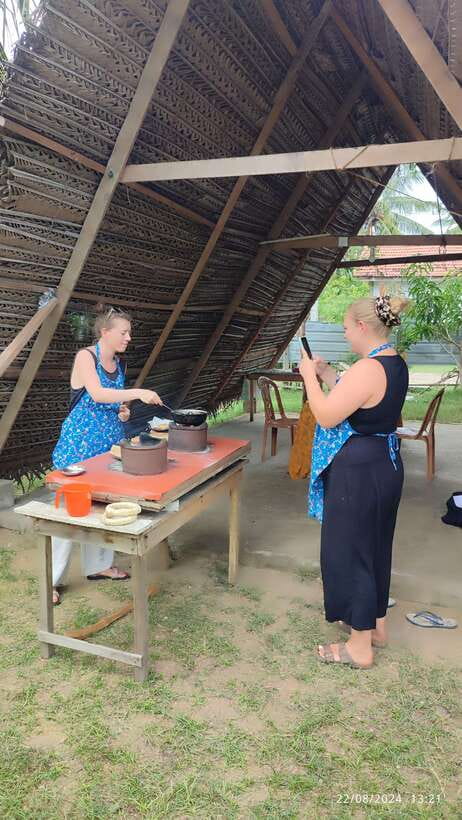
The most praised part of the experience is the warmth of Nimali and her family. The setting can make you feel included in family life for a few hours, with the hosts explaining what they are doing and encouraging you to join in.
That does not mean the class is formal or highly structured. You should expect a home kitchen or garden area, family interaction, and practical work. If you prefer a slick studio, printed timetable, and restaurant-style presentation, this may feel informal.
I think the informality is the point. You learn by handling ingredients, working around the stove, and sharing food at the end. Opening a coconut, preparing sambols, or shaping string hoppers gives you memories that a demonstration cannot provide.
Nimali’s ability to discuss the menu before cooking is another strong feature. You can request vegetarian food or ask about fish and meat. Still, the class is conducted in English or Singhalese, so you should be comfortable communicating in one of those languages.
Accessibility, timing, and practical preparation
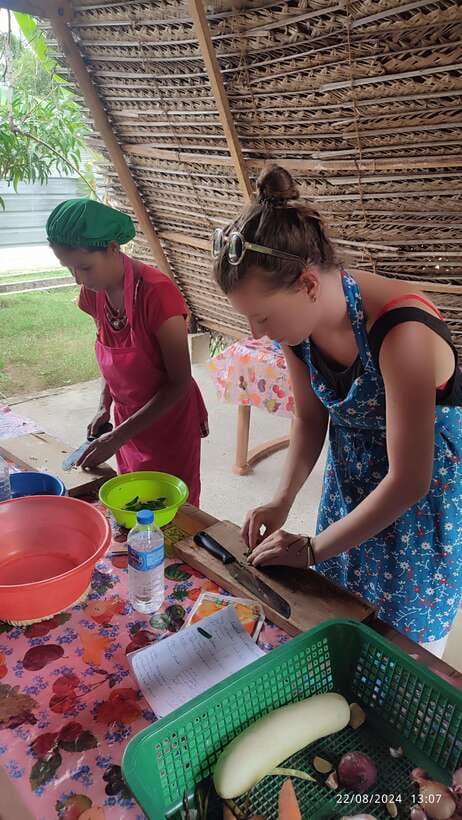
The activity is listed as wheelchair accessible, but it takes place in a traditional home setting. If you use a wheelchair or have specific mobility needs, contact the provider before booking to confirm the garden, cooking area, and seating arrangement that will be used on your date.
Starting times vary, so check availability before you plan the rest of your day. Since the activity lasts five hours, leave enough space around it rather than booking a tight connection with another tour.
Bring a hat, sunscreen, and clothes suitable for cooking. You may be working near firewood, spices, coconut, and sauces, so choose practical clothing. Tell the host about dietary restrictions in advance, while keeping in mind that the activity is not suitable for people with food allergies.
Free cancellation is available up to 24 hours before the activity for a full refund. You can also reserve now and pay later, which is useful if your Nilaveli plans are still taking shape.
Who should book this Nilaveli cooking class?
I would choose this class if you want to meet a local family, learn several dishes, and eat a proper meal at the end. It suits curious cooks, food-focused visitors, families with older children, and anyone who would rather spend an afternoon participating than sitting back and watching.
It is also a good choice if you want vegetarian Sri Lankan food or if you want to compare familiar dishes such as rice and curry with less familiar items such as pittu and string hoppers. The opportunity to request dishes makes the experience more useful for people with specific culinary interests.
I would hesitate if you need guaranteed allergy-safe cooking, dislike informal home settings, or have only a short gap in your schedule. I would also budget extra if chicken, fish, or seafood is important to you.
Should you book it?
Book this Nilaveli cooking class if the idea of making food with a local family sounds better than attending a polished demonstration. The personal welcome, wood-stove cooking, flexible menu, and shared meal give the five hours real substance.
Before booking, confirm your preferred dishes, the added cost for protein, and the meeting arrangements since transport is not included. If you can manage those details and have no food allergies, the $22 base price offers a warm, practical introduction to Sri Lankan home cooking with Nimali Dinushika and her family.
FAQ
How long does the Nilaveli cooking class last?
The activity lasts five hours. Cooking takes about four hours, followed by approximately one hour for dining.
Where does the cooking class meet?
The meeting point is Pigeon Island Tours, at The Rice and Curry seafood restaurant and dive shop. The Cook with Nimali activity uses the same location.
What dishes can I learn to cook?
The class may include rice and curry, string hoppers, hoppers, pittu, rotti, milk rice, Sri Lankan sweets, sambols, and curry powder. The menu can also include chicken, fish, or seafood at an extra cost.
Are chicken, fish, and seafood included in the $22 price?
No. Fish or chicken curry costs an additional 2,000 LKR per person. Seafood has an extra price based on the dish requested.
Is hotel pickup included?
No. Hotel pickup and drop-off are not included, so you need to arrange your own transport to the meeting point.
Can I cancel the booking?
Yes. You can cancel up to 24 hours in advance for a full refund. A reserve-now-and-pay-later option is also available.
Just added in Sri Lanka
- Day Tour of Nuwara Eliya★ 5.0 · 3 reviews
- Full day Kandy City Tour by Tuk Tuk★ 5.0 · 1 review
- Day Tour Kandy to Sigiriya with Dambulla Cave Temple Excursion★ 5.0 · 3 reviews
- Day Tour for Outdoor and Adventure Lovers★ 4.5 · 4 reviews
- Ambuluwawa Tower and Kandy City Tuk Tuk Tour with Epic views★ 5.0 · 9 reviews
- Culture Tour in Kandy★ 5.0 · 1 review
- Dambulla, Sigiriya and Pidurangala Tour from Kandy★ 5.0 · 9 reviews
- Kandy to Nallathanniya (Climb Adams Peak)★ 5.0 · 1 review
Cooking Classes, compared.
Organic cooking class sigiriya (kumara & family)
Read our review →
Sri Lankan Cooking Class with Neranji at Homestay
Read our review →
Browse the lists this tour appears in