
Review · COOKING CLASSES
Ella: Sri Lankan Authentic Cooking expirience
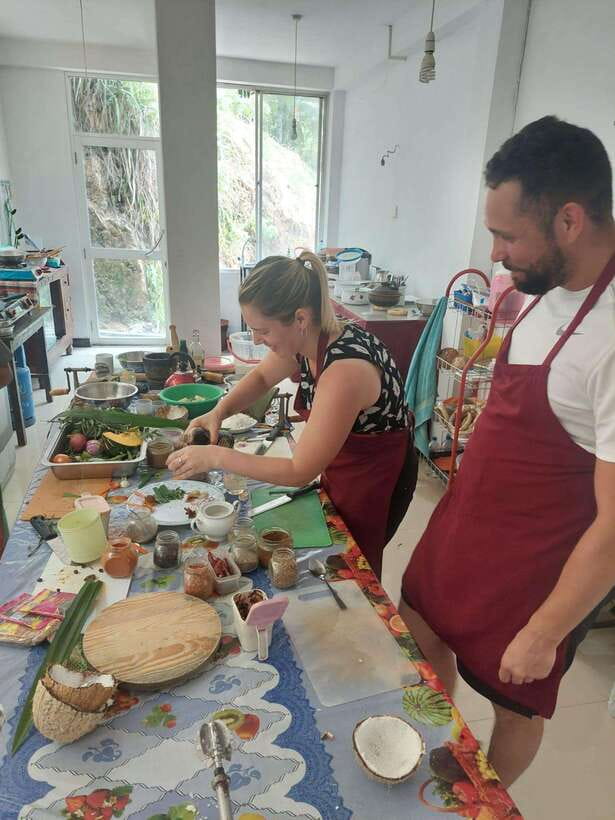
Come hungry, leave with recipes. This two-hour cooking class at Honey Bee Garden brings you into a traditional Sri Lankan home, where Ruwini teaches you to prepare rice, coconut roti, dhal, pumpkin, beans, and other curries from scratch. I like the hands-on work, especially cracking and scraping fresh coconuts, and I like that you eat the full meal afterward rather than simply watching a demonstration.
The class costs $22 per person, which is strong value for a small-group activity that includes ingredients, equipment, cooking instruction, a complete meal, and recipes sent by email. The main point to consider is the pace: you prepare many dishes in only two hours, so some parts may feel brisk, especially if the group reaches the maximum of 10 people.
In This Review
- Key points to know before booking
- A Sri Lankan kitchen instead of a staged food show
- Meeting Ruwini at Honey Bee Garden
- The spice introduction: learning the logic behind curry
- Cracking coconuts and making the basics
- Building a full rice and curry meal
- The best part comes after the cooking
- What the $22 price really covers
- Timing, group size, and practical points
- Who will enjoy this class most
- Should you book the Honey Bee Garden cooking class?
- FAQ
- Where is the cooking class held?
- How long does the cooking class last?
- How much does the class cost?
- What dishes are prepared?
- Is the class taught in English?
- Is the meal included?
- Are recipes provided afterward?
- Can I request a private class or report dietary restrictions?
Key points to know before booking
- Fresh coconut is part of the lesson: You may crack coconuts, scrape the flesh, and make fresh coconut milk and sambal.
- Ruwini leads the class: She is an English-speaking home cook praised for her warmth, patience, humor, and clear explanations.
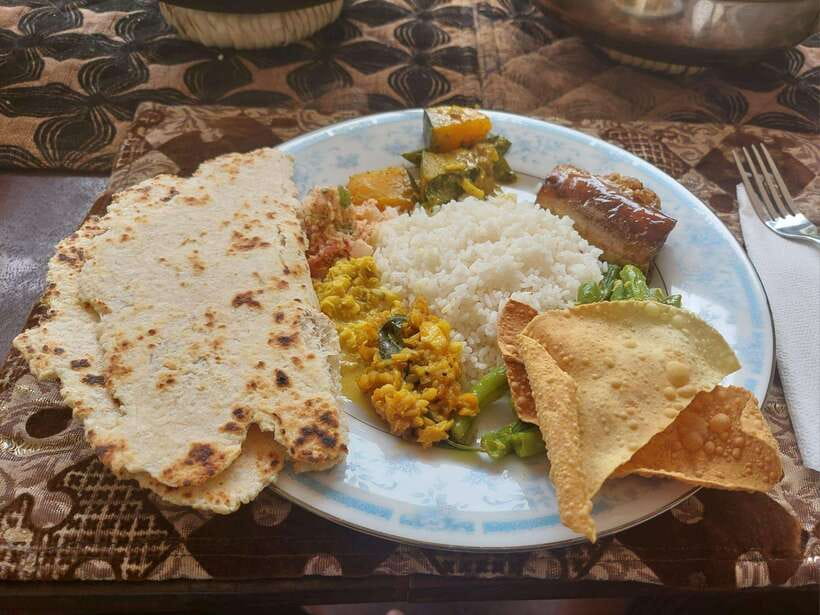
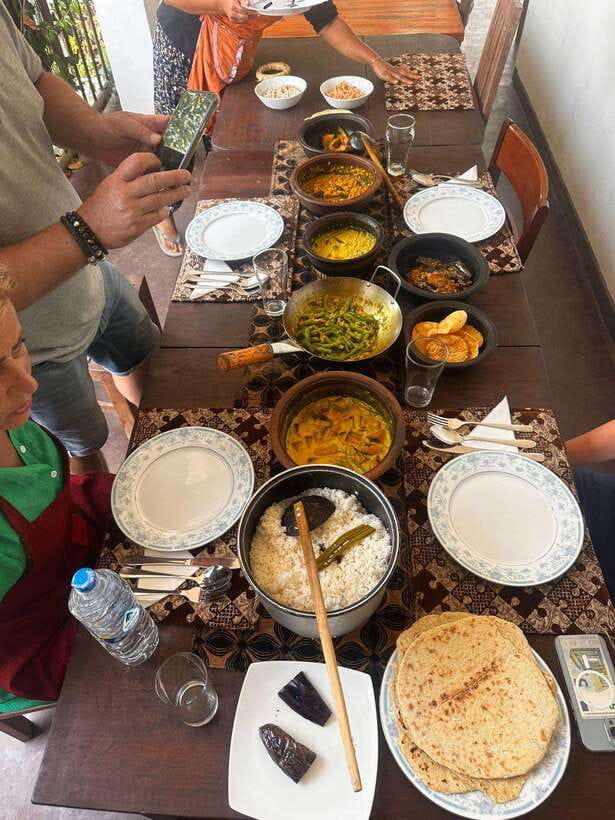
- The meal is substantial: Rice, aubergine modju, dhal curry, pumpkin curry, beans curry, coconut sambal, coconut roti, and papadam are included.
- You cook, not just watch: The class involves real preparation, from handling spices to making curries and shaping roti.
- Vegetarians are well catered for: The listed meal is vegetable-focused, and the menu gives you several different curry styles to compare.
- The group stays small: Up to 10 people can attend, with private sessions available by request.
A Sri Lankan kitchen instead of a staged food show
The setting is one of the main reasons to choose this class. You cook in a traditional Sri Lankan home, not in a polished culinary school designed mainly for tourists. That setting makes the lesson feel closer to everyday home cooking, where coconut, rice, spices, and seasonal vegetables form the backbone of the meal.
I like this approach because Sri Lankan food is easier to understand when you see how the ingredients are handled. A short introduction to the spices gives you a starting point, but the real lesson comes as you use them in several different curries. You begin to notice that the dishes are not simply variations of the same sauce. The vegetables, coconut, spice mixes, and cooking methods create different flavors.
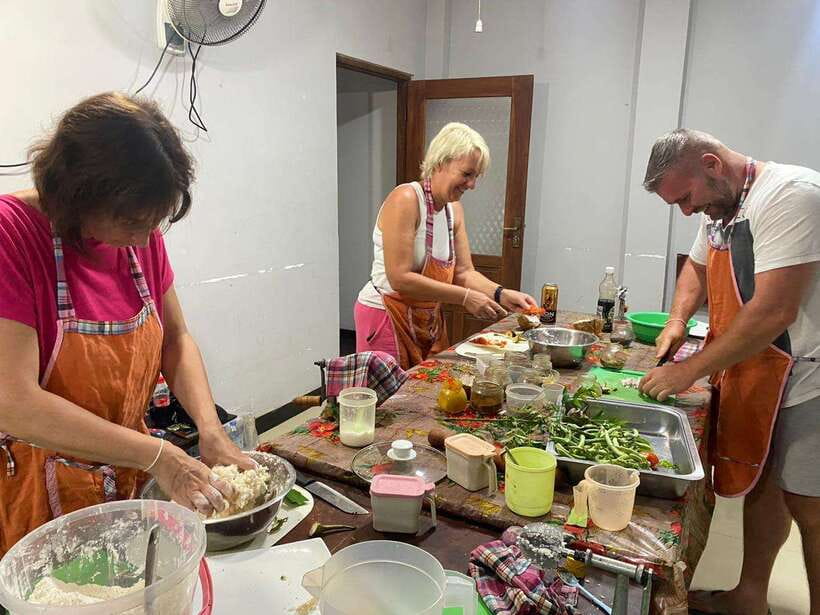
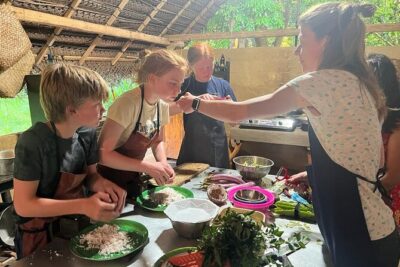
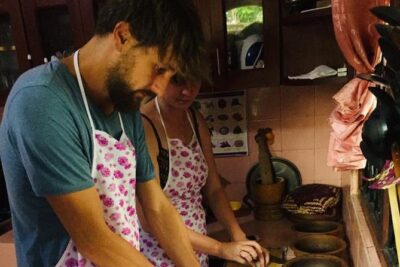
The home setting also means you should arrive ready to take part. This is not the right choice if you want to sit at a table while someone else does all the work. The class asks you to chop, mix, scrape, shape, and help with the cooking.
More Cooking Classes in Ella
- Ella: Traditional Sri Lankan Cooking Class
★ 4.9 · 788 reviews - Ella: Sri Lankan Cooking Class with Neranji at Homestay
★ 5.0 · 276 reviews - Ella : Cooking class with amazing Spice Garden Tour
★ 5.0 · 239 reviews
Meeting Ruwini at Honey Bee Garden
Ruwini is the host and instructor. She speaks English fluently and has been praised for her friendly manner, patience, humor, and ability to keep a group involved. One useful detail is that she also explains substitutions for ingredients that may be hard to find at home.
That advice can be more useful than a recipe alone. Sri Lankan cooking often depends on coconut, curry leaves, particular vegetables, and regional spices. You may not find every item in your local shop, so knowing what can be replaced, and what should not be replaced, helps you repeat the meal later.
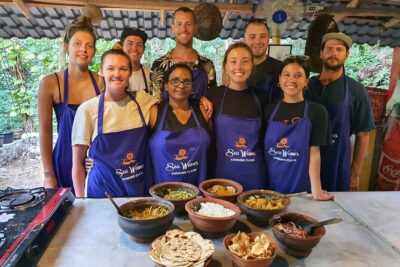
The group limit is 10 people. That is still small enough for a shared class, though your role may depend on the final number. With two or four people, each person can take on a meaningful part of the preparation. In a full group, you may spend more time sharing tasks.
Private sessions are available if requested, with adjustments to the timing. That may suit couples, families, or anyone with particular dietary needs. You should tell the host about allergies or dietary restrictions in advance rather than raising them once cooking has begun.
The spice introduction: learning the logic behind curry
The class begins with a brief introduction to Sri Lankan spices. It is not described as a long lecture, and that is probably a good thing. You get enough background to understand the flavors before moving into the kitchen.
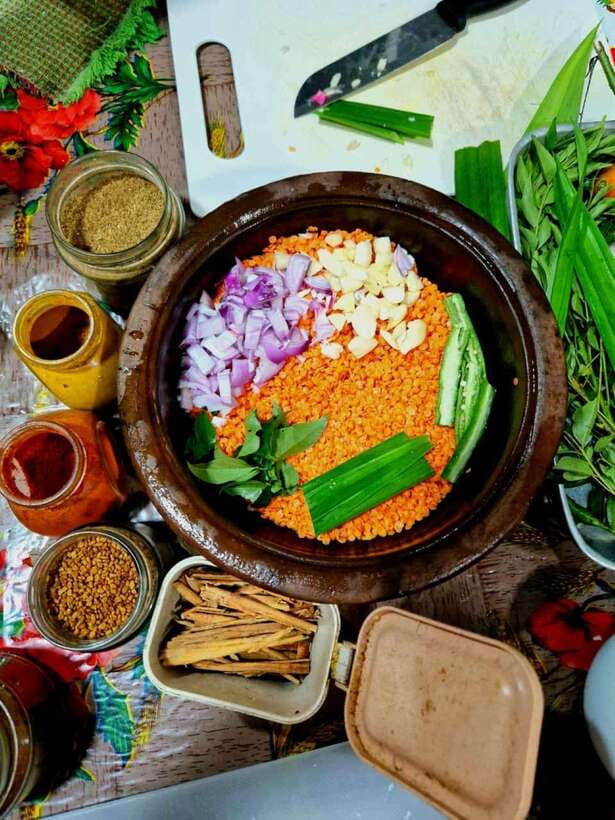
The value here is practical. Sri Lankan food can look complicated because several curries arrive on the same plate, but each dish has its own balance. One curry may lean toward dhal and coconut, while another highlights pumpkin, beans, or aubergine. By cooking several dishes together, you can compare how the same broad family of spices works with different ingredients.
I would pay close attention to the order in which ingredients are added and how the spices are adjusted. Those are the details most likely to help when you cook at home. The class also gives you a chance to ask how to change the flavor or replace an ingredient, rather than treating the recipes as fixed rules.
Upcountry black tea is available upon request. If you enjoy tea, ask for it rather than assuming it is automatically served.
Cracking coconuts and making the basics
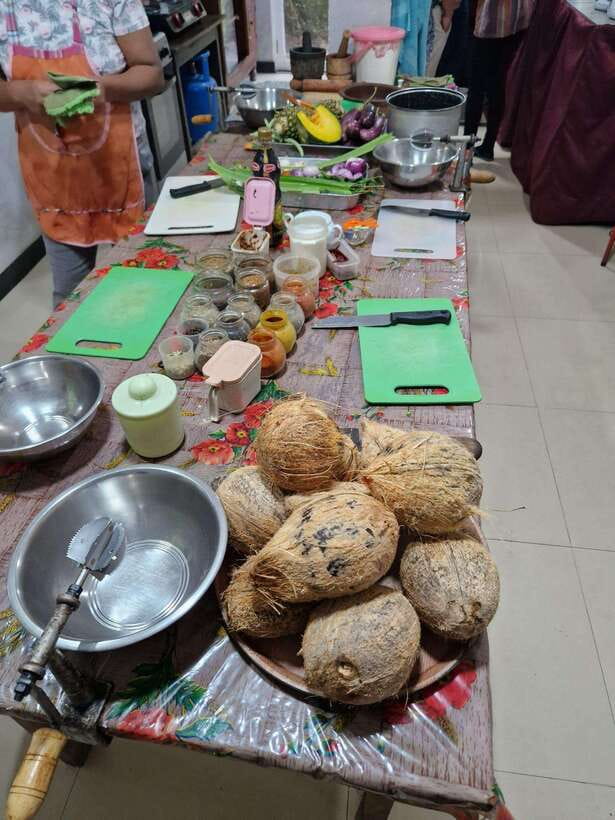
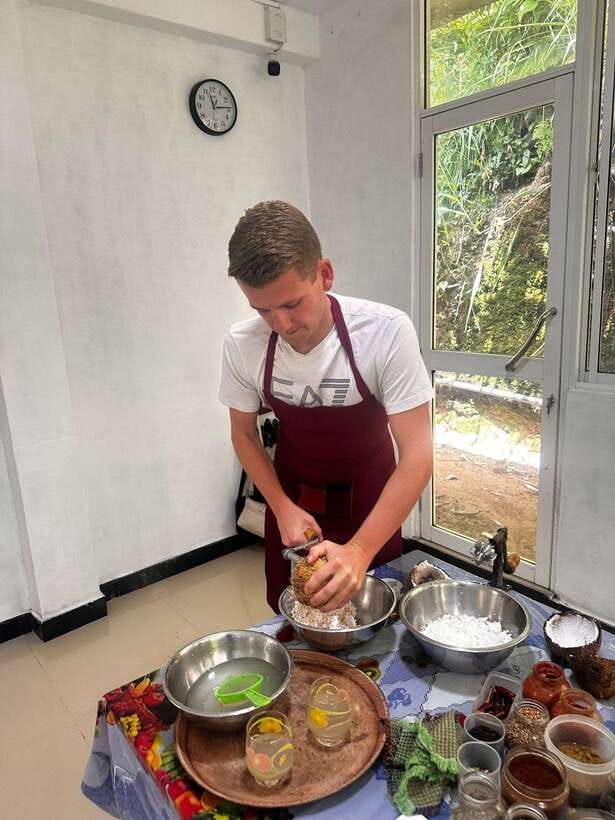
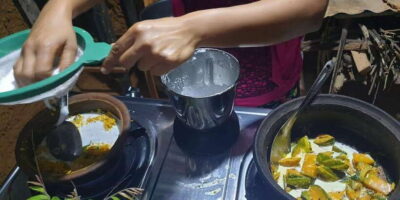
One of the most distinctive parts of the class is the coconut preparation. You may crack coconuts, scrape out the flesh, and prepare fresh coconut milk. You also make coconut sambal and coconut roti.
This is more than a fun photo opportunity. Coconut appears in several forms across Sri Lankan cooking, and the preparation affects the final dish. Fresh coconut milk gives curries a different texture from a canned product, while grated coconut brings body and freshness to sambal and roti.
The coconut roti is especially appealing for home cooks because it is a simple dish with a clear process. You learn how coconut and dough come together, then eat the result with the curries. The lesson connects the ingredient to the finished plate, which makes the method easier to remember.
The only caution is that hands-on kitchen work can be messy. That is part of the point, but wear something comfortable and suitable for cooking.
A different kind of day out entirely:
- Ella: Drop to Tangalle/Hiriketiya/Mirissa/Galle & Yala Tour
★ 4.9 · 518 reviews - Ella: Little Adam’s Peak, Nine Arches Bridge & Waterfalls
★ 4.9 · 402 reviews - ELLA: Drop to Tangalle/Hiriketiya/Mirissa/Galle & Yala Tour
★ 4.1 · 336 reviews - From Ella: Drop to Tangalle/Hiriketiya/Mirissa & Yala Safari
★ 4.8 · 296 reviews
Building a full rice and curry meal
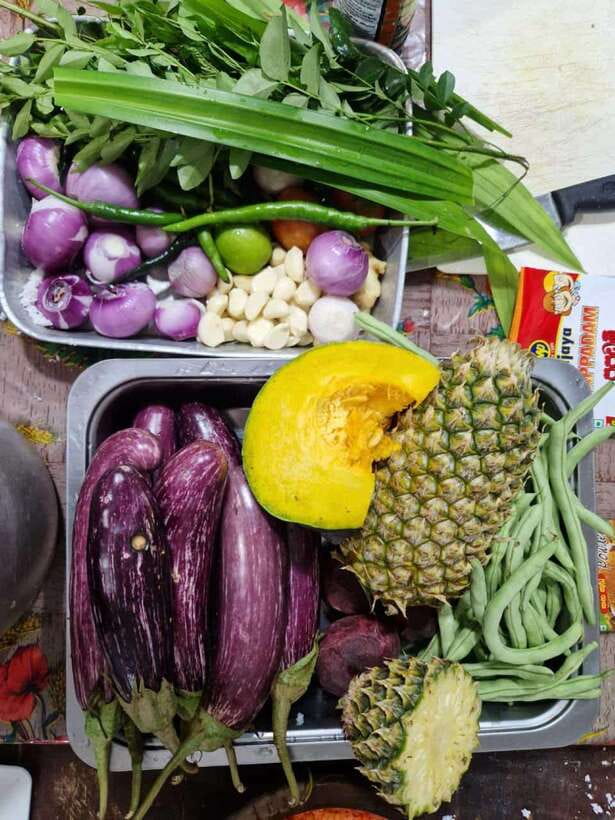
The class prepares a surprisingly broad menu for a two-hour session:
- Rice
- Aubergine modju
- Dhal curry
- Pumpkin curry
- Beans curry
- Coconut sambal
- Coconut roti
- Papadam
The exact mix gives you a useful picture of Sri Lankan rice and curry. Instead of learning one main dish and one side, you help create a complete spread with different textures and flavors.
Aubergine modju is one of the dishes worth watching closely. It adds a sharper, more concentrated vegetable element to the meal and gives you a contrast with the softer dhal and pumpkin curries. Pumpkin brings sweetness, dhal brings a creamy pulse-based texture, and beans offer a firmer vegetable bite.
The reviews also refer to four or five curries in some sessions, including eggplant and jackfruit curry. The menu can therefore vary slightly, or the class may prepare additional dishes depending on the session. The supplied meal list includes aubergine, dhal, pumpkin, and beans, so you should treat those as the reliable core rather than expect jackfruit every time.
Coconut sambal and papadam round out the meal. They provide crunch, freshness, and contrast beside the curries. This is the kind of cooking lesson where the final plate teaches you as much as the preparation does.
The best part comes after the cooking
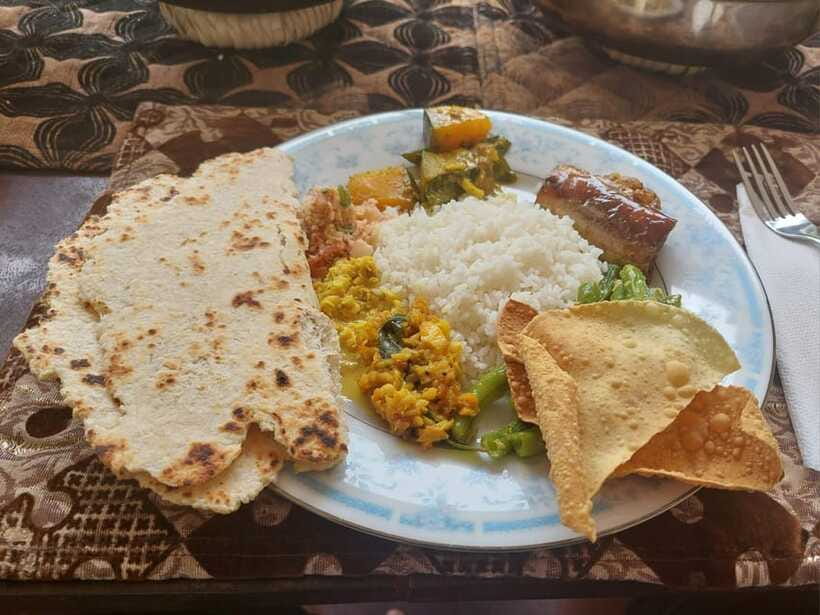
When the cooking is finished, you sit down and eat the food you prepared. That final meal is a major strength because it gives the class a clear payoff. You are not leaving with a few samples. You are eating rice, several curries, roti, sambal, and papadam as a complete meal.
The end meal also lets you judge the balance of the dishes together. A curry can taste different on its own than it does beside rice, sambal, and papadam. You can see how Sri Lankan meals are built around variety rather than one large centerpiece.
The meal may be shared with other participants, depending on the group. That creates a social element, but it also means this is not a private restaurant-style sitting. If you prefer a quieter meal or want full control over the timing, ask about a private class.
The strongest praise for this activity centers on the food. Several people describe it as among the best meals of their Sri Lankan holiday, with particular affection for the eggplant curry and the fresh, abundant dishes. That is a good sign for anyone choosing the class partly for lunch or dinner, not just instruction.
What the $22 price really covers
At $22 per person, the price is reasonable because it covers far more than an hour of instruction. You receive:
- A spice introduction
- Hands-on cooking
- All ingredients
- Cooking equipment
- A full cooked meal
- Recipes sent by email
- Upcountry black tea upon request
You also get the chance to ask questions about substitutions and methods. That makes the class useful after your trip, provided you save the recipes and actually cook from them.
Transportation is not included. You need to arrange your own way to the cooking class location in the Ella area. Factor that into the total cost, especially if you are staying outside the central area.
The value is strongest for people who want both food and a cultural activity. If you only want a cheap meal, a local restaurant will likely be simpler. If you want to understand how the meal is made and take the recipes home, this class offers much more for the money.
Timing, group size, and practical points
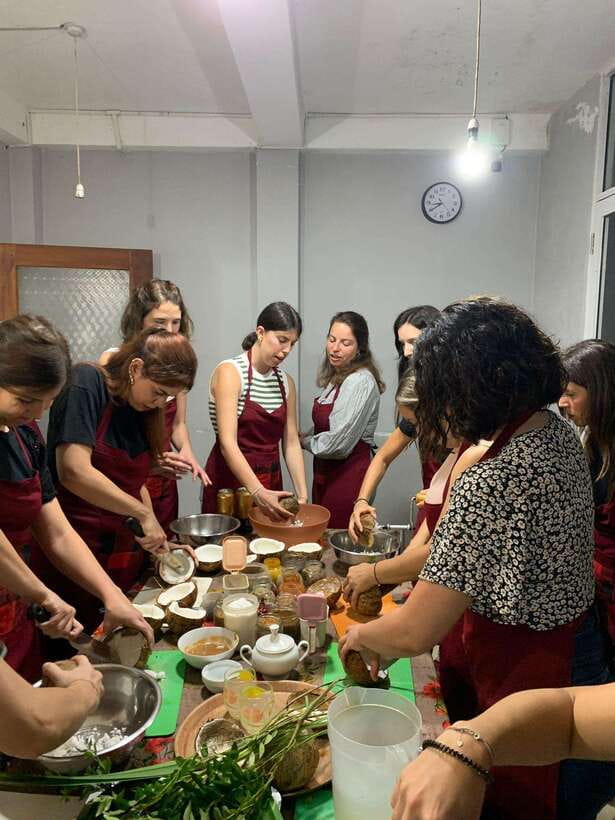
The advertised duration is two hours. That is enough time for an active introduction, preparation, cooking, and the meal, but it is not a slow half-day workshop. With many dishes on the menu, you should expect a focused session.
The class is offered in English. It is wheelchair accessible, according to the activity information. You should still contact the host in advance if you need specific assistance, since the class takes place in a traditional home rather than a purpose-built school.
Cancellation is free up to 24 hours before the start time, and you can reserve now and pay later. These policies help if your plans around Ella are still shifting, but the practical issue remains transportation. Since transfers are not included, check the meeting details carefully before booking.
The class has a maximum of 10 participants. A smaller group is likely to give you more direct work with the ingredients. A larger group may feel more social, but individual tasks may need to be shared.
Who will enjoy this class most
I would recommend it to:
- Couples who want an easy shared activity
- Food lovers interested in Sri Lankan spices
- Vegetarians looking for a substantial local meal
- Families or small groups who prefer private sessions
- Home cooks who want recipes they can repeat
- Anyone who has already eaten rice and curry and wants to understand it
It may be less suitable if you dislike active cooking, have a very limited schedule, or want a formal restaurant meal. The class is also not a good place to keep dietary needs quiet. Tell Ruwini about allergies or restrictions before the session.
For people who want a local connection without committing to a full-day cultural tour, the two-hour length works well. You get a taste of home cooking, a meal, and practical skills, then have the rest of the day free for Ella.
Should you book the Honey Bee Garden cooking class?
Yes, if you want to do more than take another restaurant meal in Ella. The strongest reasons are the traditional home setting, the broad menu, the real coconut preparation, and Ruwini’s friendly English-language teaching. The recipe email and ingredient-substitution advice add value long after the meal is over.
At $22, it is especially appealing for vegetarians, couples, and curious home cooks. Just remember that transportation is separate, the two-hour schedule may feel busy, and a group of 10 means not everyone will have the same amount of kitchen time.
Book this class if you want to roll up your sleeves, make a full Sri Lankan meal, and eat it with the people who helped prepare it. Skip it only if you want a passive demonstration or a private dining experience by default.
FAQ
Where is the cooking class held?
The class is held in a traditional Sri Lankan home at Honey Bee Garden in the Ella area, Sri Lanka.
How long does the cooking class last?
The cooking class lasts two hours.
How much does the class cost?
The price is $22 per person.
What dishes are prepared?
The meal includes rice, aubergine modju, dhal curry, pumpkin curry, beans curry, coconut sambal, coconut roti, and papadam. Some sessions may also include other dishes such as jackfruit curry.
Is the class taught in English?
Yes. The instructor, Ruwini, speaks English fluently.
Is the meal included?
Yes. You eat the cooked dishes at the end of the class, and all cooking ingredients and equipment are included.
Are recipes provided afterward?
Yes. The recipes are sent by email after the class.
Can I request a private class or report dietary restrictions?
Yes. Private sessions are available upon request, with possible time adjustments. You should tell the host about dietary restrictions or allergies in advance.
Just added in Ella
- Sri Lanka private tour package 10 Days. and luxury hotel★ 5.0 · 3 reviews
- Sri Lanka Private 10-Day Round Tour Car, Guide, Hotels, Food★ 4.8 · 10 reviews
- Sri Lanka, Kandy: Hill Country 3-Day Private Tour★ 5.0 · 1 review
- Cooking Experience from Ella★ 4.9 · 2 reviews
- Sri Lanka: 9-Day Private Round Tour With H/B Accommodation★ 5.0 · 1 review
- Sri Lanka: 2N3Day guided FULL TOUR with hotel accommodations★ 5.0 · 2 reviews
- Private Tour from Ella to Hiriketiya with Yala Safari★ 5.0 · 1 review
- Private cooking class – Personalized classic menu★ 5.0 · 5 reviews
Cooking Classes, compared.
Organic cooking class sigiriya (kumara & family)
Read our review →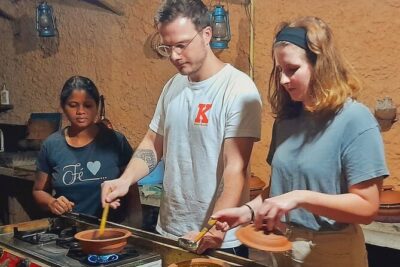
Sri Lankan Cooking Class with Neranji at Homestay
Read our review →
Browse the lists this tour appears in