
Review · COOKING CLASSES
Traditional Cooking Small-Group Class in Unawatuna
Markets make the best classrooms. This three-hour Unawatuna cooking class combines a guided shopping trip through Galle’s Greenmarket and Fishmarket with hands-on cooking on a sea-view balcony. I like the chance to choose fresh ingredients before learning how they become Sri Lankan dishes, and I like that the class is limited to 10 people. The one drawback is that the schedule includes a market visit, a tuk-tuk ride, and a full cooking session, so the pace may feel brisk if you prefer a slow, relaxed meal.
You meet at Nautilus Cooking Class on Yaddehimulla Road in Unawatuna, then head into Galle for the market portion. After shopping, you return by tuk-tuk and cook a selection of eight Sri Lankan favorites, although one account describes preparing seven dishes, so the exact number may vary. At $40 per person, the experience offers good value if you want food, local shopping, transport between the main stops, and cultural context in one compact outing.
In This Review
- Key points to know before booking
- Why this class begins in Galle’s markets
- The tuk-tuk ride connects the two parts
- Cooking on the covered sea-view balcony
- What you actually do during the cooking lesson
- A meal that shows the range of Sri Lankan food
- What makes the class feel personal
- Is $40 a fair price?
- Who will enjoy this Unawatuna experience?
- Practical details that affect your day
- Should you book the Nautilus cooking class?
- FAQ
- Where does the cooking class start?
- Where does the activity end?
- How long does the experience last?
- Does the tour include a market visit?
- How do I get back to the cooking school after the markets?
- How many people can join the class?
- How many dishes will I prepare?
- Can I cancel for a full refund?
Key points to know before booking
- Galle market shopping comes first: You visit both the Greenmarket and Fishmarket before cooking, giving you a look at the ingredients behind Sri Lankan food.
- Eight dishes are included in the plan: The advertised meal features eight Sri Lankan favorites, while the precise menu may vary.
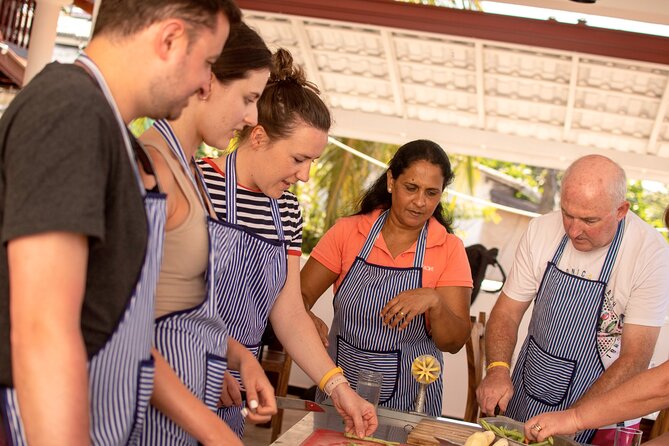
- The class is genuinely practical: You take part as the curries are chopped, seasoned, fried, cooked, and tasted.
- Cooking takes place on a covered sea-view balcony: The setting adds charm, while the cover helps keep the class going in wet weather.
- Small groups keep the lesson personal: A maximum of 10 people allows room to follow the chef and take part step by step.
- The $40 price covers a full half-day-style outing: You get the market trip, tuk-tuk transfer back, cooking lesson, and meal in one booking.
Why this class begins in Galle’s markets
Many cooking classes start with ingredients already lined up on a counter. This one begins in Galle, where the shopping trip helps you understand what you will later eat.
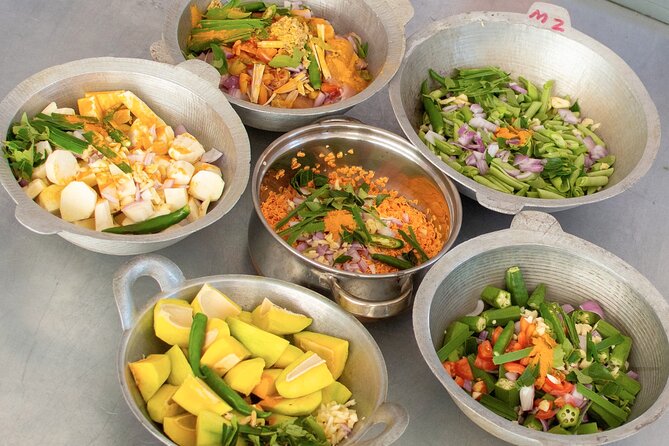
The Greenmarket gives you a look at the fresh produce used in everyday Sri Lankan cooking. You may see vegetables, herbs, and other ingredients that are familiar in shape but less familiar in their local use. The point is not simply to buy food. It is to connect the finished curry with the raw ingredients that give it color, fragrance, and texture.
The Fishmarket adds another side of local food culture. Sri Lanka is an island, and seafood plays an important role in many meals. Even if fish is not your favorite food, this stop helps explain why Sri Lankan cooking has such a broad range of curries and savory dishes.
The shopping also gives the class a sense of place. You are not learning a generic South Asian menu in a hotel kitchen. You are seeing where food is bought in the Galle area, then carrying that experience back to the cooking school.
I would treat the market visit as part of the lesson rather than a separate sightseeing stop. The focus is on fresh ingredients for the class, so you should not expect a long, formal tour of every market stall. Still, for food lovers, this opening section adds useful context that a kitchen-only class cannot provide.
More Cooking Classes in Galle
- Sea waves sri lankan cooking class
★ 5.0 · 467 reviews - Galle Unawatuna Cooking Class
★ 5.0 · 142 reviews - Galle Fort cooking class
★ 5.0 · 60 reviews
The tuk-tuk ride connects the two parts
After shopping, the group takes a tuk-tuk back to the cooking school in Unawatuna. This is a simple detail, but it matters because the market and kitchen are not treated as two disconnected activities.
The ride gives you a change of scene between the lively market visit and the more focused cooking session. It also means you do not need to arrange your own transfer between the two main parts of the experience.
A tuk-tuk is part of daily transport in Sri Lanka, so the journey fits the local character of the day. Do keep the timing in mind. The experience lasts about three hours, and that includes the market visit, transport, cooking, and eating. If you want a long market wander or a leisurely multi-course lunch, this may feel compact.
Cooking on the covered sea-view balcony
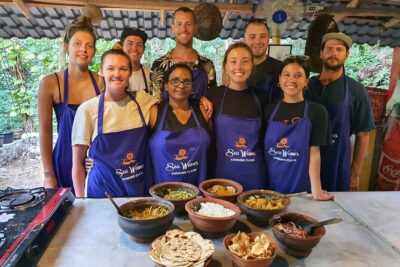
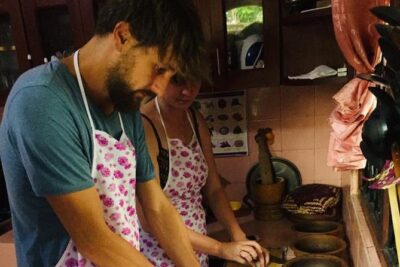
Back at Nautilus Cooking Class, the lesson takes place on a covered roof terrace or sea-view balcony. The setting is one of the most appealing parts of the experience. You get a more open, informal cooking space rather than a sealed classroom, with a view that gives the meal a sense of place.
The cover is practical as well as attractive. One class continued during rain, allowing the cooking to go ahead in a protected space. Sri Lanka’s weather can change quickly, so a covered outdoor kitchen is useful. You should still expect an open-air feel rather than a fully enclosed restaurant kitchen.
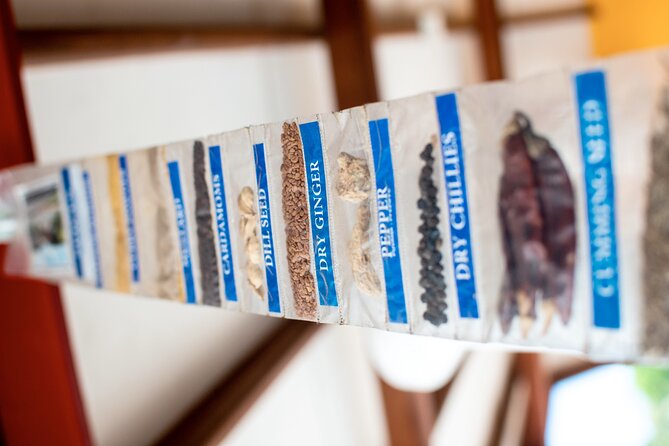
The chef introduces you to Sri Lankan vegetables, spices, and herbs before the cooking begins. That introduction matters because the flavor of Sri Lankan food depends on how ingredients are combined and prepared. You are not simply handed a plate and told what you are eating. You get a chance to see the building blocks first.
The kitchen is described as well furnished for the course. That should make it easier to watch the preparation and take part without feeling lost. With a maximum of 10 people, the group is small enough for the chef to demonstrate methods clearly and give participants space to help.
What you actually do during the cooking lesson
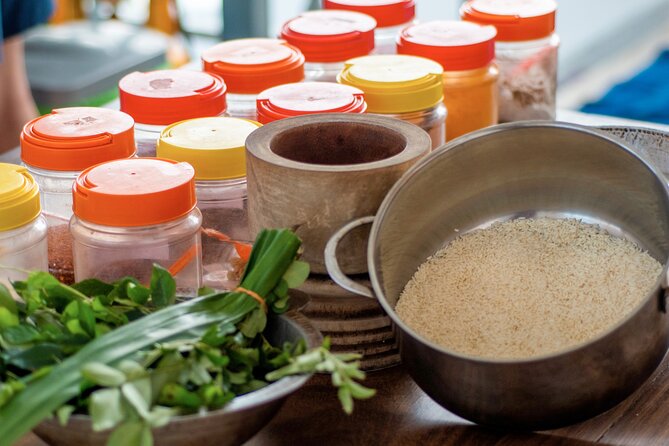
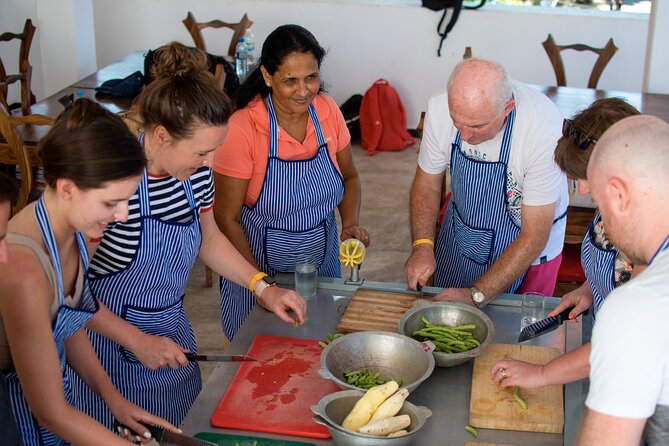
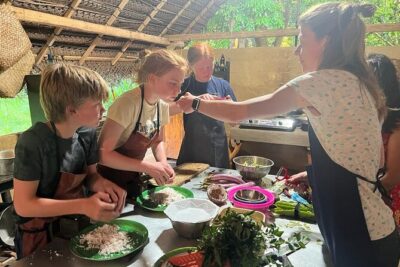
This is a hands-on class, not just a demonstration. You are shown how the curries are chopped, sliced, seasoned, fried, cooked, and tasted, then invited to join in step by step.
That sequence is useful because it shows how much work happens before a curry reaches the table. Cutting and seasoning affect the final dish, and frying spices or other ingredients helps build the base flavor. Tasting along the way gives you a better feel for how the dish changes during cooking.
The format also suits people who learn by watching and doing. You can observe the chef first, then take part in the process. The class is described as warm, practical, and fun, which suggests a relaxed teaching style rather than a strict professional kitchen lesson.
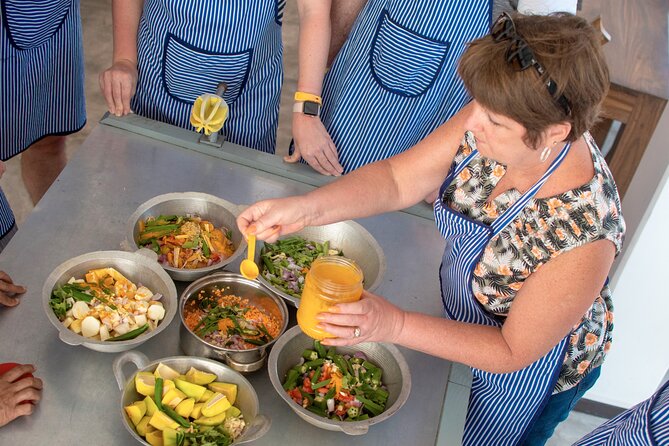
The planned menu includes eight favorite Sri Lankan dishes. One account refers to making seven different dishes, so you should regard the menu count as flexible. That is not necessarily a problem. A changing menu can reflect market ingredients, group preferences, or the way the chef structures the class.
The important value is the range. You are not making one curry and calling it a cooking class. You get exposure to several dishes and a wider selection of vegetables, spices, and herbs. The meal becomes a small survey of Sri Lankan home cooking.
A different kind of day out entirely:
- Whales and Dolphins Watching-Luxury Super Grade Cruiser(Hotel Pick up offered)
★ 5.0 · 1,268 reviews - Galle: Traditional Gems & Jewellery Workshop with Transfers
★ 4.9 · 539 reviews - Galle Fort Walking tour
★ 4.9 · 285 reviews - Snorkeling with Turtles in Mirissa
★ 5.0 · 268 reviews
A meal that shows the range of Sri Lankan food
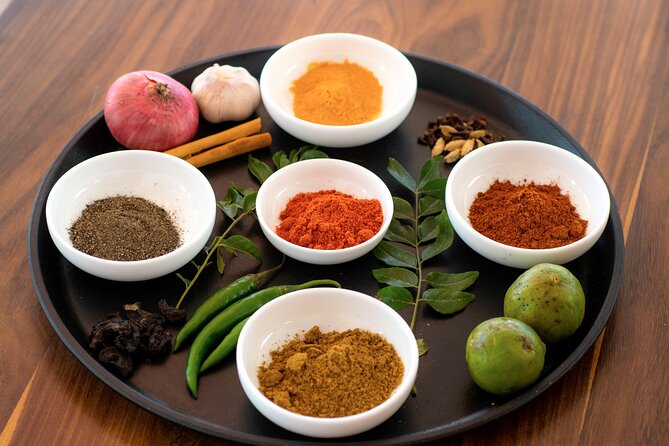
After the cooking, you sit down to eat what the group has prepared. This is where the market visit and kitchen work come together. You have seen the ingredients, helped prepare the food, and then tasted the finished dishes.
The experience promises a wide choice of healthy and delicious Sri Lankan food. Since the exact menu is not specified, you should not book with the expectation of one particular curry or seafood dish. The useful approach is to think of the class as an introduction to several local preparations.
That variety may be especially helpful if you are new to Sri Lankan cuisine. You can compare flavors and textures rather than judging the country’s food by one meal. You also leave with a better sense of the role played by vegetables, spices, and herbs.
The meal is more than a reward at the end. It gives you time to check the results of the techniques you have just practiced. If a curry tastes different from what you expected, you can connect the result to the preparation steps while they are still fresh in your mind.
What makes the class feel personal
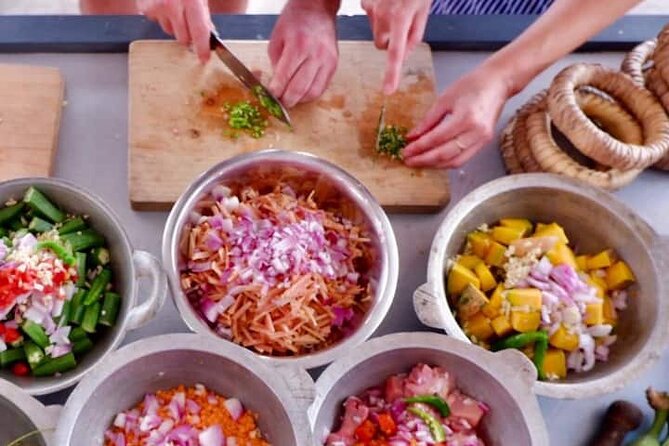
The small-group limit of 10 people is a strong feature. A large cooking demonstration can leave you standing at the edge of the room, watching someone else do all the work. Here, the format is designed for participation.
The experience is also presented as a class with professionally trained chefs, while one account describes a home cook showing the process in detail. Taken together, that suggests an approach that combines organized instruction with the feel of home cooking.
You should expect a social class rather than a private lesson. The maximum group size is small, but it is not limited to one household or one booking. If you enjoy meeting other food-minded people, that can add to the fun. If you want uninterrupted personal instruction, you may find a private class more suitable, but that option is not described here.
The cooking school’s location on Yaddehimulla Road makes it convenient for people staying in Unawatuna. The activity starts and ends at the same meeting point, which simplifies the day. It is also near public transportation, useful if you are not staying within easy walking distance.
Is $40 a fair price?
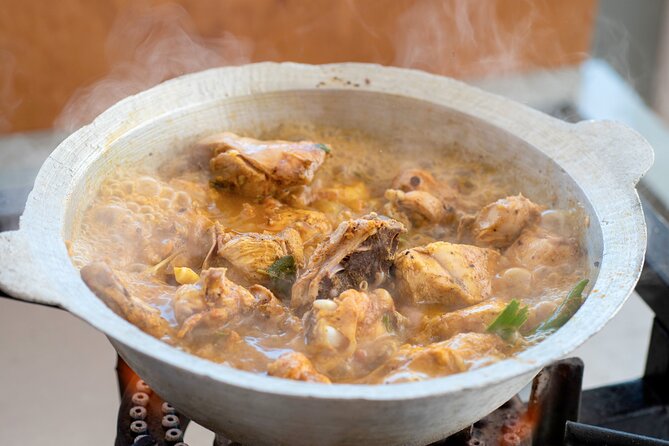
At $40 per person, I consider this a fair price for the amount packed into three hours. You are paying for more than a recipe lesson. The outing includes the market visit in Galle, fresh ingredients, the tuk-tuk transfer back to the school, chef-led instruction, several dishes, and the final meal.
The value is strongest if you already want to visit Galle’s food markets. In that case, the class gives your market time a clear purpose and removes the need to plan the food-related part yourself.
The value is less obvious if your only goal is to learn a single recipe in a quiet kitchen. The market and transport take up part of the schedule, and the three-hour duration leaves limited room for a long, slow lesson.
Still, the price compares well with the amount of local contact built into the experience. You see where ingredients are bought, learn how they are prepared, and eat the result. That combination gives you a fuller picture of Sri Lankan food than a standard demonstration would.
Who will enjoy this Unawatuna experience?
I would recommend this class to several kinds of visitors:
- First-time visitors to Sri Lanka: The market, tuk-tuk ride, ingredients, and meal create a broad introduction to local food culture.
- People who prefer practical activities: You do not only watch. You help chop, season, cook, and taste.
- Food-focused couples and small groups: The group size allows a shared activity without the scale of a large workshop.
- Vegetarians and vegetable lovers: The class highlights vegetables, spices, and herbs, with a wide choice of Sri Lankan dishes.
- Anyone staying in Unawatuna: The meeting point is local, and the activity returns to the same place.
- Visitors with a free morning or afternoon: At about three hours, it fits more easily into a short stay than a full-day food tour.
I would be more cautious if you dislike open-air settings, want a fixed menu, or need a very slow pace. The covered balcony helps with rain, but it is still a roof-terrace environment. The dish count and ingredients may also depend on what is available and how the chef runs that day’s class.
Practical details that affect your day
The experience starts and ends at Nautilus Cooking Class, No. 138 Yaddehimulla Road, Unawatuna 80600. A mobile ticket is provided, and confirmation is received at the time of booking.
The tour has a maximum of 10 people and is near public transportation. Those details make it fairly simple to fit into a stay in Unawatuna, especially if you do not have a rental car.
You should allow the full three hours rather than treating the stated duration as a rough cooking time only. The market visit and tuk-tuk ride are part of the experience, and the cooking and meal come afterward.
Free cancellation is available if you cancel at least 24 hours before the local start time. Cancellations made less than 24 hours ahead are not refunded, and changes inside that period are not accepted. For a popular date, booking ahead is sensible, since the experience is often reserved around 16 days before the start date.
Should you book the Nautilus cooking class?
Book it if you want a hands-on introduction to Sri Lankan food rather than a simple meal. The market shopping, practical cooking, small group, sea-view balcony, and shared tasting make this a well-rounded three-hour activity.
I especially like the way the class links the ingredients to the finished dishes. You see the produce in Galle, return by tuk-tuk, learn the cooking steps, and then eat what you helped prepare. That chain gives the experience a clear purpose.
Skip it if you want a fixed menu, a private kitchen, or a long market tour with plenty of free time. For most visitors based in Unawatuna, though, $40 is a reasonable price for a local food experience that feels active, social, and useful.
FAQ
Where does the cooking class start?
It starts at Nautilus Cooking Class, No. 138 Yaddehimulla Road, Unawatuna 80600, Sri Lanka.
Where does the activity end?
The activity ends back at the same meeting point in Unawatuna.
How long does the experience last?
The cooking class and market experience lasts approximately three hours.
Does the tour include a market visit?
Yes. The experience includes visits to Galle’s Greenmarket and Fishmarket, where you shop for fresh ingredients before cooking.
How do I get back to the cooking school after the markets?
The group takes a tuk-tuk back to the cooking school after shopping at the markets.
How many people can join the class?
The activity has a maximum of 10 participants.
How many dishes will I prepare?
The experience is promoted as including eight Sri Lankan dishes. One account describes preparing seven dishes, so the exact number may vary.
Can I cancel for a full refund?
Yes, if you cancel at least 24 hours before the experience’s local start time. Cancellations or changes made less than 24 hours before the start are not accepted for a refund.
Just added in Galle
- Sri Lankan Cooking with Tricks★ 5.0 · 1 review
- Private Transfer and Whale Watching Tour from Hikkaduwa and Galle★ 5.0 · 1 review
- Udawalawa National Park Safari trip from Hikkaduwa/Galle/Weligama★ 4.5 · 7 reviews
- Surfing Lessons★ 4.5 · 7 reviews
- Airport Transfer by Hikkaduwa Taxi Service★ 5.0 · 5 reviews
- Sinharaja Rainforest Trip★ 5.0 · 7 reviews
- One Day Udawalawe Safari from Galle/Mirissa/Unawatuna/Hikkaduwa★ 5.0 · 10 reviews
- Hikkaduwa/ Galle/ Mirissa : With Udawalawe safari – Day trip★ 5.0 · 2 reviews
Cooking Classes, compared.
Organic cooking class sigiriya (kumara & family)
Read our review →
Sri Lankan Cooking Class with Neranji at Homestay
Read our review →
Browse the lists this tour appears in