
Review · COOKING CLASSES
Anuradhapura: Traditional Milk Rice Cooking Class
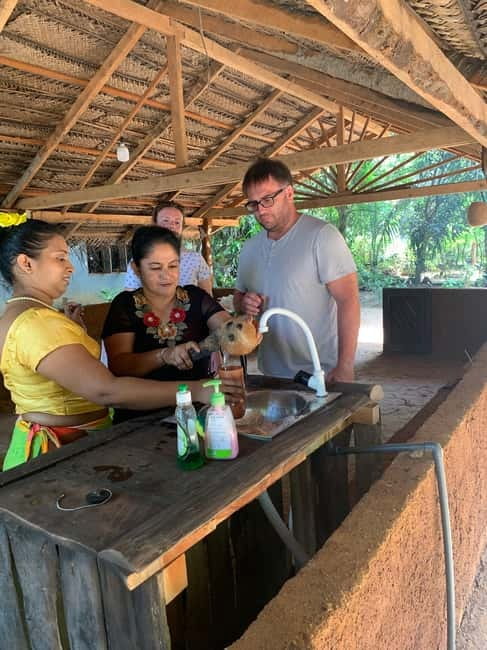
Rice tastes different when you make it over firewood. This two-hour class in Sri Lanka’s North Central Province brings you into a village clay kitchen with a coconut-leaf roof, where you learn to prepare kiribath, the country’s much-loved milk rice. I like the hands-on work with old kitchen tools, and I like that the class explains why kiribath matters at New Year celebrations, weddings, and family gatherings. The main thing to consider is that this is a focused cooking experience, not a broad tour of Anuradhapura’s ancient sites.
You work with a local housewife who teaches in English, and the setting feels more personal than a standard demonstration. I especially like the chance to pair the finished rice with lunu miris and jaggery, since those accompaniments show how one simple dish can move from spicy to sweet. At $40 per person, the value depends on how much you enjoy hands-on food and cultural contact, but the private format and traditional equipment make the price reasonable.
In This Review
- Key details at a glance
- Arriving at the coconut-leaf kitchen
- Why kiribath matters in Sri Lanka
- Grinding spices on the miris gala
- Scraping coconut with the hiramanaya
- Winnowing rice with the kulla
- Cooking kiribath over a wood-fired stove
- Shaping and serving the finished milk rice
- Learning to eat with your hands
- A two-hour schedule with no wasted sightseeing time
- What the $40 price gets you
- The local teaching style
- Who should book this class
- Practical advice before you go
- My verdict on this Anuradhapura food experience
- FAQ
- Where does the milk rice cooking class take place?
- How long does the experience last?
- How much does the experience cost?
- Is the class conducted in English?
- What dish will I learn to cook?
- Will I get to eat the food I prepare?
- What is served with the milk rice?
- Do I need previous cooking experience?
- Is the activity suitable for children?
- Is the cooking class wheelchair accessible?
- What traditional tools will I use?
- Can I cancel for a full refund?
- Can I reserve now and pay later?
Key details at a glance
- Cook kiribath from scratch: Choose the rice, cook it with coconut milk, and shape it in a traditional presentation.
- Use old village tools: Try the miris gala stone grinder, hiramanaya coconut scraper, and kulla winnowing basket.
- Cook over firewood: The wood-fired stove gives the class a practical link to older Sri Lankan home kitchens.
- Taste the finished dish: Eat your milk rice with spicy lunu miris or sweet jaggery.
- Learn local customs: Find out why kiribath appears at New Year celebrations, weddings, and other important moments.
- Private and accessible: The class lasts two hours, is conducted in English, and is wheelchair accessible.
Arriving at the coconut-leaf kitchen
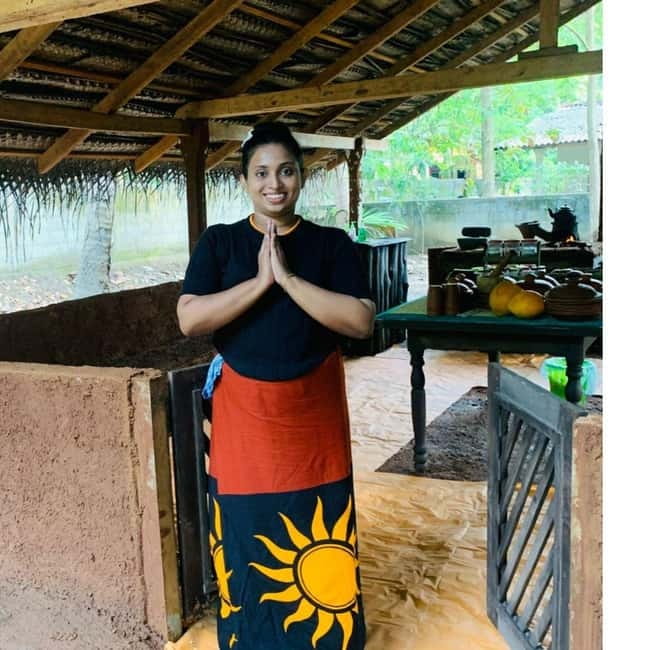
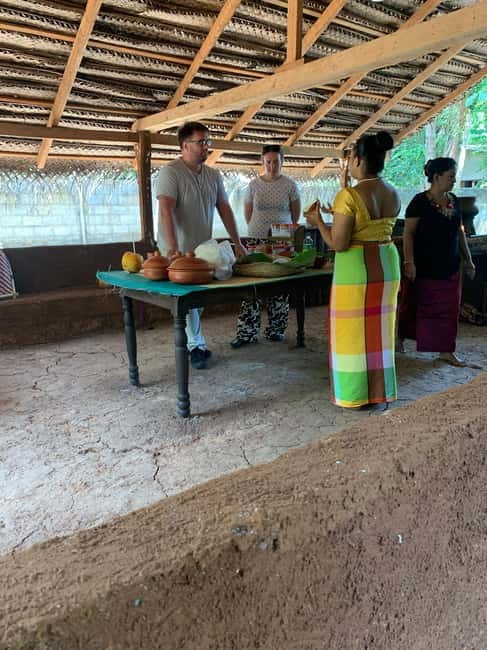
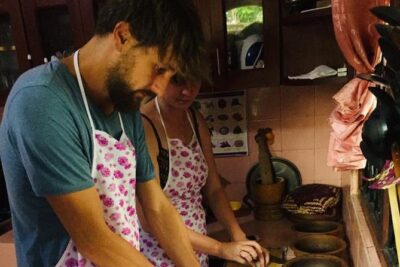
The meeting point is part of the appeal. Instead of entering a polished cooking school, you arrive at an authentic village setting with a clay kitchen, coconut-leaf roof, surrounding nature, and rustic cooking equipment.
That setting gives the class a clear sense of place. You are not just hearing about Sri Lankan food in a room that could be anywhere. You are handling tools and ingredients in a style linked to village home cooking.
The atmosphere also helps explain why this class is best suited to people who enjoy participation. You will not simply sit and watch someone cook. You will grind, scrape, clean, stir, shape, and eat. Wear clothes that are comfortable for practical work, and tell the instructor about any food allergies before you begin.
The class is suitable for all ages, and no previous cooking experience is needed. That makes it a good choice for families, couples, solo visitors, and anyone who wants an easy cultural activity between visits to Anuradhapura’s monuments.
More Cooking Classes in Anuradhapura:
- Hands-On Cooking Class in Anuradhapura: Cook Like a Local
★ 5.0 · 5 reviews - Hands-On Cooking Class in Anuradhapura-Cook Like a Local
★ 5.0 · 2 reviews - Cycling and Cooking Demonstration from Anuradhapura
★ 5.0 · 1 review
Why kiribath matters in Sri Lanka
Kiribath is milk rice, but calling it only a rice dish misses its place in daily life. It is prepared for special occasions, including New Year celebrations and weddings, while also being enjoyed as familiar home food.
The class connects the recipe with those customs. That context matters because you learn not only what goes into the pot, but why the dish has such a firm place in Sri Lankan family life. Food becomes a useful way to understand how traditions pass from one generation to the next.
The recipe itself is simple: rice and coconut milk form the base. Getting the texture right is the real skill. The rice needs to cook properly before the coconut milk is added and brought to the right consistency. Small changes in rice selection, cooking time, and moisture affect how well the finished kiribath holds its shape.
This is a good lesson in Sri Lankan cooking. The ingredients are not complicated, but the method carries the character of the dish.
Grinding spices on the miris gala
One of the more unusual parts of the class is using a miris gala, a traditional stone grinder. You grind spices by hand and notice the aroma as the ingredients are crushed.
The activity is short, practical, and sensory. It also gives you a better idea of the effort behind older home cooking. A modern blender would be faster, but the stone grinder lets you feel the rhythm of the work and see how a kitchen task once fit into everyday household life.
The grinder is especially useful for understanding the lunu miris served with the milk rice. This spicy onion sambal adds sharpness and heat to the mild, creamy kiribath. If you prefer bold savory flavors, lunu miris may be your favorite part of the meal.
The class is not presented as a hot-pepper challenge. You can focus on the method, aroma, and balance of flavors rather than proving anything to the chili gods.
Scraping coconut with the hiramanaya
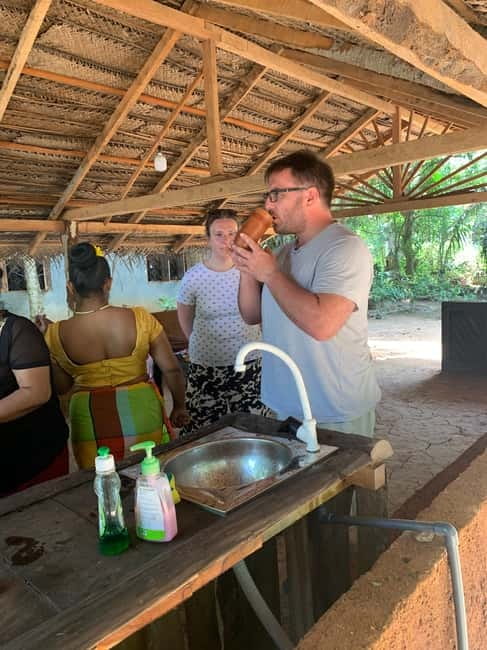
Coconut milk is central to kiribath, so the coconut-scraping demonstration is more than a side activity. You get to try the hiramanaya, a traditional Sri Lankan coconut scraper used in home kitchens.
This is one of those tools that looks simple until you use it. The class gives you a chance to learn the motion and see how coconut becomes part of the cooking process. The experience is satisfying because you handle the ingredient at an early stage, before it reaches the cooking pot.
The coconut also explains the texture of kiribath. Coconut milk gives the rice its creamy quality and mild flavor. It is not just poured over the dish at the end. It is part of the cooking method itself.
If you enjoy learning small kitchen skills, this may be one of the strongest parts of the class. You leave with a clearer sense of how basic ingredients are prepared before cooking even starts.
A few more options to weigh up in Anuradhapura
- Private City Day Tour in Anuradhapura
★ 5.0 · 383 reviews - Minneriya National Park Elephant Jeep Safari Private Tour
★ 5.0 · 68 reviews - Explore & Ride the history of anuradhapura with Vogel Tours
★ 5.0 · 62 reviews - Minneriya National Park | Private Safari
★ 5.0 · 59 reviews
Winnowing rice with the kulla
The kulla is a classic Sri Lankan winnowing basket used to clean grains. During the class, you step into that part of the process and try tossing and cleaning rice in the traditional way.
The movement takes practice, but that is part of its charm. You are not being shown a museum object behind glass. You are using a working tool and taking part in a method associated with generations of farming and household food preparation.
This activity also makes the rice selection feel more meaningful. The instructor helps you understand that the type of rice affects the final texture of the milk rice. The right grain is not a minor detail, since kiribath needs enough structure to be cut or shaped after cooking.
You should expect some trial and error. The class is about learning, not performing a perfect demonstration on your first attempt.
Cooking kiribath over a wood-fired stove
The main cooking stage takes place on a firewood stove. This gives the class a clear connection to older Sri Lankan kitchens and adds a smoky character to the setting.
You learn to cook the rice and coconut milk to the right consistency under the instructor’s direction. The important part is timing. The rice must become tender, while the coconut milk needs to blend into the mixture without leaving it too loose.
Cooking over firewood also changes the pace. You pay attention to the heat and the pot rather than pressing a button and walking away. That slower rhythm is useful for understanding why traditional recipes often depend on sight, touch, and judgment instead of exact written measurements.
The stove may be less convenient than a modern cooker, and anyone sensitive to smoke should keep that in mind. Still, the firewood cooking is one of the details that gives this class its character.
Shaping and serving the finished milk rice
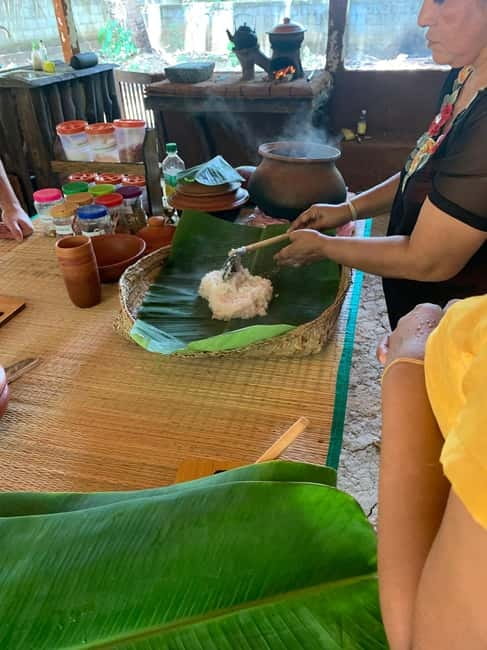
Once the kiribath reaches the right consistency, you learn how to shape and present it in traditional styles. This step matters because milk rice is often served in neat pieces rather than left as a loose mound.
Presentation is tied to the dish’s role at celebrations. Shaped kiribath looks ready for sharing, and the neat cuts make it easy to serve with condiments.
You then taste your work with local accompaniments. Lunu miris brings heat and onion flavor, while jaggery provides a sweet contrast. Trying both gives you two different ways to understand the same base dish.
I would pay attention to the balance here. The milk rice itself is mild, creamy, and filling. The condiments provide most of the punch. If you usually prefer savory food, start with lunu miris. If you have a sweet tooth, try the jaggery pairing as well.
Learning to eat with your hands
The class includes instruction in the traditional Sri Lankan way of eating with your hand. This is not a forced gimmick. It is part of the local food culture and changes how you handle the rice and condiments.
You use your fingers to combine the food and control each bite. It can feel unfamiliar at first, but the instructor guides you through it. The technique is practical, not ceremonial, and it helps you take part in the meal on local terms.
If you prefer utensils, you may want to ask about your options, though the experience specifically encourages trying the traditional method. Bring an open mind and treat it as another skill in the class, much like using the kulla or hiramanaya.
The best approach is not to worry about looking polished. You are there to learn, and nobody expects a first attempt to look like a family member who has been eating this way for years.
A two-hour schedule with no wasted sightseeing time
The two-hour duration is a sensible length for this activity. It gives you enough time to work through several traditional tasks without turning the cooking into an all-day commitment.
A typical flow includes:
- A welcome drink and introduction to the kitchen
- An explanation of kiribath and its cultural role
- Rice preparation and use of the kulla
- Coconut scraping with the hiramanaya
- Spice grinding on the miris gala
- Cooking rice and coconut milk over the wood-fired stove
- Shaping and presenting the finished kiribath
- Eating the dish with lunu miris and jaggery
- Guidance on eating by hand
The exact order may vary, since cooking depends on the pace of the group and the food. The format is a private group, so the instructor can give attention to your technique rather than moving a large crowd through a fixed demonstration.
Starting times are subject to availability. You should check the schedule when booking, especially if you are fitting the class between temple visits or other plans in Anuradhapura.
What the $40 price gets you
At $40 per person, this is not the cheapest way to eat rice in Sri Lanka. It is also not simply a meal. The fee covers a two-hour hands-on lesson, an English-speaking instructor, ingredients, equipment, cultural explanations, a welcome drink, and the finished tasting.
The strongest value comes from the tools and setting. You are paying for access to a clay kitchen, wood-fired stove, stone grinder, coconut scraper, and winnowing basket, along with guidance in using them. Those are difficult details to reproduce through a restaurant meal.
The private-group format also matters. You are not just watching a large class from the back. You can ask questions and get help with tasks such as shaping the rice or using the traditional equipment.
I would recommend the class more readily to someone who values food culture and personal participation than to someone looking only for a quick lunch. If you want a full cooking menu with several different dishes, this may feel narrow. The focus is kiribath, with the condiments and preparation methods giving the dish variety.
The local teaching style
The instructor is a local housewife who teaches in English. That combination is important because the class is built around home cooking rather than restaurant technique.
You can expect guidance on the practical details that often get skipped in a polished cooking demonstration: how to choose the rice, how to judge texture, how to work the tools, and how to present the finished food.
The class also gives you a chance to ask about the role of kiribath in Sri Lankan traditions. The supplied experience does not name the instructor, so you should not expect a named chef-led lesson. Its appeal is the connection to everyday household knowledge.
A verified booking from July 8, 2025, described the family as kind and praised the chance to see milk rice made in a traditional way. That is a useful clue about the tone you can expect: personal, family-based, and centered on showing how the food is really prepared.
Who should book this class
I would choose this activity if you want one of the following:
- A cultural experience that does not require previous cooking skills
- A practical introduction to Sri Lankan food traditions
- A private class rather than a large group demonstration
- A family-friendly activity suitable for all ages
- A chance to use traditional tools instead of modern kitchen equipment
- A slower, more personal stop during a visit to Anuradhapura
It is also a good fit if you like tasting food in context. You learn how kiribath is made, why it is served, and how it is eaten.
You may want to skip it if you dislike coconut, rice, spicy condiments, hands-on work, or wood-fired cooking. You should also be realistic about the focus. This is not a general Sri Lankan cooking course covering a wide menu of curries, roti, desserts, and drinks.
The class is wheelchair accessible, but the information does not describe the exact layout of the clay kitchen or surfaces. If you have specific mobility needs, contact the provider before booking so the setup can be confirmed.
Practical advice before you go
Wear comfortable clothing that allows you to work around a stove and handle food. Cooking can be messy, especially when you are learning to scrape coconut, grind spices, and use a winnowing basket.
Tell the instructor about food allergies in advance. The class includes coconut milk, rice, spices, onion sambal, and jaggery, so it is worth discussing any concerns before preparation begins.
The instruction is in English. If you want to ask detailed questions about customs or cooking methods, prepare a few questions ahead of time. That will help you get more from the cultural part of the class.
Cancellation is free up to 24 hours before the activity for a full refund. You can also reserve now and pay later, which is useful when your Sri Lanka schedule is still changing.
My verdict on this Anuradhapura food experience
Book this class if you want to understand Sri Lanka through one dish and several traditional kitchen skills. The combination of kiribath, a village clay kitchen, a wood-fired stove, and old tools gives the two hours a clear purpose.
I especially value the way the class links food with celebrations and family tradition. The practical work makes the lesson memorable, while lunu miris and jaggery keep the final tasting from feeling plain.
The limitation is its narrow subject. You are learning milk rice, not an entire Sri Lankan menu. For the right person, that focus is a strength. At $40, I would book it for the setting, instruction, and cultural connection, not just for the amount of food on the plate.
FAQ
Where does the milk rice cooking class take place?
The class takes place in an authentic village setting in Sri Lanka’s North Central Province, inside a clay kitchen with a coconut-leaf roof and natural surroundings.
How long does the experience last?
The cooking class lasts two hours.
How much does the experience cost?
The price is $40 per person.
Is the class conducted in English?
Yes. The instructor teaches in English.
What dish will I learn to cook?
You will learn to prepare kiribath, a traditional Sri Lankan milk rice dish made with rice and coconut milk.
Will I get to eat the food I prepare?
Yes. The experience includes a tasting of your homemade kiribath with local condiments.
What is served with the milk rice?
The class pairs kiribath with lunu miris, a spicy onion sambal, and jaggery for a sweet option.
Do I need previous cooking experience?
No. The class is suitable for beginners and does not require prior cooking experience.
Is the activity suitable for children?
Yes. The experience is suitable for all ages.
Is the cooking class wheelchair accessible?
Yes. The activity is listed as wheelchair accessible.
What traditional tools will I use?
You will get hands-on experience with a miris gala stone grinder, hiramanaya coconut scraper, kulla winnowing basket, and wood-fired stove.
Can I cancel for a full refund?
Yes. You can cancel up to 24 hours in advance for a full refund.
Can I reserve now and pay later?
Yes. The activity offers a reserve-now, pay-later option.
Just added in Anuradhapura
- Village tour Sigiriya Rock, Pidurangala Rock and Dambulla temple★ 5.0 · 2 reviews
- Day Tour from dambulla to Sigiriya & Polonnaruwa★ 5.0 · 13 reviews
- Wilpattu Half Day Safari From Anuradhapura★ 5.0 · 4 reviews
- Wilpattu National Park Private Safari★ 4.5 · 2 reviews
- Sunrise or sunset tour pidurangala Rock and Sigiriya Rock★ 5.0 · 4 reviews
- One Day Tour – Sacred city of Anuradhapura & Sacred city of Mihintale. (Sunset)★ 4.5 · 23 reviews
- Wilpattu National Park Entrance Ticket with Private Safari★ 5.0 · 1 review
- Taxi From Anuradhapura to Kandy (Private)★ 5.0 · 1 review
Cooking Classes, compared.
Organic cooking class sigiriya (kumara & family)
Read our review →
Sri Lankan Cooking Class with Neranji at Homestay
Read our review →
Browse the lists this tour appears in