
Review · COOKING CLASSES
Hands-On Cooking Class in Anuradhapura: Cook Like a Local
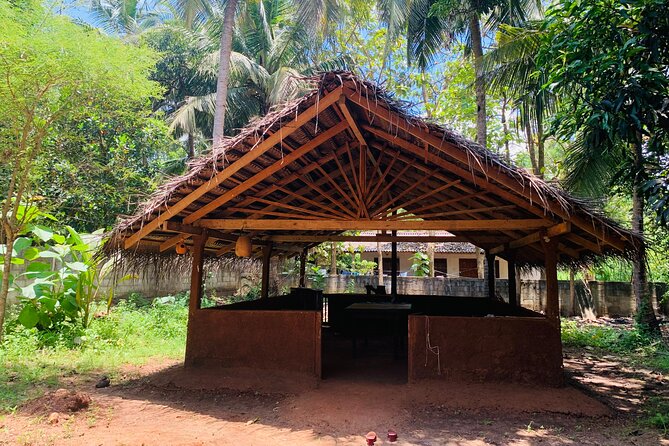
Sri Lankan flavor starts with fire and stone. This three-hour class from GK Immersions takes you into a traditional clay kitchen in Rajarata, where you prepare a full village meal with local tools, fresh ingredients, and plenty of guidance. It is a practical way to connect food with everyday life in North Central Sri Lanka.
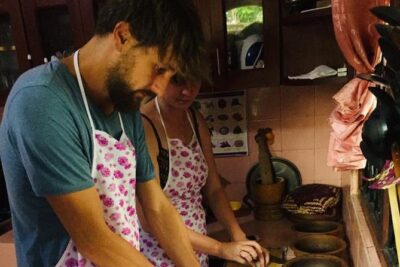
I like the hands-on work, especially grinding spices on a miris gala and scraping coconut with a hiramanaya. I also like the setting: a peaceful clay house kitchen beneath a coconut-leaf shelter, rather than a polished restaurant classroom. The main consideration is comfort. Cooking over a wood-fired stove in an open village kitchen can mean heat, smoke, and insects, so mosquito repellent is a smart addition.
- Traditional tools in real use: Grind spices on a stone miris gala, scrape coconut by hand, and cook over a firewood stove.
- A full Sri Lankan meal: Prepare rice, lake fish curry, ambarella curry, pumpkin curry, banana blossom mallum, greens, sambal, and dessert.
- A village setting near Anuradhapura: The clay kitchen and coconut-leaf roof give the class a distinctly local feel.
- Food with a story: The menu introduces you to tropical fruits, flowers, greens, coconut, and fish used in Rajarata cooking.
- Private, English-language instruction: You get a private group experience with an English-speaking instructor.
- Good value for food lovers: At $40 per person for three hours, the price includes a substantial meal and a cultural activity, not just a recipe demonstration.
In This Review
- A Clay Kitchen Instead of a Cooking Studio
- Starting With a Local Drink and the Coconut Tree
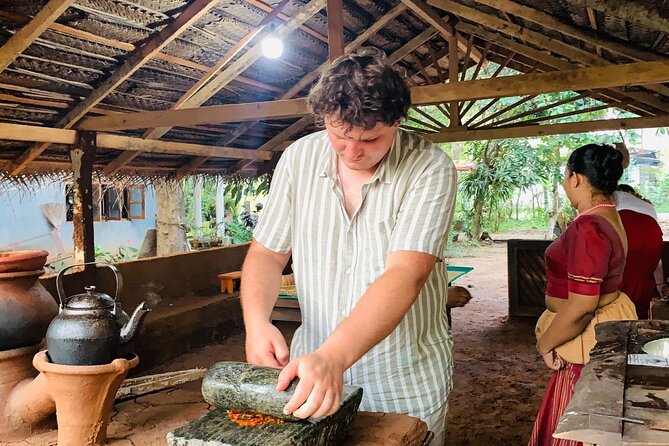
- Grinding Spices on the Miris Gala
- Scraping Coconut With a Hiramanaya
- Cooking Over Coconut-Shell Firewood
- The Sri Lankan Menu You Prepare
- Rice, the Base of the Meal
- Ambarella Curry
- Banana Blossom Mallum
- Lake Fish Curry
- Kathurumurunga Mallum
- Coconut Sambal
- Pumpkin Curry
- Finishing With Curd, Treacle, and Fruit
- Why the Three-Hour Format Works
- Is $40 Per Person Good Value?
- Who Will Enjoy This Class Most?
- Practical Details Before You Go
- Should You Book the Rajarata Cooking Class?
- FAQ
- Where does the cooking class take place?
- How long does the experience last?
- How much does the cooking class cost?
- Is the class taught in English?
- Is this a private group activity?
- Can I cancel and receive a refund?
A Clay Kitchen Instead of a Cooking Studio
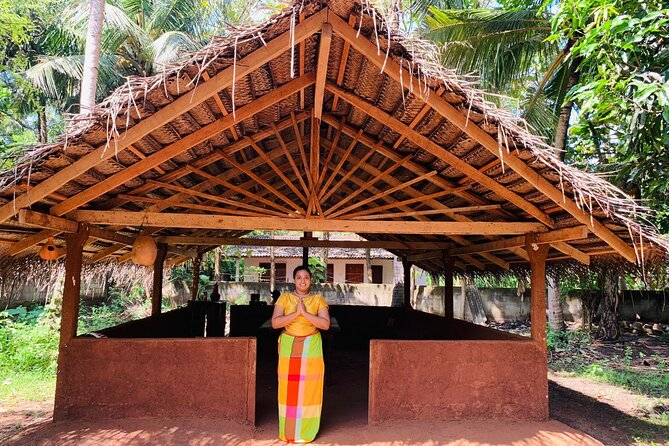
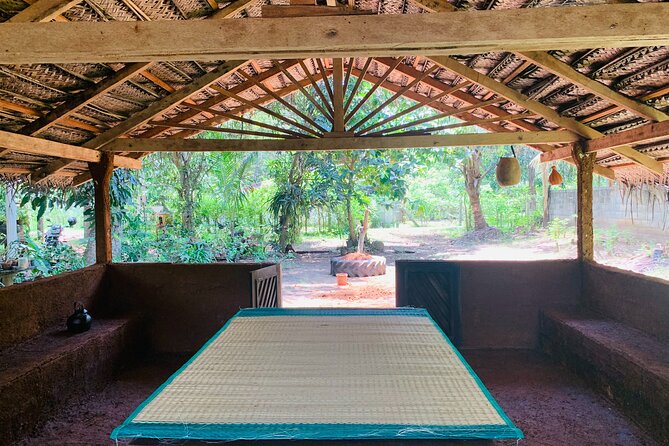
The class takes place at a clay house kitchen shaded by a traditional coconut-leaf shelter. That setting matters. You are not simply watching a chef prepare curry in a modern kitchen. You are seeing how cooking connects to the home, garden, fire, tools, and pace of village life.
The atmosphere is intended to be peaceful and rustic. You might find the setting more memorable than a standard cooking school, especially if you have already spent time visiting Anuradhapura’s ancient sites and want an activity that brings you closer to present-day local life.
The class is also private, which makes the three hours more personal. You can ask questions, handle the tools, and follow the cooking without competing with a large group. The instructor speaks English, so you can ask about ingredients and methods as you work.
Starting With a Local Drink and the Coconut Tree
Your welcome includes a refreshing local drink, followed by an introduction to the ingredients and tools. One of the more unusual parts of the experience is the chance to pick your own coconut straight from the tree.
That small task helps explain the role of coconut in Sri Lankan food. It is not just a garnish or a flavoring. Fresh coconut appears in sambal, mallum, curries, and desserts, and the class lets you see how it moves from tree to table.
You should expect a practical activity rather than a formal lecture. The emphasis is on doing. You handle the ingredients, learn the basic preparation, and then use what you have prepared in the meal.
The class information does not specify how the coconut is picked or what equipment is used, so follow the instructor’s directions closely. If you are not comfortable with the activity, the important part is still the lesson that follows: fresh coconut is central to the cooking here.
More Cooking Classes in Anuradhapura:
- Hands-On Cooking Class in Anuradhapura-Cook Like a Local
★ 5.0 · 2 reviews - Cycling and Cooking Demonstration from Anuradhapura
★ 5.0 · 1 review - Anuradhapura: Traditional Milk Rice Cooking Class
★ 5.0 · 1 review
Grinding Spices on the Miris Gala
The miris gala is a traditional stone grinder. Grinding spices by hand takes more effort than reaching for a modern electric appliance, but it gives you a better sense of how Sri Lankan cooking begins.
You will notice the smell first. Crushing spices releases an aroma that is hard to capture in packaged powders. The activity also shows why Sri Lankan meals can taste layered even when the ingredient list looks simple.
This is one of the strongest parts of the class for anyone who enjoys food technique. You are not just told which spices to use. You learn how the ingredients are prepared before they reach the pot.
Clear instruction is important here, and the class is designed around it. The guidance covers which spices and vegetables to use, as well as how to prepare them. That makes the experience useful for home cooks who want to recreate a few dishes later.
Scraping Coconut With a Hiramanaya
The hiramanaya is a traditional coconut scraper and a familiar tool in Sri Lankan home kitchens. Using it can feel awkward for the first few minutes, but that is part of the fun. You quickly understand that ordinary kitchen work often depends on practiced hand movements.
Freshly scraped coconut is used in several parts of the meal. It brings texture and richness to sambal and mallum, while also helping balance the heat of chili and the sharpness of lime.
I like this part because it turns a common ingredient into a skill. You are not just eating coconut in finished dishes. You are learning one of the everyday tasks that shaped traditional Sri Lankan cooking.
This is also a good place to keep expectations realistic. A three-hour class will not make you an expert with the hiramanaya. You will, however, get a memorable introduction to a tool that rarely appears in ordinary western cooking classes.
Cooking Over Coconut-Shell Firewood
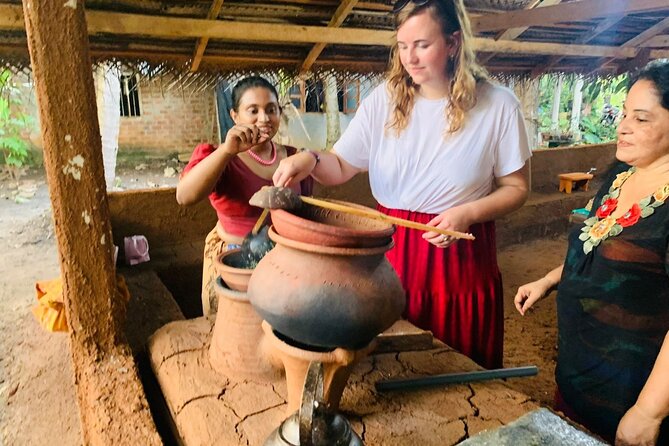
The meal is cooked on a traditional wood-fired stove, with coconut-shell firewood and clay pots. This gives the class a strong sense of place, and it changes the cooking process in ways you can see and smell.
The fire needs attention. You may need to work around heat and smoke, and the open kitchen can feel warm. That is a genuine part of the experience, not a flaw in the setup, but it is worth knowing before you book.
Cooking over fire also helps explain the appeal of the finished dishes. The smoky aroma adds another layer to the food, especially when curries simmer in clay pots. You get a better feel for the patience involved in village cooking, where the meal is built step by step rather than rushed.
One useful tip comes from the practical side of the experience: bring mosquito repellent. The setting is outdoors or partly open, and an evening in a garden or village kitchen can attract insects.
A few more options to weigh up in Anuradhapura
- Private City Day Tour in Anuradhapura
★ 5.0 · 383 reviews - Minneriya National Park Elephant Jeep Safari Private Tour
★ 5.0 · 68 reviews - Explore & Ride the history of anuradhapura with Vogel Tours
★ 5.0 · 62 reviews - Minneriya National Park | Private Safari
★ 5.0 · 59 reviews
The Sri Lankan Menu You Prepare
The menu is generous for a three-hour class. You prepare a range of dishes rather than focusing on one curry, so the meal gives you a broad introduction to Sri Lankan flavors and textures.
Rice, the Base of the Meal
You may prepare yellow rice or white rice. White rice is soft and plain, allowing the curries and sambal to take the lead. Yellow rice adds color and seasoning while still working as the central part of the plate.
Rice is more than a side dish here. It is the base that brings several strongly flavored dishes together. Learning how it is prepared gives you a better understanding of how a Sri Lankan meal is composed.
Ambarella Curry
Ambarella is a tropical fruit used here as a savory ingredient. Its tangy flavor gives the curry a sharp edge and makes it different from the more familiar potato or lentil dishes often served in South Asian restaurants.
This is a useful reminder that Sri Lankan cooking makes creative use of local produce. Fruit does not have to be reserved for dessert. In this dish, its sour character becomes part of the main meal.
Banana Blossom Mallum
Banana blossom has a firm, slightly fibrous texture and an earthy flavor. It is prepared as a mallum, a dish that combines chopped ingredients with coconut and spices.
For many people, this will be the most unfamiliar item on the menu. That is a good thing. A cooking class should introduce you to ingredients you might not order on your own, and banana blossom offers a taste of traditional plant-based cooking.
Lake Fish Curry
The lake fish curry brings local waters into the meal. The fish is simmered with spices and coconut milk, creating a sauce that is creamy, fragrant, and suited to rice.
The dish also gives the menu a different texture from the vegetable curries. You learn how fish works with Sri Lankan seasoning without being overwhelmed by it.
The exact fish and level of heat are not specified, so you should ask the instructor about the ingredients if you have allergies or dietary restrictions. The class is in English, making those questions easier to discuss.
Kathurumurunga Mallum
Kathurumurunga is a local green mixed with coconut and spices. The result is lighter than a creamy curry and adds a fresh, leafy element to the plate.
This dish helps balance the richer food. A traditional Sri Lankan meal is not just a collection of hot curries. It often includes different textures, degrees of spice, and types of produce.
Coconut Sambal
Coconut sambal combines freshly scraped coconut with red chili, lime, and onion. It is simple to make, but the flavors are direct: sweet coconut, sharp lime, heat from chili, and bite from onion.
You can adjust how much of it you eat with each mouthful. A small spoonful can wake up mild rice or pumpkin curry, while a larger portion brings serious heat.
Pumpkin Curry
Pumpkin curry provides a soft and gently sweet contrast to the sharper dishes. It is creamy, comforting, and lightly spiced.
This is likely to be one of the easiest dishes to enjoy if you prefer mild food. It also shows how Sri Lankan cooking uses sweetness without turning the meal into dessert.
Finishing With Curd, Treacle, and Fruit
The meal ends with fresh curd and treacle, plus ripe papaya or another ripe fruit included in the sweet finish. Curd and treacle offer a cool, creamy contrast after the warm curries and chili-heavy sambal.
The dessert is modest rather than elaborate, which suits the class. You finish with familiar local ingredients instead of a restaurant-style presentation. It feels like the natural end of a home meal.
The ripe fruit adds freshness and keeps the final course light. By this point, you have prepared a substantial spread, so a simple dessert is welcome.
Why the Three-Hour Format Works
Three hours is long enough to cover several dishes without turning the activity into an all-day commitment. You have time to learn the tools, prepare ingredients, cook over fire, and sit down to eat.
The class is especially useful as a break between sightseeing days in Anuradhapura. Ancient monuments can fill your schedule with temples, stupas, and archaeological sites. This activity gives you a different view of the area through food and household traditions.
The pace may feel active. You are handling ingredients and working with traditional equipment, not simply sitting through a demonstration. If you prefer a relaxed class with lots of watching, this may feel more involved than expected.
On the other hand, that involvement is the main reason to book. The experience is designed so you can understand the process with your hands, nose, and appetite.
Is $40 Per Person Good Value?
At $40 per person, the price is reasonable if you want both a meal and a cultural activity. You receive three hours of instruction, a private group setting, a local drink, access to traditional tools, and a large meal with several curries and side dishes.
The value is strongest for people who care about how food is made. If you only want a quick lunch, a restaurant will cost less and take less time. You are paying for the setting, the guidance, the cooking process, and the chance to use tools you may never encounter elsewhere.
The private format also makes the price easier to justify for families, couples, or small groups who want direct attention. Solo visitors should check the available booking conditions before making plans, since the activity is described as a private group experience.
Free cancellation up to 24 hours before the class and the option to reserve now and pay later add useful flexibility. You can fit it around changing sightseeing plans without paying at once.
Who Will Enjoy This Class Most?
I would recommend this class to food lovers, curious cooks, and anyone looking for things to do in Anuradhapura beyond the major historical sights. It suits people who want a real activity and are happy to work with unfamiliar tools.
Families may enjoy the coconut, spice grinding, and firewood elements, though adults should supervise children around the stove. The private group format can make the experience more comfortable for families than a large public class.
It also works well for visitors who want an introduction to Sri Lankan village food without committing to a longer rural stay. You get a concentrated look at ingredients, cooking methods, and the social role of the meal.
You may want to skip it if you dislike heat, smoke, open-air kitchens, or hands-on preparation. This is not a polished indoor demonstration, and that rustic quality is both its appeal and its main limitation.
Practical Details Before You Go
The meeting point is the clay house kitchen operated by GK Immersions. Search Google Maps for GK Immersions, Best things to do provider in Anuradhapura, and confirm the exact location and starting time when you book.
The class lasts three hours, but the available start times can vary. Check the schedule carefully so it fits around temple visits and other Anuradhapura activities.
Instruction is in English. The group is private, and the activity is listed as wheelchair accessible. If you have food allergies, mobility concerns, or dietary needs, raise them before the class so the instructor can explain what can be adjusted.
Wear clothing you do not mind exposing to smoke or food splashes. Mosquito repellent is useful, and practical footwear makes more sense than anything delicate. Bring a camera if you like food photography, but keep it safely away from the stove and preparation areas.
Should You Book the Rajarata Cooking Class?
Book it if you want to understand Sri Lankan food through action, not just eating. The strongest parts are the traditional tools, the clay kitchen, the full menu, and the careful instruction covering spices and vegetables.
I would choose this class over a standard restaurant meal when I wanted a personal cultural activity in Anuradhapura. The $40 price is fair for three hours of work, guidance, and food, especially in a private group.
Skip it only if you want air conditioning, a short demonstration, or a menu built around familiar dishes. For everyone else, this is a thoughtful and tasty way to see how local ingredients become a Sri Lankan meal.
FAQ
Where does the cooking class take place?
The class takes place at a clay house kitchen shaded by a traditional coconut-leaf shelter in Anuradhapura.
How long does the experience last?
The cooking class lasts three hours.
How much does the cooking class cost?
The listed price is $40 per person.
Is the class taught in English?
Yes. The instructor provides English-language instruction.
Is this a private group activity?
Yes. The experience is offered as a private group.
Can I cancel and receive a refund?
You can cancel up to 24 hours in advance for a full refund. You can also reserve now and pay later.
Just added in Anuradhapura
- Village tour Sigiriya Rock, Pidurangala Rock and Dambulla temple★ 5.0 · 2 reviews
- Day Tour from dambulla to Sigiriya & Polonnaruwa★ 5.0 · 13 reviews
- Wilpattu Half Day Safari From Anuradhapura★ 5.0 · 4 reviews
- Wilpattu National Park Private Safari★ 4.5 · 2 reviews
- Sunrise or sunset tour pidurangala Rock and Sigiriya Rock★ 5.0 · 4 reviews
- One Day Tour – Sacred city of Anuradhapura & Sacred city of Mihintale. (Sunset)★ 4.5 · 23 reviews
- Wilpattu National Park Entrance Ticket with Private Safari★ 5.0 · 1 review
- Taxi From Anuradhapura to Kandy (Private)★ 5.0 · 1 review
Cooking Classes, compared.
Organic cooking class sigiriya (kumara & family)
Read our review →
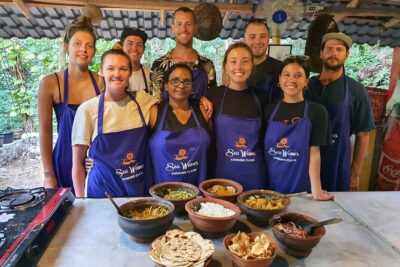
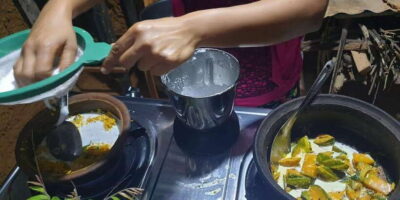
Sri Lankan Cooking Class with Neranji at Homestay
Read our review →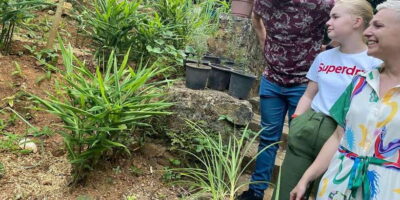
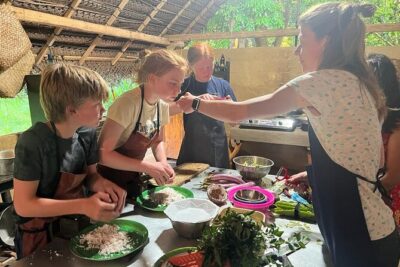
Browse the lists this tour appears in