
Review · COOKING CLASSES
Hands-On Cooking Class in Anuradhapura-Cook Like a Local
Fire, spice, and coconut make a memorable lesson. This three-hour class at GK Immersions takes you into a peaceful village home, where you learn Sri Lankan cooking through the tools and methods used in local kitchens. Hosted by Anuththara Gimhani Ilangathilaka, it connects food with the old Rajarata way of life.
I especially like the chance to pick a coconut straight from the tree and grind spices on a miris gala, a traditional stone grinder. The private format is another plus, since your group can take part at its own pace rather than follow a crowded demonstration. The main consideration is the outdoor, weather-dependent setting, so poor conditions can lead to a new date or cancellation.
In This Review
- Key points to know before you book
- Entering the village kitchen in Anuradhapura
- A coconut picked straight from the garden
- Grinding spices the old-fashioned way
- Learning the hiramanaya coconut scraper
- Cooking over firewood and clay
- Tasting the meal you helped prepare
- Why the Rajarata setting adds value
- What $40 represents for three hours
- Who will enjoy this class most
- Timing the class around your Anuradhapura visit
- Booking, cancellation, and weather details
- Should you book Cook Like a Local?
- FAQ
- Where does the cooking class take place?
- Where does the experience end?
- How long does the cooking class last?
- How much does the experience cost?
- Is the activity private?
- Is a mobile ticket available?
- What traditional tools will you use?
- Can I cancel for a full refund?
- What happens if bad weather cancels the class?
Key points to know before you book
- Pick a coconut from the tree: You see one of Sri Lanka’s most important cooking ingredients go from garden to kitchen.
- Use a miris gala stone grinder: Grinding spices by hand gives you a feel for the work behind Sri Lankan curry.
- Scrape coconut with a hiramanaya: This traditional tool turns a simple ingredient into a practical kitchen lesson.
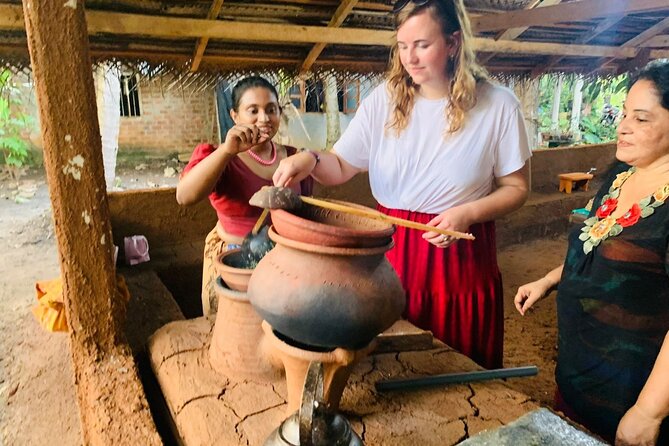
- Cook over a wood-fired clay stove: Coconut-shell firewood and smoke add an old-fashioned touch to the meal.
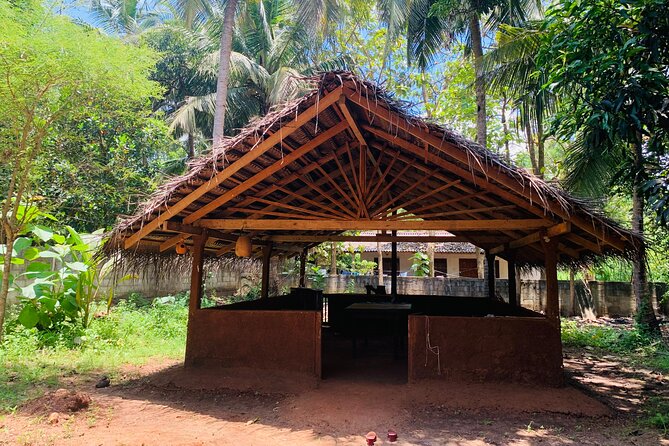
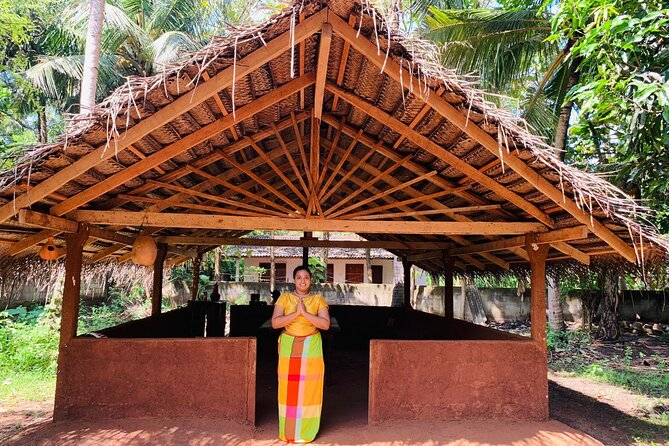
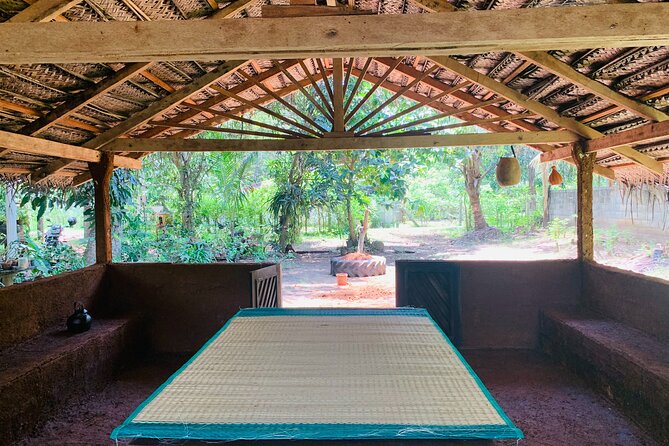
- Learn inside a village home: The clay kitchen, coconut-leaf roof, and garden setting make this more than a standard food workshop.
- Enjoy a private three-hour class: The $40 price covers a focused cultural activity for your own group, not just a quick cooking demonstration.
Entering the village kitchen in Anuradhapura
The class begins at GK Immersions, located at No. 214, Nidhahas Mawatha, Anuradhapura 50000. The activity both starts and finishes at this address, which keeps the plan simple for a morning or afternoon in town.
You receive a local drink when you arrive. That small welcome matters because the class is designed as a home-based experience, not a formal culinary school with polished counters and rows of cooking stations.
The setting is a clay kitchen with a coconut-leaf roof, surrounded by nature. I would choose this class if you want to see how cooking fits into village life, rather than simply learn a recipe in a modern kitchen.
You should keep the location details handy on your phone. A mobile ticket is provided, and the meeting point is near public transportation. The available information does not include hotel pickup, so plan to reach No. 214, Nidhahas Mawatha on your own.
More Cooking Classes in Anuradhapura:
- Hands-On Cooking Class in Anuradhapura: Cook Like a Local
★ 5.0 · 5 reviews - Cycling and Cooking Demonstration from Anuradhapura
★ 5.0 · 1 review - Anuradhapura: Traditional Milk Rice Cooking Class
★ 5.0 · 1 review
A coconut picked straight from the garden
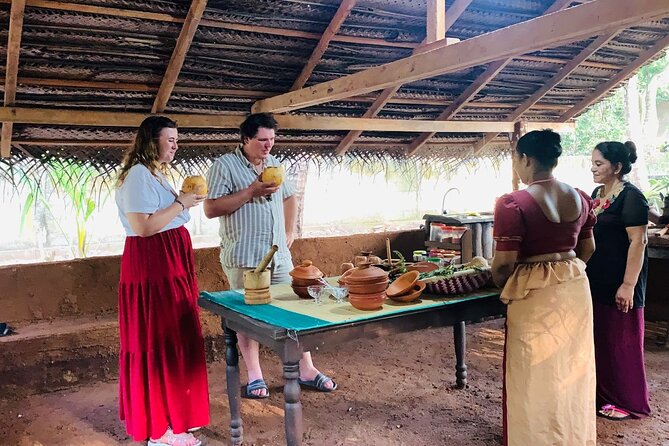
The first hands-on moment is one of the most memorable: you pick your own coconut from the tree. It is a simple act, but it explains a great deal about Sri Lankan food.
Coconut is not just a garnish here. It can provide milk, grated flesh, oil, and fuel. By taking one from the garden, you see the ingredient before it reaches the kitchen and before it becomes part of a curry or side dish.
This is also a nice change from classes that hand you premeasured ingredients. You get a direct link between the garden and the meal. The experience does not treat food as an abstract list of ingredients. It shows where an important one comes from and how it is used.
The practical detail is that the class includes outdoor activity. Wear clothing you do not mind using around a garden and a firewood stove. The provided information does not specify footwear or clothing requirements, so comfortable everyday clothes are the sensible choice.
Grinding spices the old-fashioned way
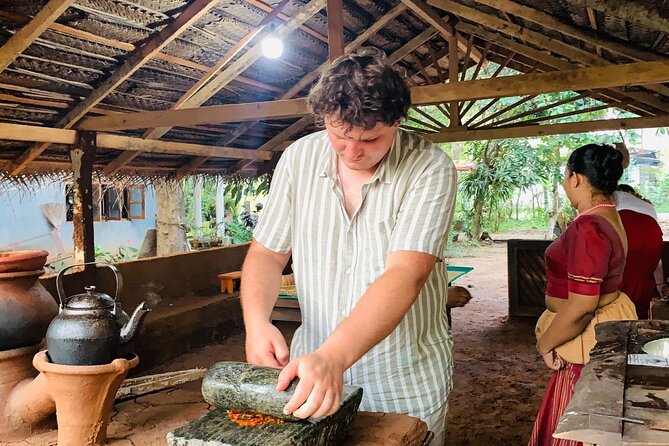
Next comes the miris gala, a traditional stone grinder. You grind your own spices and notice the aroma as the ingredients are crushed by hand.
This is where the class gives you more than a recipe. Ground spices change the smell and feel of a kitchen, and the slow work helps you understand the labor behind a home-cooked meal. You are not simply told which spices belong in a dish. You take part in one of the methods that gives Sri Lankan cooking its character.
The stone grinder also puts modern convenience in perspective. An electric appliance is faster, but it does not offer the same physical connection to the food. A few minutes with the miris gala can make the spice mixture feel like something you made, not something that appeared in a bowl.
For anyone interested in food traditions, this is likely one of the strongest parts of the class. It is also useful for families and mixed-age groups because the activity is clear and tactile. The available details do not state the exact dishes or spice combinations, so you should book this for the method and cultural context, rather than for a guaranteed menu.
Learning the hiramanaya coconut scraper
You also try the hiramanaya, a traditional coconut scraper used in Sri Lankan homes. It is a practical kitchen skill, and the class presents it as something every local home cook would recognize.
The tool gives you another way to understand the importance of coconut. First you pick the coconut, then you work with it in the kitchen. That sequence makes the ingredient feel central rather than decorative.
There is a pleasant rhythm to this part of the class. The stone grinder asks you to crush and release aroma. The coconut scraper asks you to work steadily and carefully. Together, the tools show how much preparation can happen before a pot reaches the stove.
The description calls the technique easy to learn and satisfying to use. Still, you should expect a hands-on task, not a quick photo opportunity. If you prefer to watch rather than participate, this class may feel more active than a standard cooking show.
A few more options to weigh up in Anuradhapura
- Private City Day Tour in Anuradhapura
★ 5.0 · 383 reviews - Minneriya National Park Elephant Jeep Safari Private Tour
★ 5.0 · 68 reviews - Explore & Ride the history of anuradhapura with Vogel Tours
★ 5.0 · 62 reviews - Minneriya National Park | Private Safari
★ 5.0 · 59 reviews
Cooking over firewood and clay
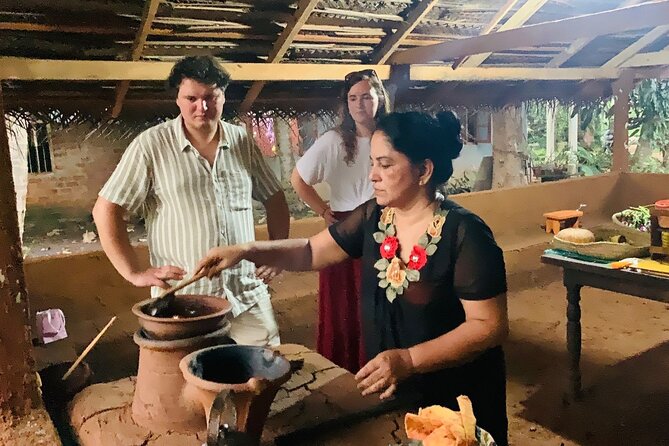
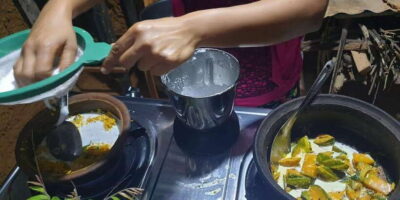
Once the ingredients are prepared, you cook over a wood-fired stove. The kitchen uses clay pots and coconut-shell firewood, bringing the meal close to older cooking methods.
The fire is part of the lesson. You have to work with heat created by burning fuel, not simply turn a dial and walk away. That makes the process slower and more connected to the way food was prepared in earlier generations.
The smoke also adds flavor. The description specifically points to the smoky taste produced by the wood-fired stove, so the final meal should have a character that you would not get from a typical electric range.
This is an important reason to allow the full three hours. The class is not built around speed. You are moving through preparation, cooking, and eating, with time for the tools and methods to make sense.
There is one practical tradeoff. Firewood and outdoor conditions can be less predictable than a modern kitchen. The activity requires good weather, and poor conditions may lead to a different date or a full refund. That is not a major problem if your itinerary has some flexibility, but it is worth remembering during Sri Lanka’s wetter periods.
Tasting the meal you helped prepare
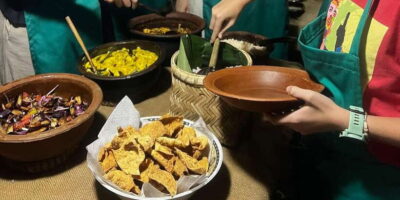
The class ends with food after the cooking, not just a demonstration and a polite goodbye. You get to eat the meal prepared during the session, which gives the work a clear reward.
The information available does not name the exact dishes. That can be a drawback for anyone booking around a particular curry, dessert, or dietary requirement. If the menu matters to you, ask before confirming your place.
What is clear is that the meal includes fresh ingredients, traditional preparation, and a local cooking approach. The food is part of the lesson, not an unrelated restaurant course. You learn about the ingredients and methods, then taste the result.
That connection was one of the most praised parts of the experience. The class provides plenty of food after the cooking and explains how the ingredients are used. You come away with more than a full stomach. You understand how a Sri Lankan meal is built.
Why the Rajarata setting adds value
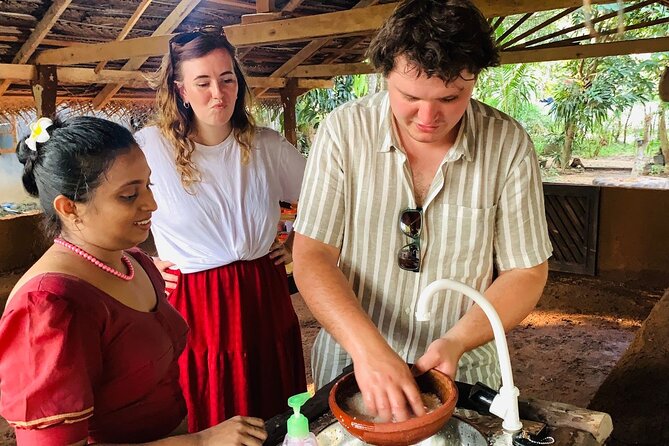
Anuradhapura was the center of the ancient Rajarata Kingdom, and this class uses that regional identity as part of its focus. You are not just learning broad Sri Lankan cooking techniques. You are being introduced to food traditions associated with the local area and its older way of life.
The class does not appear to be a formal history lecture, and that is a strength. Instead, the past comes through the kitchen. Clay pots, a coconut-leaf roof, a stone grinder, a coconut scraper, and a firewood stove make the culture visible through ordinary tasks.
That approach works well after visiting Anuradhapura’s famous ancient sites. You can spend part of the day looking at monuments and irrigation works, then see a living household tradition expressed through food.
I also like that the experience avoids reducing Sri Lankan cuisine to a restaurant meal. Eating at a restaurant can show you the finished product. Here, you see the work, tools, and ingredients that shape it.
What $40 represents for three hours
At $40 per person, this is not the cheapest way to eat in Anuradhapura. A local meal will cost less, and a short cooking demonstration may take less time.
The value comes from the combination of a private activity, instruction, ingredients, a welcome drink, practical participation, and the meal at the end. You are paying for access to a home-style setting and for the chance to use tools that are unlikely to appear in an ordinary restaurant kitchen.
The private format matters. Only your group participates, so you are not sharing the class with a large public audience. That can make the three hours feel more personal and gives your group room to ask questions or repeat a technique.
The price makes the most sense if you care about food and culture equally. If you only want lunch, it is more than you need. If you want a local activity that explains how food is made, the cost is easier to justify.
Who will enjoy this class most
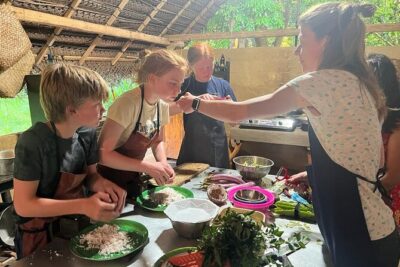
I would recommend it to food lovers who want to understand Sri Lankan cooking from the ground up. The class gives you several distinct jobs, from picking the coconut to grinding spices and cooking over fire.
It also suits people who like cultural activities that involve doing, not just watching. You use the tools yourself and take part in the preparation. That makes it a good choice for couples, families, and private groups looking for something different from temple visits and sightseeing.
It may also work well for anyone planning to cook Sri Lankan food at home. You learn techniques that are difficult to understand from a recipe alone, especially spice grinding and coconut preparation.
You may want to choose another activity if you need a fixed menu, have little flexibility with weather, or prefer a polished indoor kitchen. The exact dishes are not specified, and the experience depends on a traditional outdoor-style setting.
Service animals are allowed, and the meeting point is near public transportation. The supplied details do not provide further information about access within the clay kitchen, so anyone with mobility needs should check directly before booking.
Timing the class around your Anuradhapura visit
The class lasts about three hours. That is long enough to feel like a real activity but short enough to fit alongside sightseeing if you plan carefully.
I would avoid placing it immediately before a major appointment or a tightly timed transfer. Cooking over a wood-fired stove is part of the appeal, and the class should not be treated like a fast meal stop.
Because the activity begins and ends at the same address, you do not need to arrange a separate return point. The end of the session brings you back to the starting location.
The private setup also makes the class easier to fit into a personal itinerary, though no specific start times are provided in the supplied information. Confirm the time when you book and keep weather in mind.
Booking, cancellation, and weather details
You receive confirmation when you book, and a mobile ticket is available. The experience is private, with only your group taking part.
Free cancellation applies when you cancel at least 24 hours before the local start time. Cancel within 24 hours, or request changes during that period, and the payment is not refunded.
Weather matters because part of the experience takes place around a garden and a wood-fired stove. If poor weather causes the class to be canceled, you are offered another date or a full refund.
That policy is fair for an activity based on outdoor cooking, but it means you should avoid scheduling it on the final few hours of your trip. Give yourself room to move the class if conditions change.
Should you book Cook Like a Local?
Book this class if you want a small, practical cultural experience in Anuradhapura. The strongest reasons are the private setting, the chance to pick a coconut, the traditional tools, and the meal you help prepare.
At $40, the class is best viewed as a three-hour food and culture experience rather than a cheap lunch. You should also accept that the exact menu is not stated and that weather can affect the schedule.
For a first visit to Sri Lanka, this is a useful way to understand the food you will encounter during the rest of your trip. For a repeat visitor, it offers a slower look at familiar ingredients and older household methods. If that sounds more appealing than simply sitting down to eat, this is a worthwhile booking.
FAQ
Where does the cooking class take place?
The class begins at GK Immersions, No. 214, Nidhahas Mawatha, Anuradhapura 50000, Sri Lanka.
Where does the experience end?
The activity ends back at the meeting point at GK Immersions.
How long does the cooking class last?
The class lasts approximately three hours.
How much does the experience cost?
The listed price is $40 per person.
Is the activity private?
Yes. Only your group participates in this private activity.
Is a mobile ticket available?
Yes. The experience includes a mobile ticket, and booking confirmation is received at the time of booking.
What traditional tools will you use?
The class includes a miris gala stone grinder, a hiramanaya coconut scraper, a wood-fired stove, clay pots, and coconut-shell firewood.
Can I cancel for a full refund?
Yes, if you cancel at least 24 hours before the local start time. Cancellations made within 24 hours are not refunded.
What happens if bad weather cancels the class?
You are offered a different date or a full refund if the experience is canceled because of poor weather.
Just added in Anuradhapura
- Village tour Sigiriya Rock, Pidurangala Rock and Dambulla temple★ 5.0 · 2 reviews
- Day Tour from dambulla to Sigiriya & Polonnaruwa★ 5.0 · 13 reviews
- Wilpattu Half Day Safari From Anuradhapura★ 5.0 · 4 reviews
- Wilpattu National Park Private Safari★ 4.5 · 2 reviews
- Sunrise or sunset tour pidurangala Rock and Sigiriya Rock★ 5.0 · 4 reviews
- One Day Tour – Sacred city of Anuradhapura & Sacred city of Mihintale. (Sunset)★ 4.5 · 23 reviews
- Wilpattu National Park Entrance Ticket with Private Safari★ 5.0 · 1 review
- Taxi From Anuradhapura to Kandy (Private)★ 5.0 · 1 review
Cooking Classes, compared.
Organic cooking class sigiriya (kumara & family)
Read our review →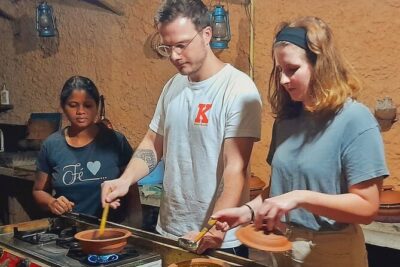
Sri Lankan Cooking Class with Neranji at Homestay
Read our review →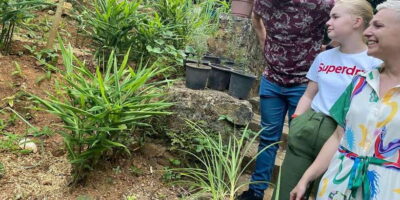
Browse the lists this tour appears in